Pentagon’s Quiet Deadline Signals a Faster Drawdown of America’s Global Military Burden
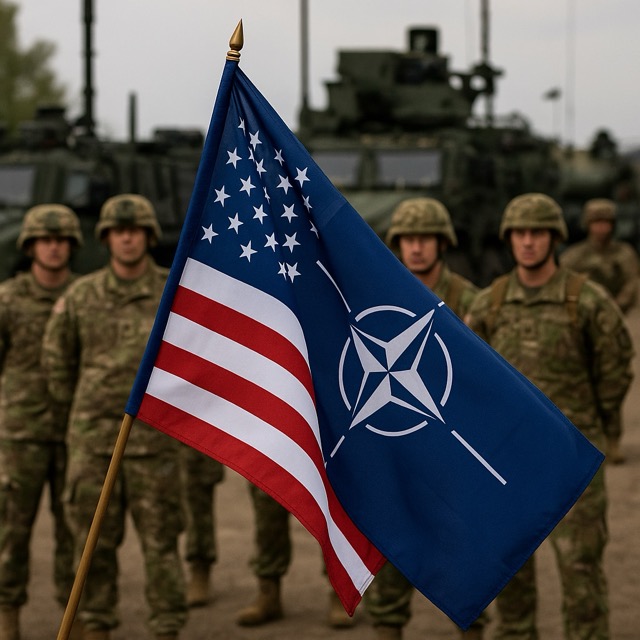
Washington — The United States has privately informed its European NATO allies that they must be prepared to assume the majority of the alliance’s conventional defence responsibilities by 2027, according to senior defence officials familiar with the Pentagon’s internal planning. The directive, which has circulated through NATO defence ministries since late September, marks the clearest sign yet that Washington intends to accelerate the rebalancing of its global military commitments.
The move reflects a growing consensus across both major U.S. political parties: America’s traditional defence posture — one that has relied on massive, permanent deployments in Europe — is no longer strategically or financially sustainable. With pressures mounting in the Indo‑Pacific and rising domestic demands on the defence budget, the Pentagon is signalling that Europe should no longer assume that U.S. forces will remain the backbone of NATO’s conventional defence.
According to officials briefed on the planning, the Department of Defense expects European members to meet two benchmarks by mid‑2027: the ability to conduct large‑scale, multi‑domain operations without U.S. ground forces, and the establishment of sustainable defence‑industrial capacities capable of supplying prolonged high‑intensity conflict. The benchmarks, one official said, are “not aspirational — they are requirements.”
European governments have reacted with a mix of urgency and concern. While defence spending across the continent has risen sharply since Russia’s 2022 invasion of Ukraine, gaps remain in munitions production, air defence networks, and rapid‑deployment readiness. Germany’s defence ministry warned privately that the mid‑2027 timeline may be “extremely challenging” without further industrial restructuring. France and Poland, by contrast, have expressed confidence that Europe is “on the verge of strategic adulthood.”
NATO Secretary General Jens Stoltenberg has attempted to downplay talk of an American retreat, emphasising that the U.S. remains committed to Article 5 and nuclear deterrence. But alliance officials acknowledge that the Pentagon’s message represents a structural shift: the U.S. will continue to provide its nuclear umbrella, long‑range strike capabilities, and intelligence assets, but conventional defence — particularly land power — must increasingly be European‑led.
Analysts say the U.S. deadline reflects a broader recalibration. “Washington isn’t abandoning Europe,” said Marta Kowalska, a defence strategist at the EU Institute for Security Studies. “It’s signalling that the era of European dependency is over. The U.S. needs to concentrate resources on a rising China and a more contested global military environment.”
Some European officials fear that the shift, if mishandled, could embolden Russia at a sensitive moment. The war in Ukraine remains unresolved, and Moscow has expanded its military footprint in Belarus. But others argue that Europe must seize the opportunity. “Strategic sovereignty is not just a slogan anymore,” said a senior French diplomat. “This is Europe’s moment to show it can defend itself — and contribute meaningfully to global stability.”
Whether European industry can scale in time remains uncertain. Production bottlenecks—particularly in artillery shells, air‑defence interceptors, and armored‑vehicle components—have plagued procurement programmes for years. A recent NATO report found that Europe is currently able to meet only 58 percent of the alliance’s projected munitions needs for a high‑intensity conflict lasting more than three months.
Despite these challenges, Pentagon officials insist the timeline will not shift. “2027 is firm,” one senior U.S. defence planner said. “Europe must be ready.”
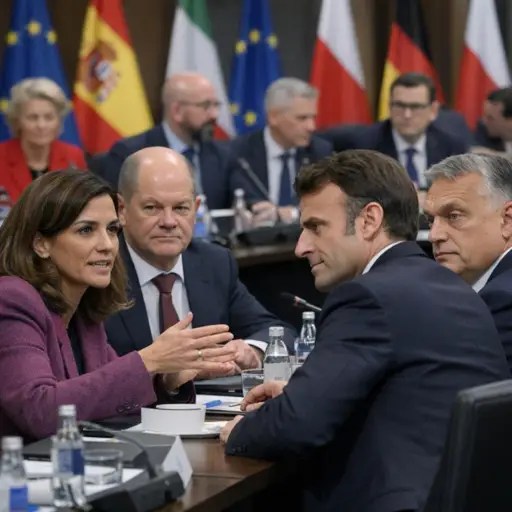
For now, the directive has not been made public. But as European defence ministers convene this autumn, many expect this quiet deadline to dominate the agenda—and to reshape the future of transatlantic security.



 The Tower Post