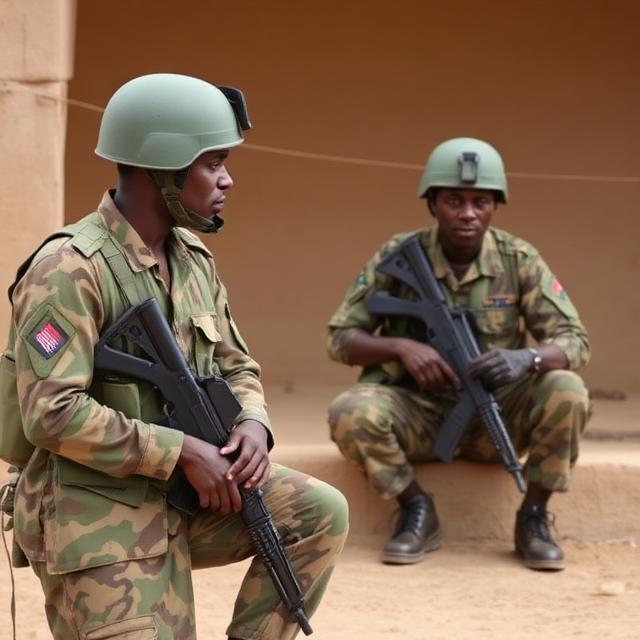
Loyalist forces maintain control as rebel soldiers briefly claim to have ousted President Patrice Talon in West Africa’s latest challenge to democratic governance
The government of Benin announced Sunday it has successfully foiled an attempted military coup, with Interior Minister Alassane Seidou declaring in a televised address that the nation’s armed forces remained “committed to the republic” and true to their oath. The dramatic events unfolded when a group of soldiers, led by Lieutenant Colonel Pascal Tigri, made a broadcast claiming they had overthrown President Patrice Talon.
Eyewitnesses reported hearing gunshots throughout the day, and journalists working for the state broadcaster were briefly held hostage during the chaos. Helicopters were seen flying over Cotonou, Benin’s largest city and seat of government, while roads were blocked and a heavy military presence secured several streets. A presidential adviser confirmed to the BBC that Talon was in a safe location, though French diplomats denied earlier reports that he had sought refuge at France’s embassy.
The rebel soldiers justified their actions by citing multiple grievances against Talon’s administration. They criticized his handling of the deteriorating security situation in northern Benin, where the army has suffered losses near the border with insurgency-hit Niger and Burkina Faso as jihadist militants linked to Islamic State and al-Qaeda have spread southward in recent years. The statement also condemned what the rebels described as the government’s neglect of fallen soldiers and their families, alongside complaints about healthcare cuts, tax increases, and restrictions on political activities.
Benin, a former French colony and one of Africa’s largest cotton producers, has long been regarded as one of the continent’s more stable democracies. However, Talon has faced growing accusations of suppressing criticism and limiting political opposition. In October, the electoral commission barred the main opposition candidate from standing in upcoming elections, citing insufficient sponsors. Last month, constitutional amendments extended terms for elected officials from five to seven years, though the presidential two-term limit remained unchanged.
The sixty-seven-year-old president, a businessman known as the “king of cotton,” first came to power in 2016 and is scheduled to step down next year after completing his second term, with elections planned for April. He has endorsed Finance Minister Romuald Wadagni as his successor and promised not to seek a third term. While supporters praise Talon for overseeing economic development, critics argue his government has systematically silenced dissenting voices.
The attempted coup comes amid a troubling wave of military takeovers across West Africa. Just over a week earlier, Guinea-Bissau’s President Umaro Sissoco Embaló was overthrown, though some regional figures have questioned whether the incident was staged. In recent years, the region has witnessed successful coups in Burkina Faso, Guinea, Mali, and Niger, raising serious concerns about regional stability. These Sahel countries have strengthened ties with Russia, and Burkina Faso, Mali, and Niger have left the West African regional bloc Ecowas to form their own Alliance of Sahel States.
International reaction was swift and unified. Both the Economic Community of West African States and the African Union condemned the coup attempt, with AU Commission chair Mahmoud Ali Yousouf reiterating the organization’s “zero tolerance stance toward any unconstitutional change of government, regardless of context or justification.” Nigeria, Benin’s large eastern neighbor, described the attempt as a “direct assault on democracy” and commended Benin’s security forces for “defending the constitutional order and guaranteeing the safety of the president.”
The French and Russian embassies urged their citizens to remain indoors during the crisis, while the US embassy advised staying away from Cotonou, particularly the area around the presidential compound. According to BBC Monitoring, news of the attempted takeover was celebrated by several pro-Russian social media accounts, highlighting the geopolitical tensions underlying the region’s instability.
Despite ranking among the world’s poorest countries, Benin’s successful defense of its democratic institutions offers a rare counterpoint to the recent trend of successful military takeovers in West Africa. The incident underscores both the fragility of democratic governance in the region and the continued commitment of some nations to resist unconstitutional changes of power.



 The Tower Post