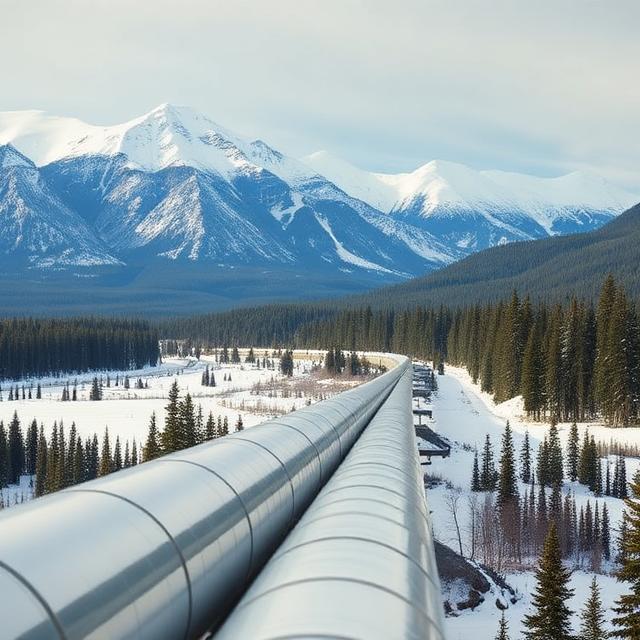
Mark Carney’s proposal to lift 53-year tanker ban reignites fears among First Nations after devastating 2016 spill
The distress call went out to the Canadian coast guard station after midnight on an October night in 2016. The Nathan E Stewart, an American-flagged tugboat sailing through the light winds and rain of the central British Columbia coast, had grounded on a reef. The captain tried to reverse, moving the rudder from hard over port to hard over starboard. The boat pivoted but did not move, and the tug repeatedly struck the sea bed.
Four hours later, the ship began taking on water, leaking diesel into the sea. That evening, a coast guard helicopter confirmed the worst-case scenario: a large sheen of diesel oil on the water was visible outside of a containment boom. In total, 110,000 litres spilled near the entrance to Seaforth Channel.
“I remember being in my office later that day getting calls from elders in the community. Some were crying and very upset. They talked as though we had lost someone in our community. People were devastated,” said Marilynn Slett, chief councillor of the Heiltsuk Nation, whose community of Bella Bella was 10 nautical miles from the grounding. The spill contaminated primary harvesting sites, causing immediate economic losses that continue today.
Nearly a decade after the disaster, the nation is still fighting for compensation for the losses it bore, including the destruction of clam gardens cultivated for centuries. Their lengthy battle has returned to the spotlight as Prime Minister Mark Carney supports a pipeline project that would ferry bitumen across Alberta and British Columbia, requiring the lifting of a tanker ban that has been in place for 53 years.
Against the backdrop of a trade war and the climate crisis, Canada finds itself in a difficult position. It is the world’s fourth-largest oil producer with the fourth-largest reserves, outproducing most members of OPEC. Yet swathes of the country are warming faster than the rest of the world, and communities are facing devastating effects.
Grappling with those two realities, Carney has pledged to help Alberta with a pipeline that would move at least one million barrels a day to Asia. With new legislative powers, Carney’s government could slash permitting and approval delays and is weighing lifting the moratorium on tanker traffic along the BC north coast.
For many, that ban, formalized into law in 2019, reflects the inherent danger of shipping oil through a region of tempestuous weather, physical hazards and deeply revered marine ecosystems. Rick Steiner, who was one of the first on the scene of the 1989 Exxon Valdez disaster, told the Canadian Press it’s spectacularly dangerous to conceive of putting a pipeline to northern BC and hauling that oil across the Gulf of Alaska to Asian markets. “It should not see the light of day,” he said.
Large oil tankers would likely have to traverse portions of the Hecate Strait, described by author John Vaillant as a “malevolent weather factory” where winter storms produce one of the most diabolically hostile environments that wind, sea and land are capable of conjuring.
Coastal First Nations, which represent nine nations along the central coast, swiftly declared that the project would never happen and said the tanker ban was non-negotiable. Chiefs representing more than 600 First Nations voted unanimously for Ottawa to uphold the oil-tanker ban and to withdraw from the deal between the federal and Alberta governments that could see a pipeline project pushed through.
Green Party leader Elizabeth May said in a statement there was no chance on God’s green Earth that an oil tanker will ever move through the inner waters between Haida Gwaii and the north coast of British Columbia. She added that governments cannot wish away science nor can they pretend that an oil tanker would not break apart under those conditions.
For First Nations on the coast, the prospect of an oil spill is deeply feared. Even relatively small disasters can have years-long consequences. The ecosystem still bears the scars of the Nathan E Stewart grounding: traditional harvesting sites have been closed and the damage to the ecosystem has permitted invasive species such as the European green crab to thrive.
λáλíyasila Frank Brown, a Heiltsuk hereditary chief, said his community is open to industrial development, but only projects for which the risks can be safely managed and the community consents. BC Premier David Eby alluded to this reality when he told reporters he was open to a pipeline proposal, but said any project that would require the tanker ban to be lifted was a non-starter.
He pointed out that billions of dollars’ worth of projects in the region, including liquefied natural gas terminals, currently have support from First Nations, and warned that support could be rapidly withdrawn if the federal government pushes to lift the tanker ban. Scrapping the ban would be a “grave mistake,” he said, adding that the risk of an oil spill is really significant in terms of the economic harm.
For Slett and her community, the potential harms transcend economics and push into cultural losses that have proven far more damaging. Under existing maritime law, the Heiltsuk aren’t eligible for compensation for cultural losses, including the loss of access to cultural sites. A delegation traveled to London last year to meet with the UN’s international marine organization to lobby for changes.
“We’ve been fighting for justice through this colonial legal system and it’s really a process of ‘show me your receipts’. But how do you show a receipt for the loss of our ability to transmit our knowledge and our cultural practices between generations?” she asked.
The cleanup salvage operations for the Nathan E Stewart spill took 40 days, with harsh weather suspending work for 11 of those. It took 45 vessels and more than 200 people to help with both the initial response and the cleanup. That was a spill of fewer than 700 barrels and yet it polluted over 1,500 acres of Heiltsuk territory, Slett noted, adding that large oil tankers can carry more than 2 million barrels.
“We just cannot accept this risk to our community after seeing what can happen. We can’t. And we won’t.”



 The Tower Post