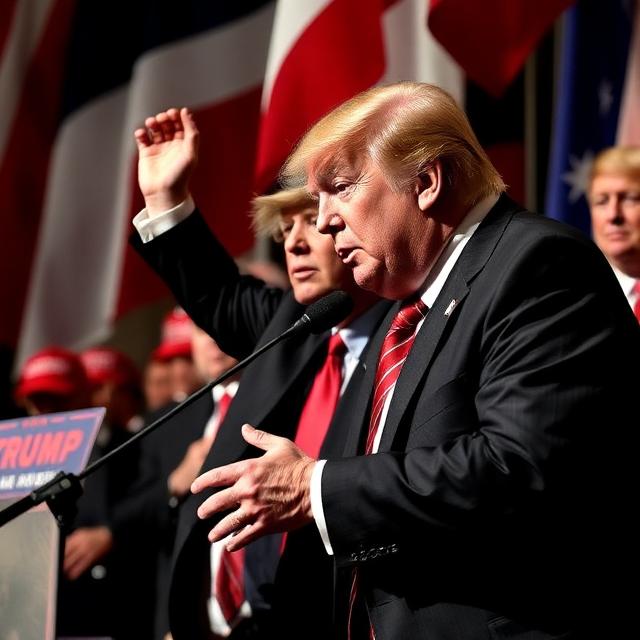
Transatlantic tensions over X fine spark populist revolt as Euroskeptic parties align with Washington’s anti-EU rhetoric
Europe’s far-right political forces are seizing on a transatlantic dispute to advance their anti-Brussels agenda, rallying behind the Trump administration’s fierce criticism of European Union institutions. The controversy erupted after the European Commission imposed a €120 million fine on social media platform X for violating transparency requirements under the Digital Services Act, the bloc’s content moderation framework.
Senior U.S. officials, including Vice President JD Vance and Secretary of State Marco Rubio, have launched a barrage of attacks against what they characterize as EU “censorship” and an assault on American tech companies. Their intervention has provided fresh ammunition for Euroskeptic parties seeking to roll back European integration.
Hungarian Prime Minister Viktor Orbán was among the first to capitalize on the dispute, declaring on X that “when the Brusselian overlords cannot win the debate, they reach for the fines.” He praised tech mogul Elon Musk for “holding the line” and insisted that “Europe needs free speech, not unelected bureaucrats deciding what we can read or say.” Musk responded by threatening to target the EU officials responsible for the penalty.
Alice Weidel, leader of Germany’s far-right Alternative for Germany party, echoed these sentiments, claiming the European Commission “appreciates censorship and chat control of its citizens” and wants to “silence critical voices by restricting freedom of speech.”
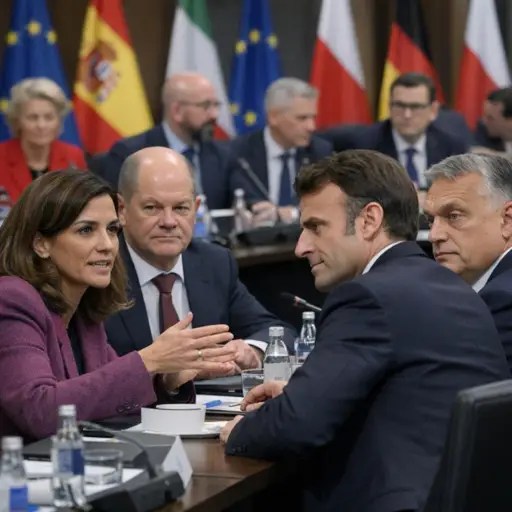
Three right-wing to far-right parliamentary groups—the European Conservatives and Reformists, the Patriots for Europe, and the Europe of Sovereign Nations—collectively hold 191 of the European Parliament’s 720 seats. These factions are united in their opposition to deeper European integration, advocating for proposals ranging from transferring powers back to national governments to dismantling the EU entirely. They champion national sovereignty over collective European cooperation.
Since Donald Trump’s reelection, these parties have positioned themselves as the primary transatlantic bridge, attempting to replicate the U.S. president’s political messaging in Europe through initiatives like a “Make Europe Great Again” movement. The recent American criticism of EU institutions has proven invaluable for amplifying their political platforms.
The Patriots for Europe declared on X that they “will fight to dismantle this censorship regime,” while the ECR group, which counts Italian Prime Minister Giorgia Meloni among its members, issued a statement questioning the Digital Services Act’s enforcement. ECR co-chairman Nicola Procaccini argued that “a digital law that lacks legal certainty risks becoming an instrument of political discretion.”
The ECR’s current stance marks a notable shift from its previous position. When the DSA passed through Parliament, the group supported the legislation, stating at the time that it would “protect freedom of expression, increase trust in online services and contribute to an open digital economy in Europe.”



 The Tower Post