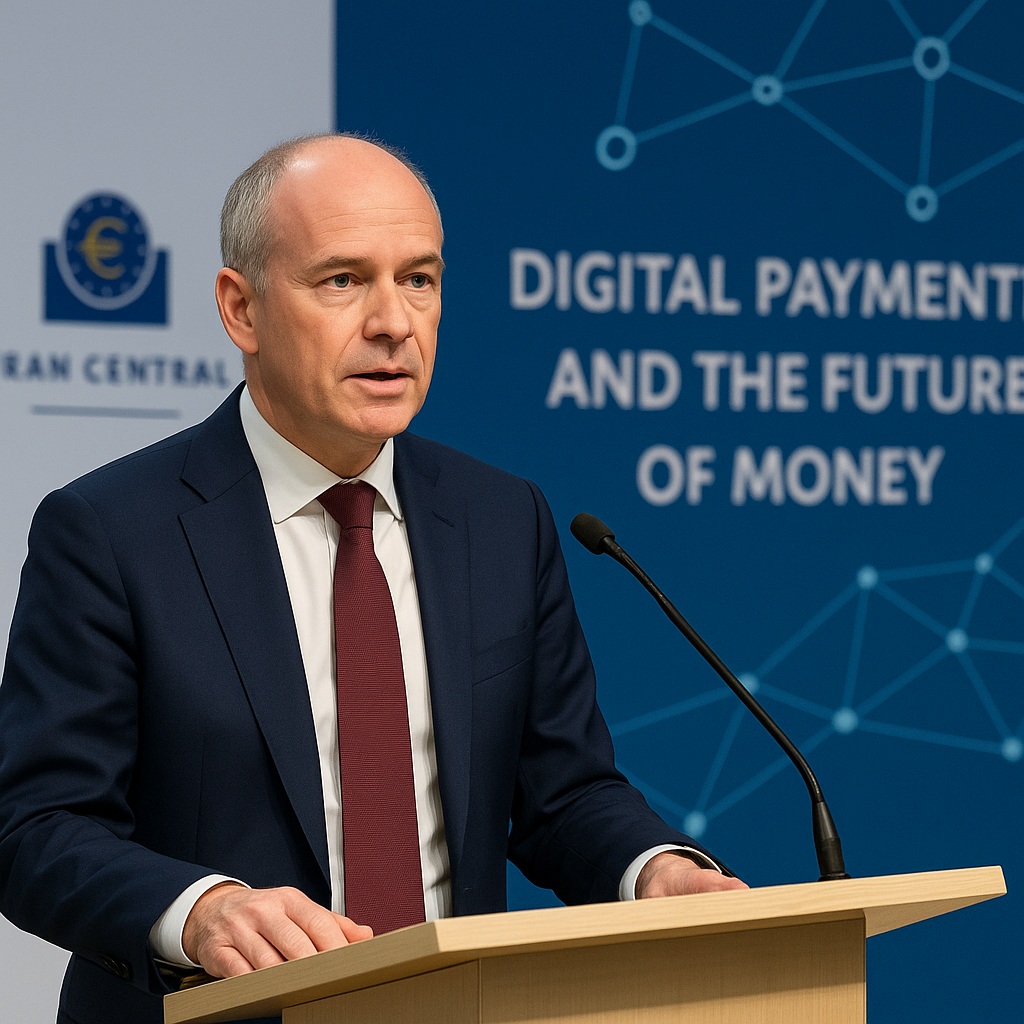
In Frankfurt, officials outline why modernized payment rails and a maturing digital euro may be vital to preserving monetary sovereignty amid rapid fintech disruption.

European central banks are intensifying their push toward modernized digital payment systems, signaling what many policymakers describe as a decisive pivot in the future architecture of money. Speaking in Frankfurt, a senior official said that Europe’s monetary authorities can no longer afford incremental improvements to outdated payment rails if they hope to remain credible guardians of financial stability and consumer trust.
The message was clear: central banks must evolve or risk becoming peripheral as private-sector fintech firms and global payment platforms reshape how Europeans transact, save, and store value.
The official argued that payment systems — once considered the quiet infrastructure of the financial world — now stand at the center of geopolitical, economic, and technological competition. In particular, the rapid growth of instant payments, tokenized assets, and cross-border digital platforms has introduced competitive pressures that traditional frameworks were never designed to handle. Central banks, the official said, must answer with systems that match the speed, security, and interoperability offered by cutting-edge technology firms.
Much of the discussion focused on Europe’s progress toward a potential digital euro, a project that has slowly advanced from research and consultation phases to more structured experimentation. While no definitive launch commitment has been made, the official stressed that the groundwork being laid today will determine whether Europe can shape — rather than simply react to — the transformation underway in global finance.
A digital euro, if implemented, would coexist with physical cash but offer a state-backed alternative to private digital payment tools. This, supporters argue, is essential for maintaining monetary sovereignty. Without such an option, Europeans could increasingly rely on non-European payment providers or unregulated crypto-based networks, raising concerns about data governance, financial stability, and resilience in times of crisis.
Yet the path forward remains contentious. Some commercial banks worry that a widely adopted central bank digital currency (CBDC) could drain deposits from the traditional banking system, complicating lending and liquidity operations. Privacy advocates, meanwhile, caution that digital public money must include robust safeguards to prevent misuse of transaction data. Addressing those concerns, the Frankfurt official reiterated that any digital-euro design would rely on strict privacy standards and a carefully calibrated architecture that avoids destabilizing the banking sector.
Despite the debate, pressure is mounting. European consumers are embracing cashless payments at unprecedented rates, and younger generations increasingly expect instant, cost-free, cross-border financial services. At the same time, global competitors are moving fast: several Asian economies have deployed advanced real-time payment networks, and major corporations continue to experiment with proprietary digital tokens that could one day challenge public money’s primacy.
The official noted that payment modernization is not simply a technical upgrade but a strategic imperative. The credibility of central banks depends on their ability to provide money that is trusted, accessible, and usable in a rapidly evolving economy. Failure to modernize, they warned, could fragment the financial landscape and weaken Europe’s influence in shaping international payment norms.
In the coming months, the European Central Bank and national authorities are expected to expand pilot programs that test secure digital wallets, offline payment capabilities, and new cybersecurity frameworks tailored for a digital-euro environment. None of these pilots guarantees a launch, but together they form a blueprint for a future monetary system that blends public oversight with private-sector innovation.
For now, Europe stands at a crossroads. The technological foundations of money are shifting, and central banks must decide whether to lead or follow. The Frankfurt official made the case that leadership is not optional: it is the prerequisite for preserving a stable and sovereign financial system in an age defined by digital acceleration.
What is increasingly evident is that the future of European money will not be shaped by static institutions or legacy systems. It will be forged in the interplay between public authority and private innovation — and in the willingness of central banks to rethink what money must be in the decades to come.



 The Tower Post