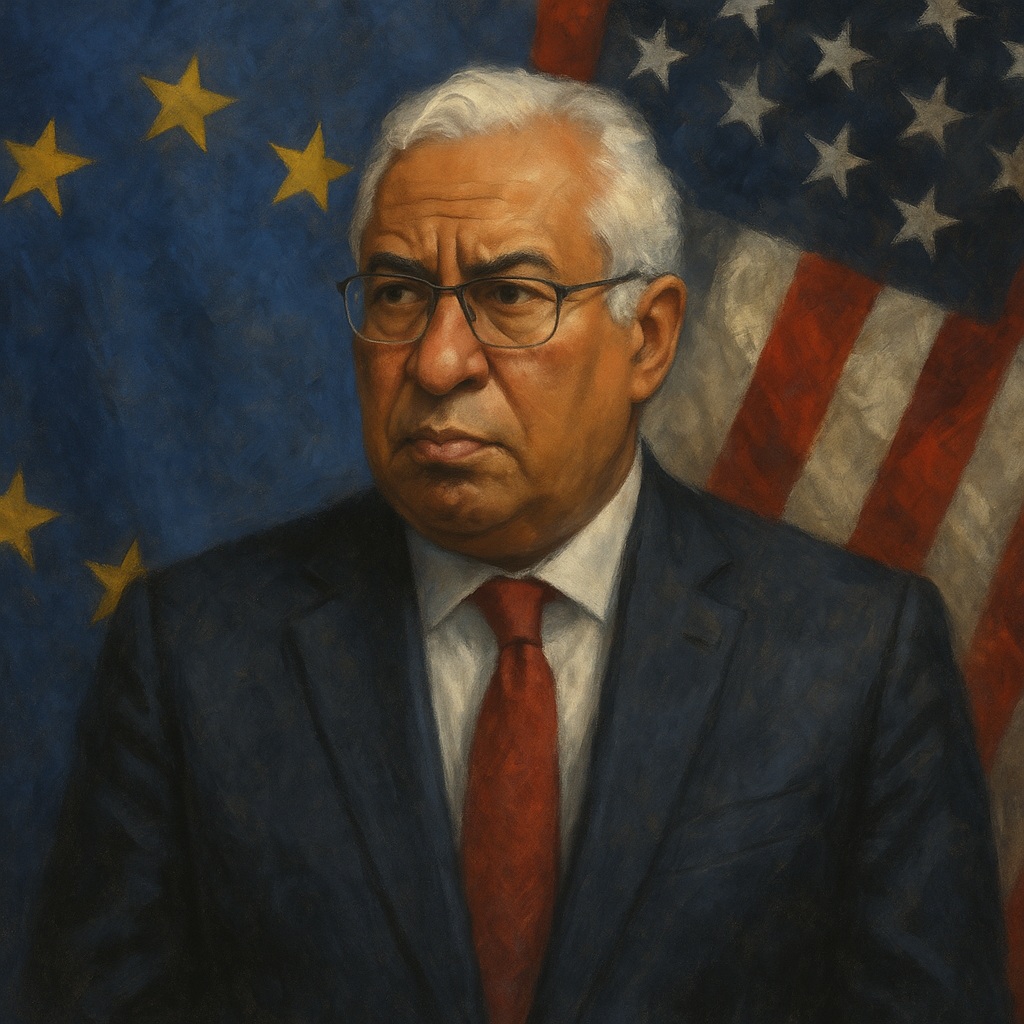
European Council president warns US against political overreach, says strategy portrays Europe as weak and undermines shared values
In a forceful intervention that has sent ripples across diplomatic circles, European Council president António Costa has sharply criticised the newly unveiled U.S. security strategy, describing it as an unwelcome intrusion into Europe’s internal political landscape. Speaking to reporters during high‑level consultations in Brussels, Costa argued that the document frames Europe as strategically vulnerable and politically indecisive — a characterisation he says misrepresents the continent’s capabilities and erodes the foundation of transatlantic unity.
The U.S. strategy, presented in Washington earlier this week, outlines a shift in global priorities that places stronger emphasis on countering emerging authoritarian powers and stabilizing the economic pressures reshaping international alliances. But for many European officials, Costa foremost among them, the text crosses a line by implying that the European Union requires firm external guidance to remain cohesive and effective. “Europe does not need to be lectured on its strengths or its responsibilities,” Costa said. “We are partners, not protégés.”
Diplomats familiar with the internal discussions say European leaders were taken aback by passages that appear to question the EU’s ability to act independently on security and trade. According to Costa, such framing risks undermining shared values long upheld by both sides of the Atlantic, including mutual respect for sovereignty and the recognition that strategic debates within Europe must be resolved by Europeans themselves.
Costa warned that the tone adopted in Washington could embolden political actors within Europe who seek to exploit foreign narratives for domestic gain. He stressed that allowing external powers — even long‑standing allies — to shape political discourse within EU borders sets a dangerous precedent. “Interference does not always arrive with hostility,” he noted. “Sometimes it comes dressed as advice, but its impact is the same: it distorts our democratic debate.”
Behind Costa’s unusually blunt public stance lies a growing unease in Brussels over the trajectory of U.S. foreign policy. While the two sides continue to cooperate closely on defence investments, cyber‑security frameworks and energy resilience, the perception that Washington is adopting a more paternalistic posture is deepening. European officials fear this could fracture unity at a moment when global instability is reshaping alliances at unprecedented speed.
Analysts say Costa’s remarks reflect a broader confidence within the EU’s leadership, which has invested heavily in strengthening collective defence mechanisms and reducing external dependencies over the past two years. The bloc’s expanding security coordination and its push for greater technological autonomy have positioned Europe as a more assertive actor — a reality Costa believes the U.S. strategy fails to acknowledge.
Despite the sharp criticism, Costa reiterated that Europe remains committed to the transatlantic partnership. He emphasised that disagreements of this nature should be addressed openly, not glossed over for the sake of political convenience. “Our alliance is strongest when we can challenge each other honestly,” he said, stressing that constructive dialogue is essential for navigating the geopolitical upheavals facing both continents.
As European leaders prepare for further discussions with U.S. counterparts, Costa’s statement has effectively set the tone for a more candid phase in transatlantic relations. Whether Washington adjusts its approach remains to be seen, but Brussels has made one point unmistakably clear: Europe intends to define its own strategic path — and will push back firmly against any attempt, however subtle, to steer it from abroad.



 The Tower Post