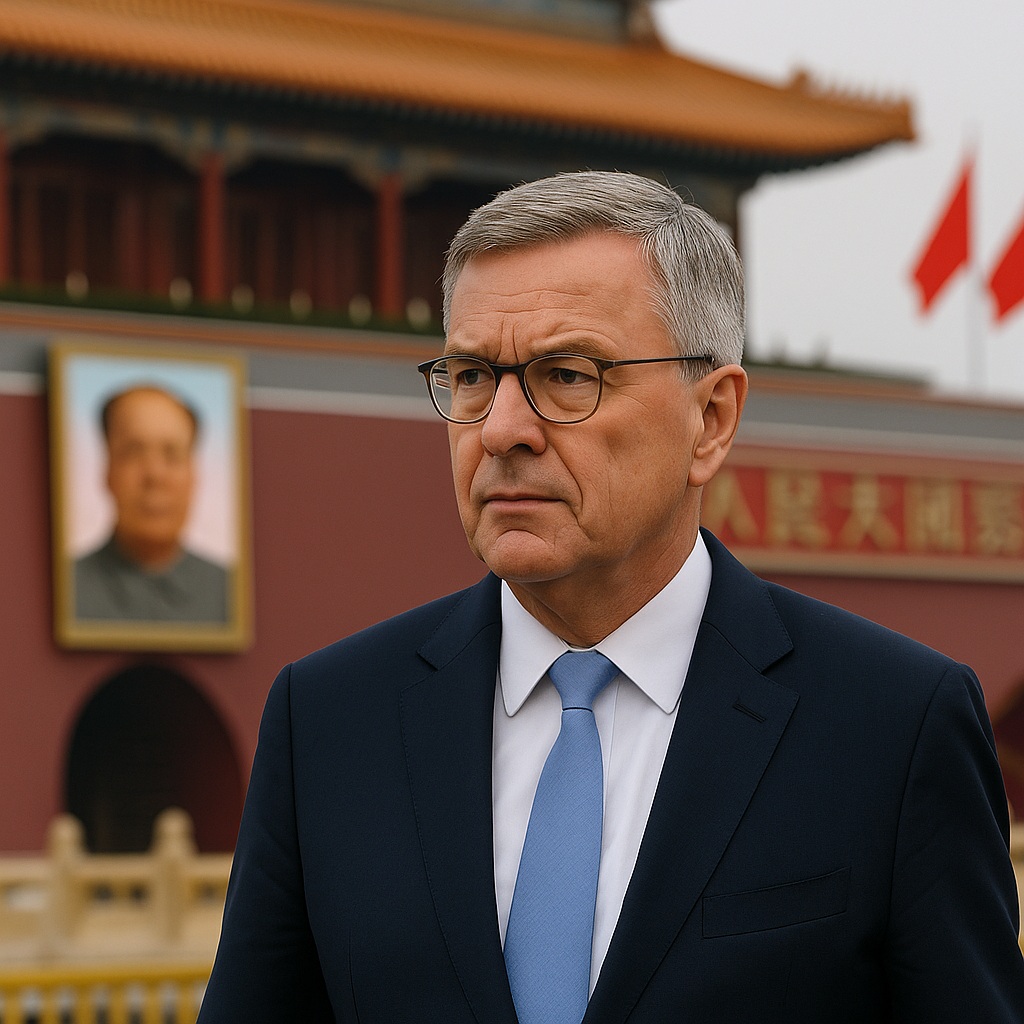
Johann Wadephul’s first official trip to China underscores renewed high-level engagement amid a complex era of cooperation and competition between Europe and Beijing

A Diplomatic Reset — With Caution
Johann Wadephul, the newly appointed German Foreign Minister, has arrived in Beijing for his first official visit in the role — a trip viewed by many diplomats as emblematic of renewed momentum in high-level European diplomacy with People’s Republic of China (PRC). The visit signals that Berlin, alongside other capitals in Europe, is recalibrating its China strategy in a fraught global environment.
The backdrop to Wadephul’s arrival is a broader pattern: a noticeable uptick in EU–China diplomatic travel in recent months, following a period of relative cooling after long‑standing tensions over trade, human rights, and geopolitical alignments.
But while the optics point to engagement, the tone remains cautious. For Berlin — and by extension, much of the European Union — this engagement is framed as necessary dialogue, not a return to business as usual. Wadephul’s visit comes as Europe seeks to balance economic interdependence with strategic autonomy amid growing global uncertainty.
What Wadephul Wants — Trade, Supply Chains, Stability
At the center of discussions: economic frictions that have dogged Sino‑European ties this year. The agenda reportedly includes critical issues such as rare‑earths supply and export restrictions, semiconductor dependencies, and overcapacity in certain industries — matters of direct relevance to Germany’s industrial heartland.
Germany, reflecting broader EU concerns, appears willing to engage constructively — but only if China addresses European grievances. Beijing expressed a willingness to “deliver on common understandings” and deepen cooperation.
Still, German and EU officials emphasize that cooperation must be built on reciprocity and respect for strategic autonomy. The notion is not of unconditional partnership — but of managed engagement, where economic interdependence is balanced by safeguarding European security and industrial interests.
The Broader EU Context: 50 Years of Diplomatic Ties and New Momentum
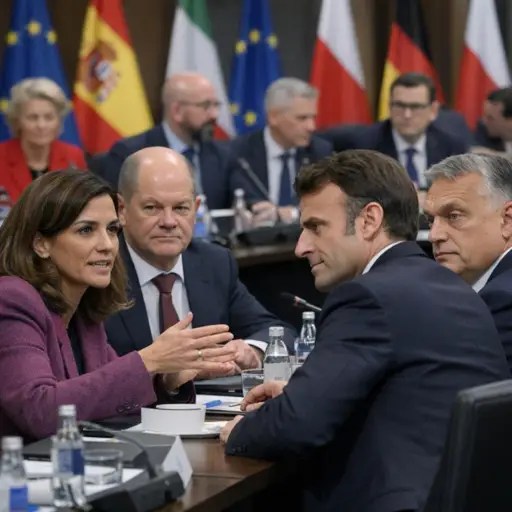
This visit comes on the heels of the 25th EU‑China Summit — which in mid‑2025 marked half a century of formal diplomatic relations between the European Union and China. The summit, though symbolically significant, delivered mixed results: landmark anniversaries notwithstanding, concrete breakthroughs on trade, climate, or geopolitical coordination proved elusive.
Analysts described the summit atmosphere as tense — an indicator that the EU-China relationship remains defined by structural distrust, diverging values, and economic friction.
Yet, for all the difficulties, both sides saw value in maintaining direct channels. The EU emphasised its commitment to multilateralism and global cooperation; China, for its part, continues to view Europe as a critical trade partner and geopolitical counterweight to other global powers.
Political Significance and Domestic Signals in Berlin
Wadephul’s own background underscores the significance of this trip. Having assumed office in May 2025 — the first from his party to hold the position in decades — he brings decades of foreign‑policy and security experience to his role.
Germany’s decision to send him to Beijing so soon underscores Berlin’s view that, despite growing tensions, China remains too important to neglect. It also reflects a broader European willingness to approach China with nuance: cooperation where possible, firmness where necessary.
Challenges Ahead — Geopolitics, Values, and Mutual Distrust
Despite the diplomatic goodwill, there are serious obstacles. Structural disagreements remain: the EU’s concerns over supply‑chain dependencies, trade fairness, and Chinese policies; China’s insistence on its political principles.
The divergence over geopolitical issues continues to cast a long shadow over any deeper alignment. Moreover, for many in Europe, cooperation cannot come at the expense of European values: human rights, democratic standards, and the rules-based global order.
What the Next Days Could Reveal
Over the course of the visit, Wadephul is expected to meet with Chinese Foreign and Trade officials — a show of Berlin’s intent to engage across political and economic dimensions.
The outcome may shape not only the Germany‑China relationship, but also influence how the rest of the EU calibrates its China policy in 2026. A successful visit could ease tensions over supply chains, industrial access and global trade — but failure to secure clarity or reciprocity may harden positions on both sides.


 The Tower Post