
Despite steady economic activity, Fitch Ratings says public finances across Central and Eastern Europe are set to deteriorate next year amid rising social pressures, higher debt-servicing costs and volatile political landscapes.
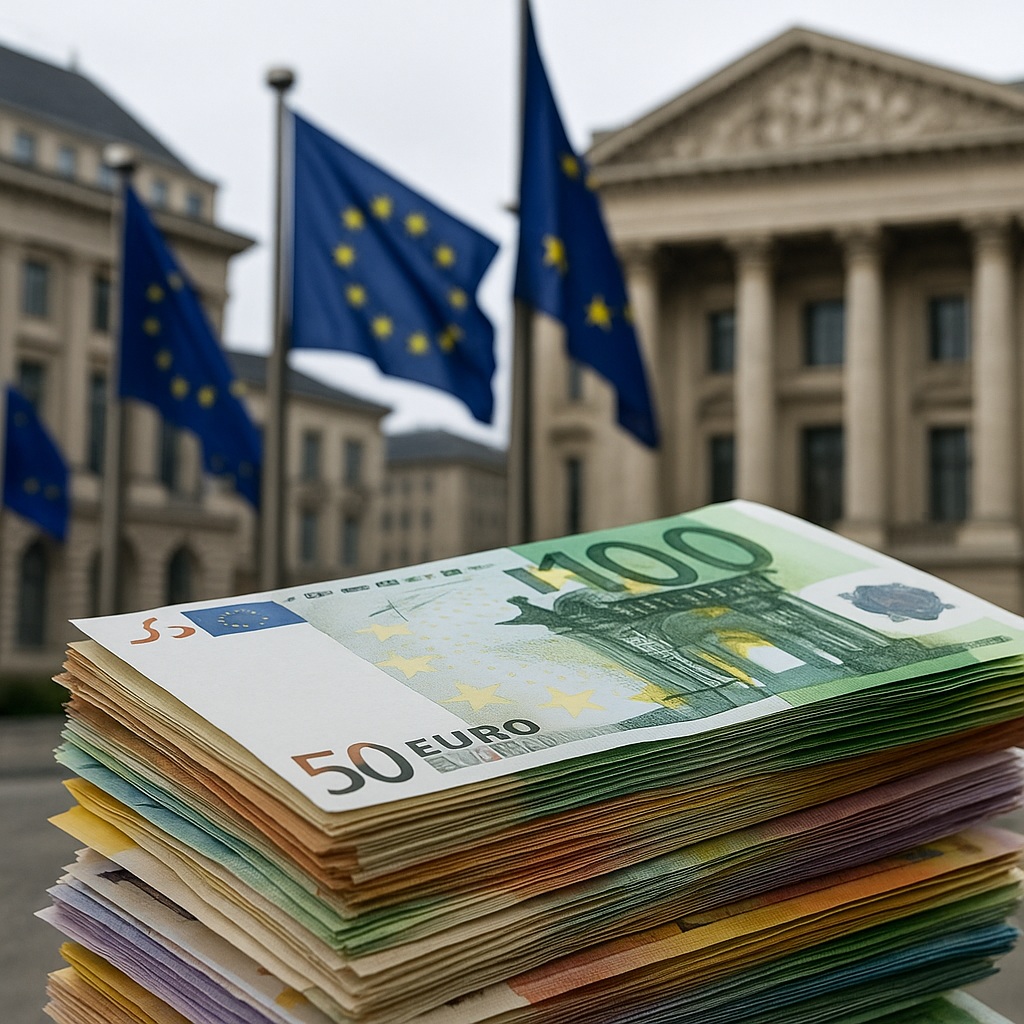
Fiscal Stress Builds in Eastern Europe as 2026 Nears, Fitch Warns
Public finances across Central and Eastern Europe appear poised for renewed strain next year, according to Fitch Ratings. In a report released in early December, the agency signaled that the region’s governments are heading into 2026 with widening fiscal gaps, climbing debt burdens and a challenging mix of social demands and political uncertainty.
The warning comes as many governments—stretching from the Baltic states to Southeastern Europe—prepare their budget frameworks for the coming year. While economic growth across the region is expected to remain moderate, Fitch says the pace will not be strong enough to counterbalance the fiscal pressures accumulating on the expenditure side.
Growing Social Spending Meets Higher Borrowing Costs
A central driver of the expected deterioration is the expansion of social spending, which has accelerated since the pandemic era and remains politically difficult to reverse. Wage support measures, pension enhancements and extended social benefit programs have become deeply embedded in several national budgets.
According to Fitch, these structural outlays are increasingly colliding with another persistent challenge: higher debt-servicing costs. After years in which governments could refinance cheaply, the elevated interest-rate environment continues to push up the cost of rolling over public debt. For countries with substantial refinancing needs in 2026, this alone could add significant pressure to already-stretched fiscal plans.
Economists note that these dual forces—social commitments and rising debt costs—are squeezing governments’ room for maneuver. Many are attempting to maintain support for households and public sector workers while also navigating infrastructure demands and commitments linked to European Union programs, all within tighter fiscal envelopes.
Political Uncertainty Clouds Fiscal Consolidation
Fitch’s assessment also highlights an increasingly unsettled political landscape. Several countries in Central and Eastern Europe face elections, fragile governing coalitions or contentious parliamentary majorities heading into the new year.
This unpredictability, the agency warns, is likely to complicate fiscal consolidation efforts. Governments may delay expenditure cuts or revenue-raising measures to avoid alienating key voter blocs. In some cases, the prospect of early elections or cabinet reshuffles risks stalling reforms altogether.
Political analysts say the region is experiencing a period in which competing social, security and economic priorities make consensus-driven budgeting more difficult. As a result, some governments may opt for short-term political gains at the expense of long-term fiscal sustainability.
Moderate Growth, but Not Enough to Offset Fiscal Pressures
Despite the challenges, Fitch does not paint a picture of economic stagnation. Growth across Central and Eastern Europe is expected to improve on the back of gradually easing inflation, recovering domestic demand and stabilizing external markets.
However, the agency stresses that this growth will be insufficient to offset the deteriorating fiscal trajectory. Revenue performance is expected to improve only modestly, and the gap between income and expenditure is likely to remain wide in several countries.
Budget analysts also point out that many governments have postponed major tax overhauls, and reliance on temporary revenue measures may no longer suffice to close deficits. Some countries may explore new forms of taxation—particularly windfall or sector-specific levies—but these carry political and economic risks of their own.
Debt Ratios Set to Rise Again
One of the most striking observations in Fitch’s outlook is that public-debt ratios in several Central- and Eastern European economies are expected to climb again next year. Following years of pandemic-related borrowing and additional spending linked to energy-market volatility and social programs, governments have struggled to reverse the upward momentum.
Debt levels remain manageable compared with many Western European peers, but Fitch warns that the direction of travel is becoming more concerning. In particular, countries with large structural deficits could see debt rise faster than markets expect, which in turn could increase downward pressure on credit profiles.
The agency also notes that global financial conditions may remain uneven, and any renewed tightening could further complicate refinancing operations. For countries with high foreign-currency debt exposure, exchange-rate volatility presents an additional layer of risk.
EU Funds Offer Support, but Not a Cure-All
A bright spot in Fitch’s analysis is the continued flow of EU cohesion and recovery funds. These resources are helping to stabilize public-investment pipelines and support long-term growth projects across the region.
However, the agency underscores that EU funds cannot single-handedly repair structural fiscal weaknesses. Without credible medium-term budget strategies, the risk remains that governments will rely too heavily on one-off injections rather than tackling persistent imbalances.
Analysts also point out that some countries have faced delays in meeting governance or rule-of-law milestones tied to funding disbursements, adding another layer of uncertainty.
A More Challenging Year Ahead
As 2026 approaches, Fitch’s message is clear: even with encouraging economic signals, the fiscal environment in Central and Eastern Europe is set to become more difficult. Rising social expectations, higher borrowing costs and fragile political dynamics are pushing governments into a narrow fiscal corridor.
The region’s performance next year will depend on whether policymakers can implement credible, durable strategies to rein in deficits without undermining social cohesion or economic momentum. For now, Fitch’s outlook suggests that the balance will be difficult to maintain—and that public finances may weaken before they stabilize.



 The Tower Post