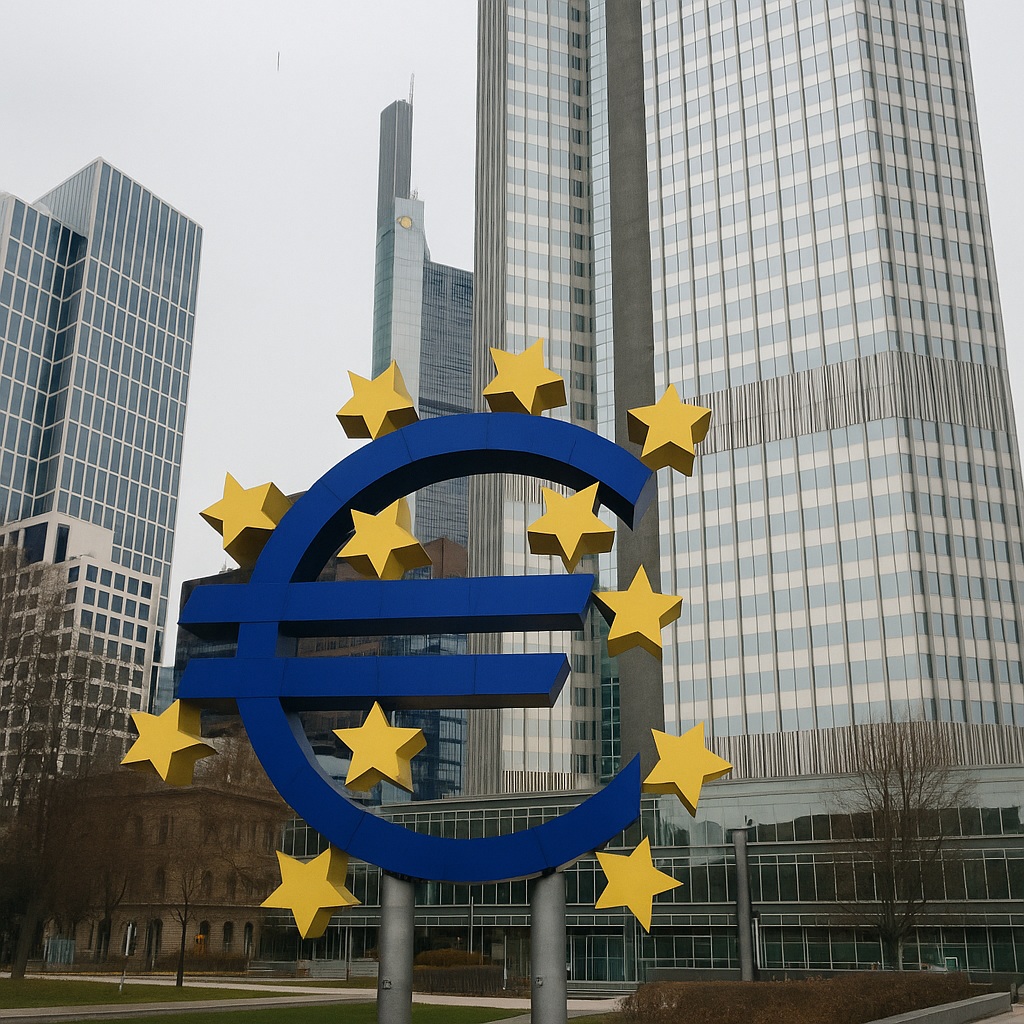
With inflation hovering near 2% and financial conditions steady, policymakers signal a long pause—betting that stability, not stimulus, is the safest path forward.
The European Central Bank enters the close of the year projecting steady confidence—even if not much enthusiasm—about the state of the euro‑zone economy. Officials describe the region as being in a “good place,” a phrase that has become a quiet refrain in Frankfurt as inflation cools toward the ECB’s target and financial markets adjust to a world of higher-for-longer interest rates.
The sentiment, however, does not necessarily translate into dynamism. Across the bloc, output has flattened, with several member states narrowly skirting contraction. Retail spending remains patchy, business investment cautious, and wage negotiations tense. The message from the ECB is nonetheless clear: the current policy stance is working, and altering it too quickly risks undermining the hard‑won progress made against inflation.
In meetings throughout the autumn, policymakers signaled a broad consensus that rate cuts remain premature. While consumer‑price growth is now markedly lower than the peaks seen during the energy‑price shock, ECB officials argue that underlying inflation pressures—particularly in services—continue to justify a wait‑and‑see stance. The governing council’s prevailing view is that the road back to price stability, though far smoother than a year ago, still requires vigilance rather than victory laps.
Economists observing the bank’s communication note a shift in tone: references to “tightening” have largely disappeared, replaced by repeated assurances that existing restrictions are appropriate. This subtle pivot underscores what insiders describe as a strategic bet. Rather than recalibrating rates at the first sign of economic stagnation, the ECB prefers to preserve stability, allowing demand and supply to rebalance naturally after several years of shocks.
For households, the impact of this stance is double‑edged. Borrowing costs, particularly for mortgages, remain far higher than pre‑pandemic levels, restraining real‑estate activity in several countries. Yet the moderation in inflation has delivered modest relief to purchasing power, with wage growth finally outpacing price increases in many sectors. Savers, meanwhile, continue to benefit from higher deposit rates—a dynamic the ECB has been careful not to frame as a policy feature, even if it boosts public tolerance of the status quo.
Financial markets have priced in this extended pause. Analysts who, earlier this year, anticipated a rapid sequence of cuts have largely walked back those expectations. Instead, traders now forecast that the ECB will avoid any major adjustments for the foreseeable future, barring a sharp deterioration in economic conditions. The bank’s own messaging reinforces this view: officials emphasize data dependence, but also suggest that stability is proving more valuable than stimulus at this stage of the cycle.
Still, the approach carries risks. A prolonged period of stagnation could entrench weak productivity growth, particularly in southern member states where investment remains subdued. Political pressures may also intensify as governments grapple with tight fiscal space and rising social‑spending demands. Several national leaders have already called for greater flexibility, arguing that Europe cannot rely solely on monetary restraint while global competitors pursue aggressive industrial policies.
Critics contend that the ECB should take a more proactive role in supporting growth. They note that with inflation expectations anchored and supply‑chain disruptions fading, the bank has room to ease without jeopardizing price stability. Some labor unions echo this argument, claiming that elevated borrowing costs disproportionately affect working‑class households and small businesses.
Yet supporters of the current stance counter that easing now would risk reigniting the very pressures the ECB has spent two years trying to suppress. They argue that the healthiest path forward is one of patience: allowing inflation to fully converge to target while giving firms and consumers time to adjust to a more typical interest‑rate environment after years of ultra‑loose policy.
Inside the bank, officials acknowledge the fragility of the euro‑zone recovery but insist that monetary policy cannot—and should not—attempt to solve every economic challenge. Structural reforms, they argue, fall squarely within the remit of national governments. What the ECB can provide is a predictable framework, resisting the temptation to react to every short‑term fluctuation.
As winter progresses, the euro‑zone faces a landscape defined less by crisis than by caution. Energy supplies appear sufficient, labor markets remain resilient, and corporate bankruptcies—while rising—are not yet signaling systemic stress. But growth is likely to remain subdued, raising difficult questions about Europe’s ability to compete in a world undergoing rapid technological and geopolitical transformation.
For now, though, the ECB’s message is simple: hold steady. In a year marked by fewer crises but lingering uncertainties, policymakers believe that consistency is the most valuable instrument they possess. Whether this strategy will be remembered as prudent stewardship or missed opportunity will depend on how the euro‑zone navigates the delicate balance between stability and stagnation in the months ahead.



 The Tower Post