
Russia’s rare conviction of its own soldiers for killing a U.S. volunteer fighter in Ukraine raises fresh geopolitical tension and questions about wartime accountability.
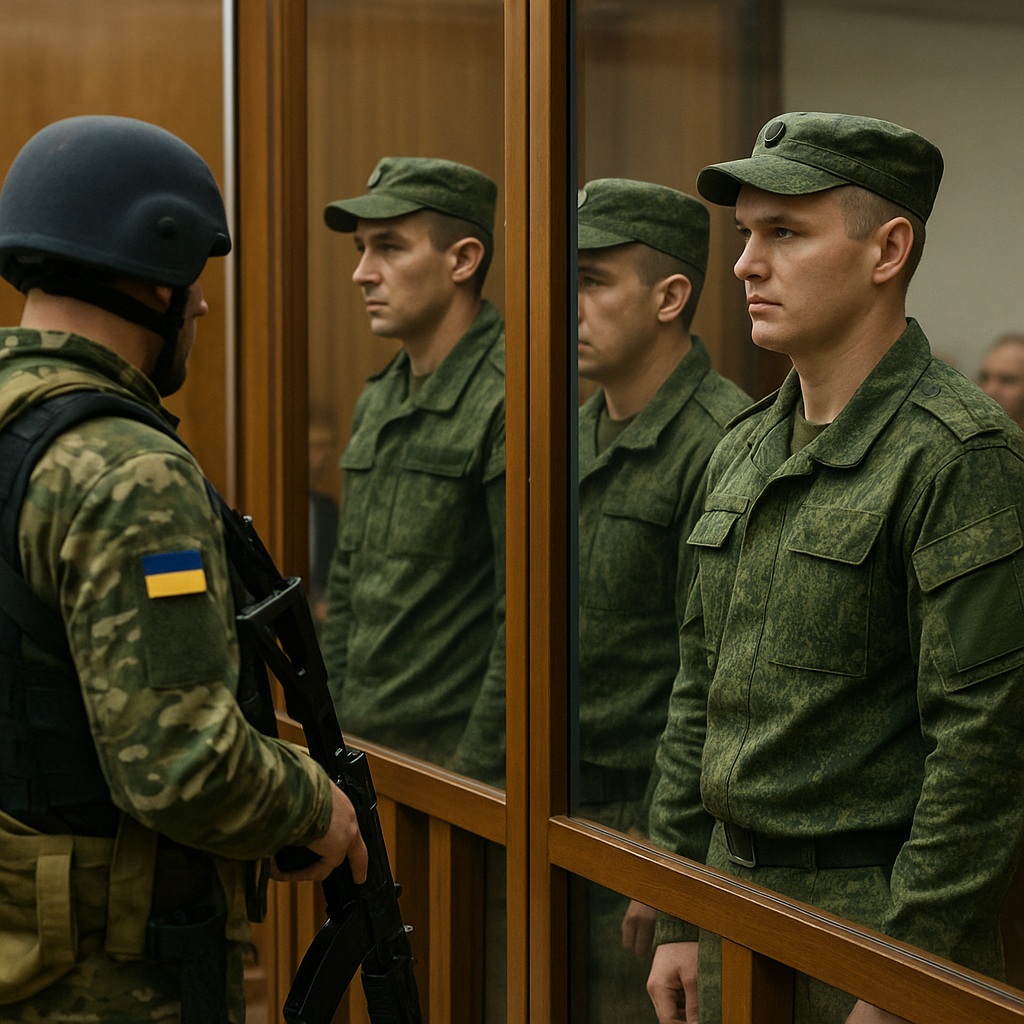
In a development that has reverberated far beyond the front lines, a Russian military court has sentenced three of its soldiers for the killing of an American volunteer who had been fighting alongside Ukrainian forces. The ruling, delivered in a closed proceeding but later confirmed by Russian state legal authorities, marks one of the few instances in which Moscow has publicly acknowledged — and punished — misconduct by its troops during the ongoing conflict.
The American, identified by fellow volunteers as a former firefighter who left home to join an international battalion, had been operating near a contested sector along a shifting line of fortifications. Witnesses reported that he was captured after becoming separated from his unit during a night operation. According to the court’s findings, the soldiers beat and shot him while he was disarmed and in custody.
Human rights monitors say the case stands out not only for its brutality but for the response it has provoked inside Russia’s own judicial system. Military courts there rarely pursue charges against active personnel for wartime actions, especially when the victims are foreign fighters. Analysts suspect the ruling reflects both internal pressure from investigators and an attempt by Moscow to avoid a diplomatic escalation with Washington.
Still, the verdict has done little to slow the wave of international condemnation. U.S. officials have formally demanded the full release of trial documents, while veteran groups and volunteer networks have expressed anger at what they call an “opaque and tightly controlled” judicial process. In Kyiv, Ukrainian commanders who had served with the American volunteer held a small memorial in his honor, emphasizing his decision to join the conflict despite warnings from U.S. authorities.
Experts on wartime law note that the ruling could signal a complex shift in Russian military discipline. “It may not be an admission of systemic wrongdoing,” one European security analyst said, “but it acknowledges the growing diplomatic cost of unpunished abuses.” Others argue that the opacity of the trial leaves open questions about whether the convicted soldiers were acting alone or under broader orders.
Within Russia, the case has sparked a muted but noticeable debate on military messaging. State media outlets have provided limited coverage, focusing primarily on the legal proceedings rather than the circumstances of the killing. Independent journalists say that the controlled narrative indicates the Kremlin’s intent to portray the sentencing as proof of accountability without engaging the larger controversy surrounding foreign volunteers on the battlefield.
In the volunteer battalion where the American had served, comrades describe him as a steady presence who favored the most dangerous assignments. They say he understood the personal risk he carried each day, but believed that supporting Ukraine’s defense was a moral imperative. His death, they add, has deepened their resolve even as it underscores the unpredictable dangers of a conflict marked by shifting alliances and escalating weaponry.
For Washington, the case introduces a politically fraught challenge. The administration has avoided public speculation on the soldiers’ motives but continues to press for transparency. Privately, officials acknowledge concerns that the incident could embolden hard‑line voices calling for a broader U.S. response.
Back on the front, the fighting continues with little sign of pause. Yet the sentencing — unusual, disputed, and incomplete in its disclosures — lingers over the international discourse surrounding the war. It is a reminder that even in a conflict defined by large‑scale assaults and strategic calculations, individual acts of violence can carry consequences that ripple across borders.
As the dust settles on the ruling, one unresolved question remains: whether this moment represents a rare exception or the beginning of a shift in how wartime conduct is judged, both within Russia and by the world watching it.



 The Tower Post