
Businesses hail reduced compliance burdens as environmental and human-rights advocates warn of a step backward for the bloc’s ambitions

In a move that has already reshaped political and corporate debate across the continent, the European Union has agreed to loosen several key sustainability and corporate-reporting requirements following months of intense lobbying from business groups. The decision—framed by supporters as a pragmatic recalibration and by critics as a retreat—reflects the bloc’s shifting approach to regulating industry in a period marked by economic strain, geopolitical uncertainty, and rising skepticism toward bureaucratic mandates.
At the heart of the changes is the Corporate Sustainability Reporting Directive, originally designed to drastically expand disclosure obligations for companies operating in or selling to Europe. Under the revised agreement, thresholds determining which firms must comply have been raised, meaning thousands of small and mid-sized companies that were previously preparing for complex reporting duties will now fall outside the scope. For many business associations, this adjustment is a long-awaited acknowledgment that compliance costs were climbing faster than companies—particularly manufacturers and exporters—could reasonably absorb.
Yet the most contentious concession came with the removal of several planned climate-transition obligations. These requirements would have compelled companies to outline concrete pathways for reducing emissions and aligning with the EU’s climate objectives. Environmental advocates argue that eliminating these commitments undermines the bloc’s own climate policy consistency, sending mixed signals at a moment when global competitors are accelerating green investment.
Human-rights groups, meanwhile, warn that narrowing the reporting scope risks blunting one of the EU’s most powerful tools for improving transparency in global supply chains. Without detailed disclosures, watchdog organizations fear it will become more difficult to identify abuses, ranging from forced labor to unsafe working conditions, especially in sectors heavily reliant on imported raw materials and outsourced production.
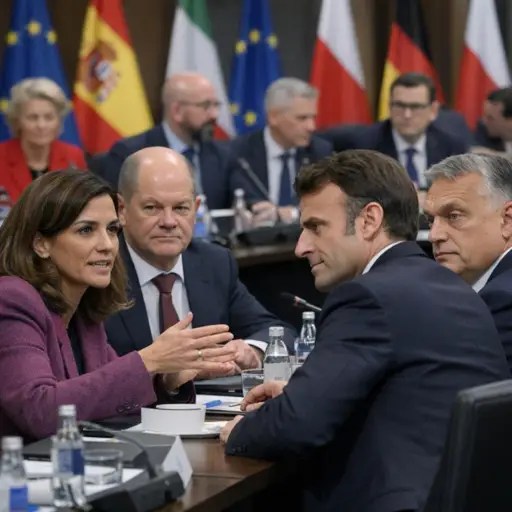
Inside the European Parliament, reactions have been sharply polarized. Lawmakers supporting the reforms say they represent a necessary correction to overambitious policymaking that failed to account for the operational realities of European business. They argue that the EU can remain a global leader in sustainability while pursuing a more “proportionate” regulatory model—one that avoids pushing companies toward cost-cutting measures that might include relocating production outside Europe.
Opponents counter that softening the rules risks emboldening industries to slow their transition efforts precisely when environmental data suggests the opposite is needed. Some warn that the changes could weaken Europe’s bargaining position in international climate negotiations, especially where the bloc has historically argued that strict domestic standards justify its demands for stronger global commitments.
The business community’s relief has been palpable, with several industry groups contending that the original rules threatened investment, competitiveness, and innovation. However, analysts point out that many larger companies—already deep into system upgrades and compliance preparations—may find the shift destabilizing. Some firms had invested heavily in sustainability teams, disclosure platforms, and emissions-tracking technologies in anticipation of stricter rules, and now face recalculating their strategies.
As policymakers defend the compromise, the next challenge will be rebuilding alignment among stakeholders whose priorities diverge sharply. With environmental advocates calling the rollback a “missed opportunity” and businesses urging further streamlining, the EU enters a new chapter in its balancing act between economic competitiveness and sustainability leadership. How the revised framework will shape corporate behavior remains uncertain, but the political debate it unleashed is unlikely to fade anytime soon.


 The Tower Post