
IG Metall’s demand to oust a key industrial partner injects fresh uncertainty into EU defense cooperation talks
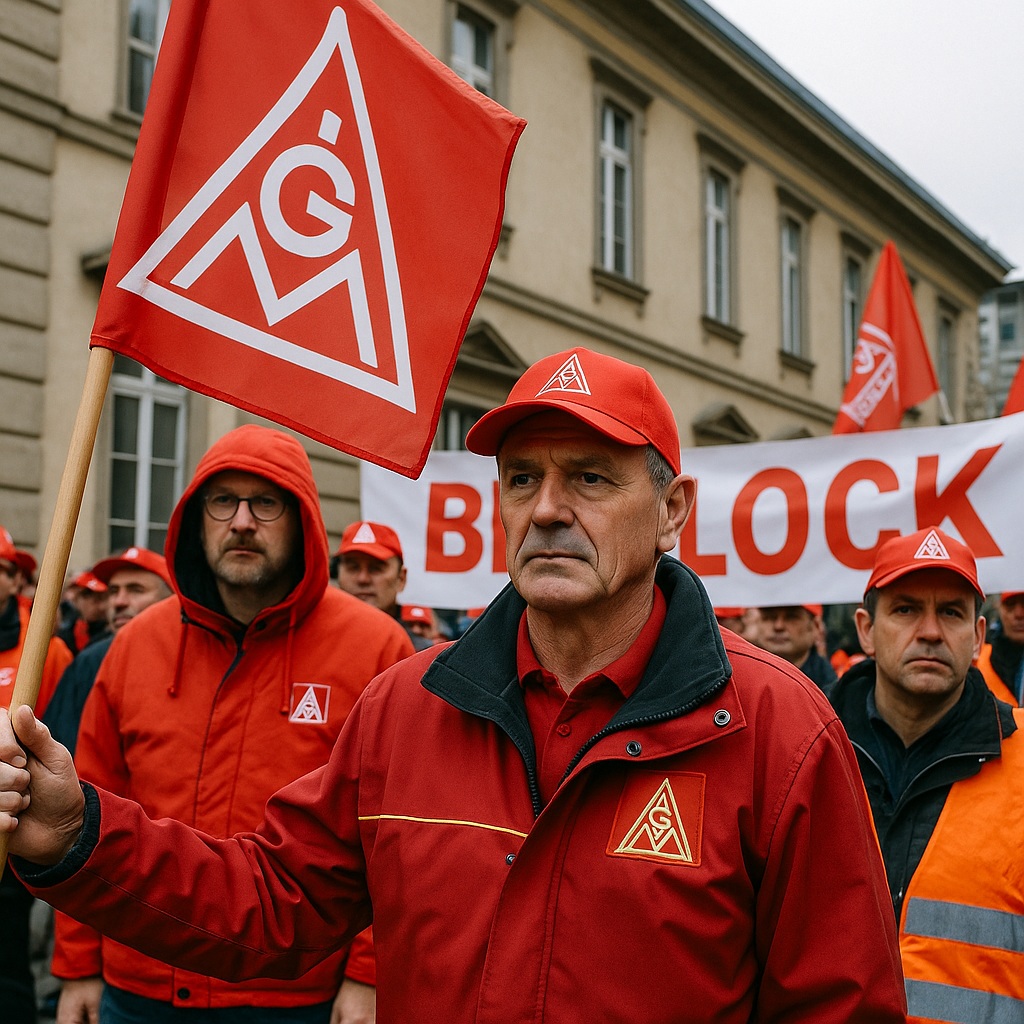
In Germany, the powerful industrial union IG Metall has escalated tensions within one of Europe’s most ambitious defense programmes, warning that it may mobilize labour actions capable of disrupting the project unless federal and European authorities intervene. The dispute, which centres on long‑standing industrial frictions and accusations of uneven workshare distribution, has become a flashpoint ahead of high‑level EU deliberations on coordinated defense procurement.
According to union officials, the crux of the conflict lies in what they describe as persistent structural imbalances within the programme’s industrial consortium. IG Metall leaders have argued that one partner—whose identity is widely known within defense circles but remains unnamed in official union statements—has repeatedly obstructed productivity agreements and undermined promises to maintain German manufacturing roles within the supply chain. Union representatives insist that unless the partner is removed entirely, the programme’s workforce stability cannot be guaranteed.
The threat lands at a politically sensitive moment. European governments have for months pushed to strengthen industrial coordination as geopolitical pressure grows on the continent’s defense readiness. Officials close to the matter note that the programme, which involves a coalition of major aerospace and defense firms across Germany, France, Spain, and other EU members, is viewed as a symbol of Europe’s bid for greater strategic autonomy. Any disruption—particularly one driven by intra‑European competition—risks undercutting that message.
Workers inside several German production hubs say frustration has been building for years. They point to a pattern of unilateral design revisions, delayed component deliveries, and what they describe as a persistent lack of transparency from the contested partner firm. IG Metall argues these tensions have pushed production schedules toward instability, forcing workers into unpredictable overtime cycles while weakening the economic credibility of German sites.
German federal officials are attempting to de‑escalate the rhetoric without appearing indifferent to union concerns. Privately, some acknowledge that IG Metall’s accusations reflect deeper structural problems in transnational defense ventures, where national expectations often collide with industrial realities. Others warn that agreeing to the union’s primary demand—the removal of a consortium partner—would fracture the delicate political balance underpinning the project and could invite retaliatory pressure from other member states.
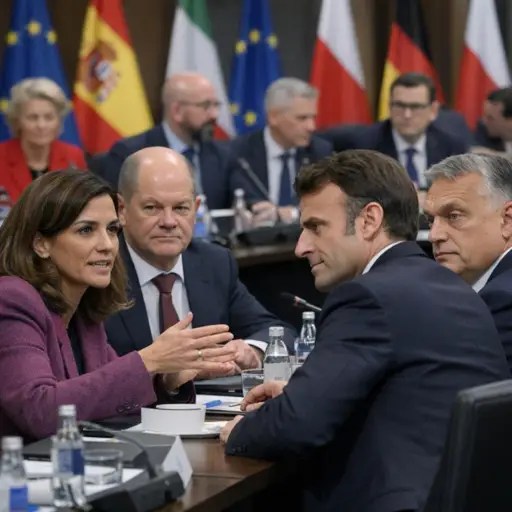
For the EU, the timing could not be more fraught. At upcoming defense cooperation meetings, ministers are expected to reassess joint procurement frameworks, industrial financing mechanisms, and long‑term strategic planning. Policymakers worry that the German standoff could overshadow these broader discussions, reinforcing a narrative of European fragmentation at a moment when cohesion is urgently needed.
Industry analysts see the confrontation as both a labour dispute and a test of Europe’s ability to execute complex multinational defense projects. If IG Metall follows through with its threat—potentially through strikes, blockades, or targeted slowdowns—production could face immediate bottlenecks. Although officials emphasize that no deadlines have been missed yet, insiders caution that even minor delays could cascade throughout the development timeline.
Union leaders show no sign of retreat. They portray their campaign as a defense of the workforce, not an attack on European cooperation. Still, the demand for removing a consortium partner sets a precedent that alarms many executives and political stakeholders. “This is about fairness and reliability,” a senior union representative said in a recent briefing. “If cooperation is the goal, every partner must act like one.”
As EU officials prepare for tense negotiations, the future of the programme hangs on whether political leaders can broker a compromise acceptable to both the union and the industrial consortium. Without such a breakthrough, Europe’s flagship defense effort may face months of operational uncertainty—an outcome that would reverberate far beyond factory floors and meeting rooms, touching the core of Europe’s collective defense ambitions.



 The Tower Post