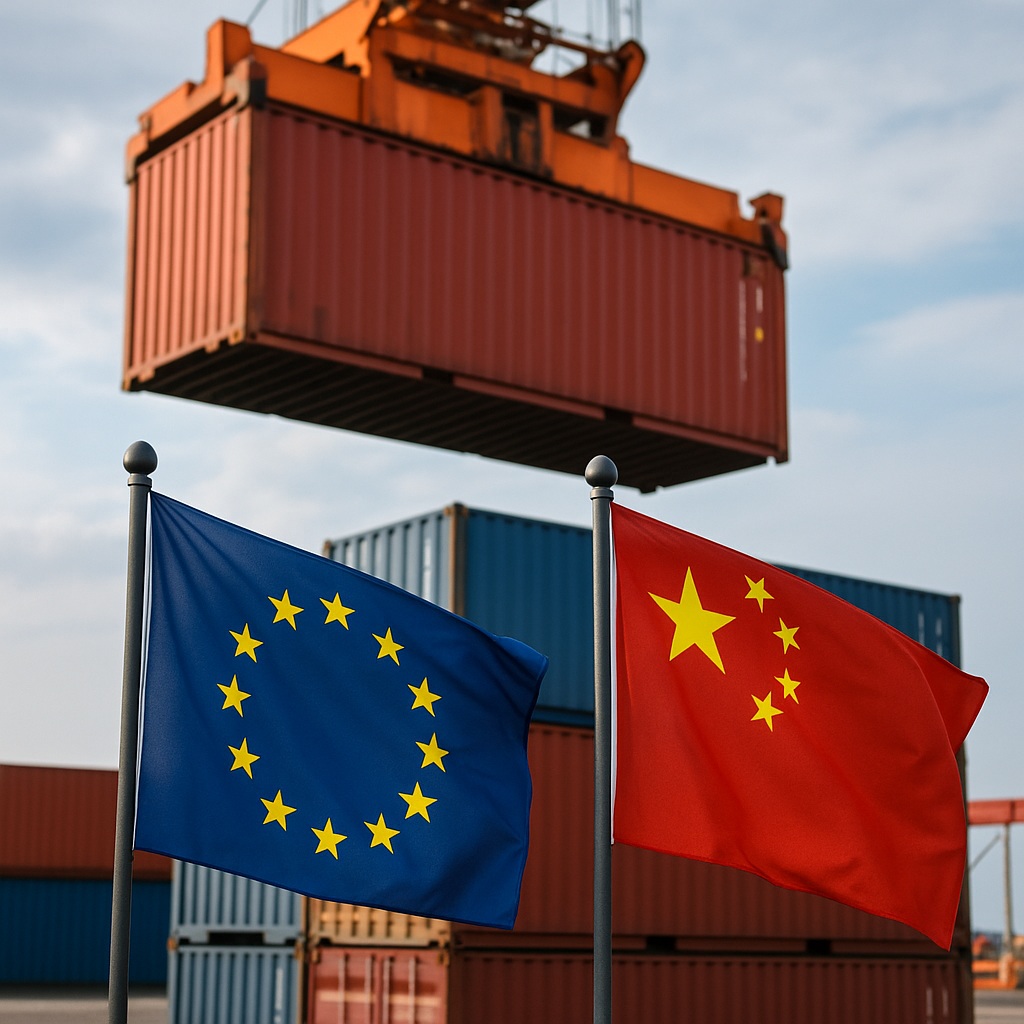
French and EU leaders warn that China’s export surge is pushing relations to a critical point, turning trade tensions into a defining challenge for the bloc’s global strategy
Europe is entering a decisive phase in its economic relationship with China. As winter settles over European capitals, policymakers in Paris, Brussels, and beyond are sharpening their scrutiny of a trade imbalance they say has reached politically and economically unsustainable levels. The issue, long discussed in technical forums, has moved firmly into the foreground of European diplomacy, framed by leaders as one of the most pressing international challenges facing the European Union.
At the heart of the debate lies a dramatic surge of Chinese exports into the European market, spanning sectors from electric vehicles and renewable energy equipment to consumer electronics and industrial components. European officials argue that this influx is no longer merely a question of competitive pressure, but a structural imbalance that risks eroding industrial capacity, distorting markets, and weakening the EU’s long-term strategic autonomy.
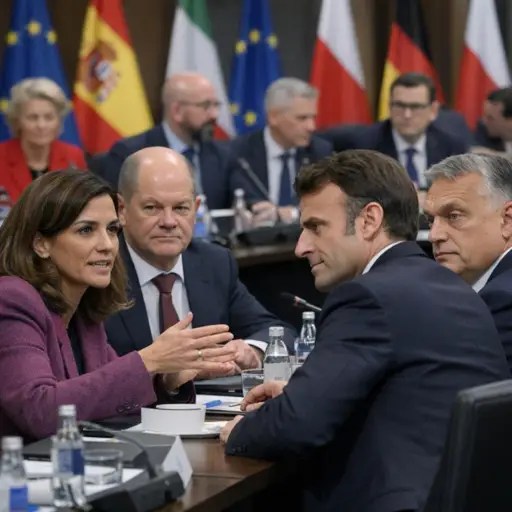
France has emerged as one of the most vocal proponents of a tougher line. Senior figures in Paris have warned that Europe cannot remain open “without limits” while key partners operate under different economic rules. The message resonates in Brussels, where trade officials increasingly describe the relationship with China as one marked by asymmetry rather than reciprocity.
A shift in tone across Europe
The current moment marks a noticeable shift in European rhetoric. For years, the EU balanced its economic dependence on China with a cautious diplomatic approach, seeking dialogue while avoiding confrontation. That balance is now under strain. The scale and speed of China’s export expansion have intensified concerns that European industries are facing competition backed by state support, preferential financing, and domestic overcapacity redirected abroad.
European Commission officials have stressed that the issue is not trade itself, but the conditions under which trade takes place. Investigations into specific sectors have become emblematic of a broader reassessment: whether existing trade defense instruments are sufficient, and whether Europe must deploy them more assertively.
French leaders have framed the debate in strategic terms, linking trade imbalances to employment, technological sovereignty, and social cohesion. In their view, unchecked imports threaten not only factories and supply chains, but also public confidence in globalization and the European project itself.
China’s perspective and diplomatic friction
Beijing, for its part, rejects accusations of unfairness. Chinese officials argue that their export strength reflects efficiency, innovation, and economies of scale, not distortion. They warn that protectionist responses from Europe could undermine global growth and damage mutual trust.
Diplomatic exchanges have grown more tense as a result. While both sides continue to emphasize the importance of dialogue, behind closed doors there is growing frustration. European negotiators complain of limited access to the Chinese market and regulatory hurdles faced by EU companies operating there. Chinese counterparts counter that Europe is politicizing trade and yielding to domestic pressures.
This friction plays out against a complex geopolitical backdrop. Europe is seeking to define an independent course between economic pragmatism and strategic caution, amid broader global rivalries and supply chain realignments. Trade with China, once seen primarily as an engine of growth, is now increasingly viewed through the lens of risk management.
Industrial anxiety and political pressure
Across Europe, industrial leaders are pressing governments to act. Manufacturers warn that sustained price competition from imported goods could accelerate deindustrialization in regions already under strain. Labor unions echo these fears, emphasizing the social consequences of factory closures and job losses.
Political pressure is mounting as well. As European citizens grapple with economic uncertainty, trade policy has become a proxy for broader anxieties about fairness and control. Leaders are keenly aware that perceived inaction could fuel discontent and strengthen anti-globalization narratives.
In response, EU institutions are exploring a mix of tools, from enhanced trade defense measures to deeper coordination on industrial policy. The objective, officials say, is not to close Europe’s market, but to ensure that openness does not become vulnerability.
A defining test for Europe’s trade doctrine
The debate over the China-Europe trade imbalance is fast becoming a test of the EU’s evolving economic doctrine. Can the bloc remain committed to open markets while defending its industrial base? Can it enforce reciprocity without sliding into protectionism? And can it speak with one voice amid differing national interests?
French and EU leaders insist that the stakes extend beyond bilateral trade figures. They see the current tensions as a signal moment, one that will shape Europe’s role in a fragmenting global economy. Decisions taken now, they argue, will influence investment, innovation, and competitiveness for years to come.
As the year draws to a close, Europe’s message is growing clearer: the status quo is no longer acceptable. Whether this leads to a recalibrated partnership with China or a period of sustained friction will depend on the choices made on both sides. What is certain is that trade, once a largely technocratic domain, has become a central arena of European power, politics, and identity.


 The Tower Post