
The EU economy commissioner weighs the political and economic consequences of President Trump’s strategy, signaling resolve, caution, and a redefinition of transatlantic cooperation.
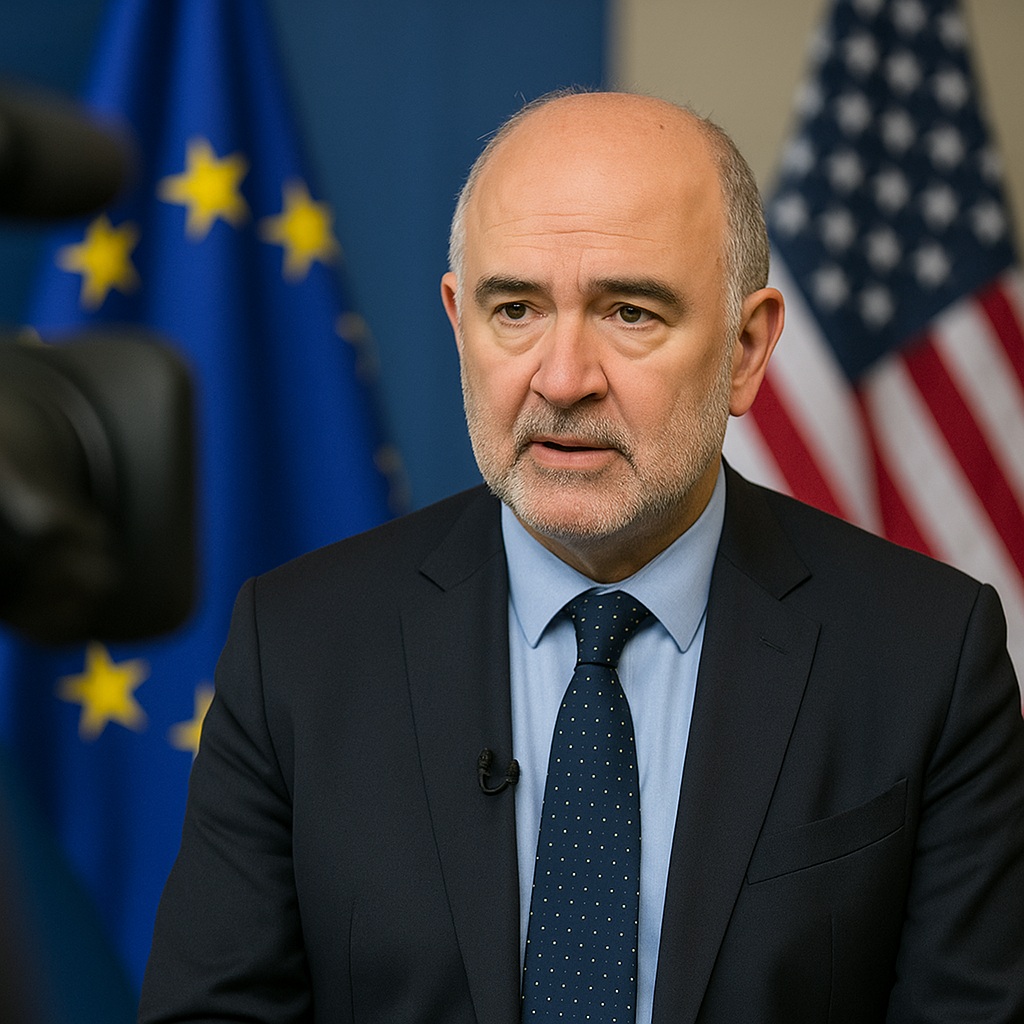
In a carefully calibrated video message released from Brussels, the European Union’s economy commissioner addressed President Donald Trump’s newly unveiled security strategy, offering a response that was at once measured and unmistakably firm. The remarks, delivered against the backdrop of growing geopolitical uncertainty, underscored Europe’s determination to safeguard its economic sovereignty while keeping open the channels of cooperation with Washington.
The commissioner’s intervention comes at a sensitive moment for the European project. Across the continent, governments are grappling with slower growth, industrial transition, and a shifting global order in which security policy increasingly intersects with trade, technology, and investment. President Trump’s strategy, which places renewed emphasis on national security considerations in economic decision-making, has sharpened debates in European capitals about dependency, resilience, and the future shape of the transatlantic alliance.
Without naming specific measures, the commissioner described the U.S. approach as a strategic recalibration that Europe must take seriously. The message avoided inflammatory language, but the subtext was clear: policies framed as security imperatives can carry profound economic consequences, particularly for allies whose markets and supply chains are deeply intertwined with those of the United States.
At the heart of the commissioner’s response was a call for balance. Europe, the video argued, recognizes the legitimacy of security concerns in an era marked by technological rivalry and geopolitical tension. Yet it also insists that security should not become a catch-all justification for unilateral actions that distort markets or undermine trust among partners.
The political implications for Europe are significant. In several member states, domestic debates have intensified over how closely the EU should align with Washington’s strategic priorities. Some leaders view the U.S. turn as a wake-up call for Europe to accelerate its own defense and industrial capabilities, while others fear a slide toward protectionism.
The commissioner’s remarks sought to bridge these perspectives by framing European autonomy not as a rejection of partnership, but as a prerequisite for a more balanced relationship. Strategic autonomy, the video suggested, is about ensuring that Europe can act, invest, and innovate without undue vulnerability.
Beyond economics, the video touched on Europe’s political landscape. The commissioner acknowledged that external pressures often reverberate internally, shaping public opinion and influencing electoral debates. When security and trade become intertwined, policy choices can quickly take on symbolic weight.
Transatlantic cooperation remained a central theme. Despite clear differences in approach, the commissioner emphasized that Europe and the United States continue to share fundamental interests and values, from financial stability to technological standards.
Observers in Brussels noted the careful tone of the message. Rather than escalating tensions, the commissioner appeared intent on setting boundaries while inviting conversation, reflecting a broader European strategy of pragmatism rather than confrontation.
The business community has been watching these developments closely. European companies, particularly in advanced manufacturing and technology, are sensitive to shifts in U.S. policy that could affect access to markets or capital.
In the video’s closing moments, the commissioner returned to the theme of cooperation in a changing world. The message was neither defiant nor deferential, presenting Europe as a partner prepared to engage but determined to protect its economic model.
As winter settles over the continent and leaders look ahead to a challenging year, the commissioner’s words capture a defining tension for Europe: how to adapt to a shifting transatlantic dynamic without losing sight of the principles that have underpinned decades of growth and stability.
Whether this approach will succeed depends on decisions yet to be made on both sides of the Atlantic. For now, the video stands as a clear signal that Europe is ready to engage, to push back when necessary, and to navigate an uncertain political landscape with caution and resolve.



 The Tower Post