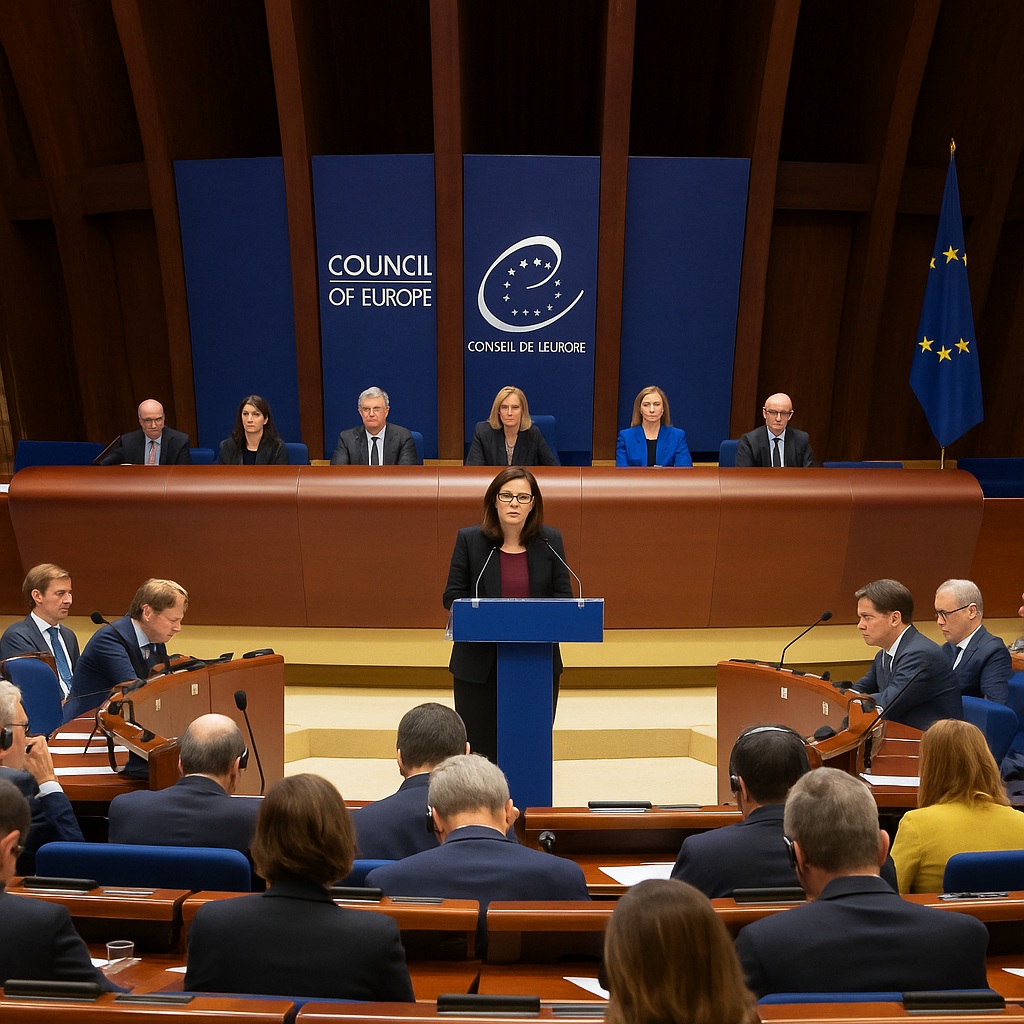
As governments clash over borders and solidarity, ministers seek a political declaration to reaffirm migrants’ rights and strengthen the fight against smuggling networks.
STRASBOURG — Migration has once again emerged as one of the most contentious issues on Europe’s political agenda, exposing deep divisions among governments while forcing a renewed debate over values, security, and responsibility. Meeting under the auspices of the Council of Europe, ministers this week acknowledged that the continent is at a critical juncture, calling for a joint political declaration aimed at safeguarding migrants’ rights while intensifying efforts against human smuggling.
The discussions unfolded against a backdrop of rising political polarization across Europe, where migration has become a central theme in national elections and parliamentary debates. For some governments, stricter border controls and deterrence measures dominate the agenda. For others, the emphasis remains firmly on human rights obligations and international law. The Council of Europe, long positioned as the guardian of democratic standards and human rights, found itself navigating between these competing pressures.
Ministers stressed that migration cannot be addressed solely through enforcement. Several delegations warned that an exclusive focus on border security risks undermining the legal and moral commitments that bind member states. They argued that migrants and asylum seekers must not be reduced to political symbols or security threats, but recognized as individuals entitled to protection, dignity, and due process.
At the same time, there was broad consensus that criminal smuggling networks are exploiting instability, conflict, and poverty, profiting from human desperation while placing lives at risk. Ministers described these networks as transnational and increasingly sophisticated, calling for stronger cooperation between states, law enforcement agencies, and judicial authorities. The proposed political declaration is expected to reaffirm a shared commitment to dismantling these networks without criminalizing migration itself.
Yet unity remained fragile. Behind closed doors, diplomats acknowledged sharp disagreements over responsibility-sharing, returns, and cooperation with non-European countries. Some governments argued that public confidence in migration systems has eroded, fueling support for hardline policies. Others countered that political rhetoric has often distorted realities on the ground, deepening fear rather than offering workable solutions.
Civil society organizations following the meeting urged ministers to translate declarations into concrete action. They warned that gaps between policy and practice continue to expose migrants to arbitrary detention, pushbacks, and limited access to asylum procedures. According to rights advocates, the credibility of the Council of Europe depends on its ability to ensure that member states uphold the standards they have pledged to respect.
The timing of the debate is significant. As winter approaches, humanitarian organizations are bracing for renewed pressure on reception systems, particularly in border regions. Ministers acknowledged the strain on local authorities but emphasized that emergency responses must be accompanied by long-term strategies rooted in solidarity and shared responsibility.
In their closing remarks, Council of Europe officials framed the proposed declaration as both a political signal and a moral statement. Migration, they said, will remain a defining challenge for Europe, testing not only administrative capacity but the resilience of democratic values. Whether the declaration can bridge political divides remains uncertain, but the debate itself underscored a central reality: Europe’s approach to migration is no longer just a policy question, but a reflection of the kind of continent it aspires to be.



 The Tower Post