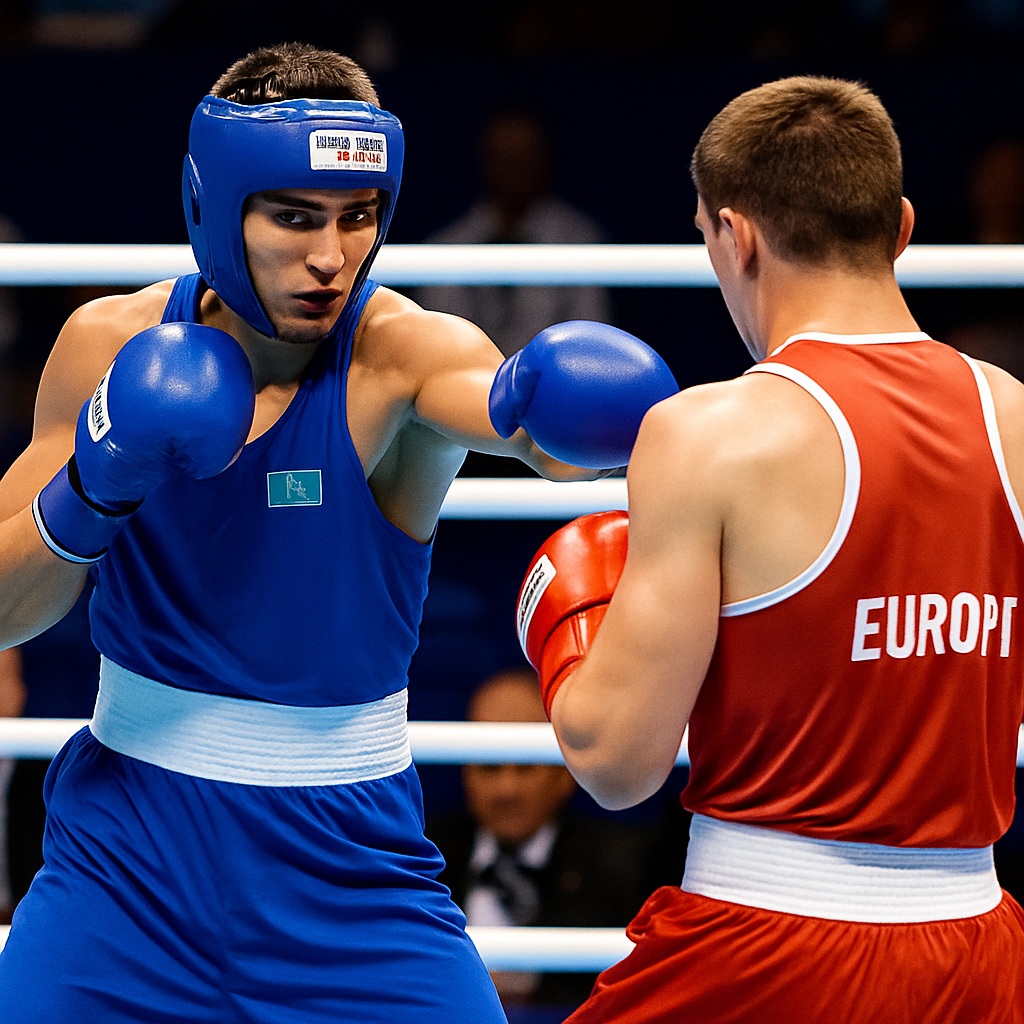
Kazakhstan’s seven-gold surge in Liverpool underlines Europe’s decisive weight in global boxing outcomes
By the time the final bell echoed through the arena in Liverpool, the message was unmistakable: European boxing is not merely participating in the global contest—it is shaping it. The World Boxing Championships concluded with Kazakhstan securing seven gold medals, a commanding performance that stood out not only for its scale, but for what it revealed about Europe’s evolving influence on the international stage.
Liverpool, steeped in sporting tradition, provided a fitting backdrop for a tournament that balanced history with renewal. Across packed sessions, the championships delivered a blend of tactical discipline, raw athleticism, and the psychological resilience that defines elite amateur boxing. For Kazakhstan, the result was a statement of continuity. For Europe more broadly, it was evidence of a continental ecosystem that continues to produce champions through structure, investment, and a shared competitive culture.
Kazakhstan’s success was not accidental. Over recent years, the country has refined a model that combines Soviet-era technical foundations with modern sports science. Fighters arriving in Liverpool demonstrated exceptional ring intelligence: controlling distance, managing tempo, and adapting mid-bout with calm precision. Their seven gold medals came across multiple weight categories, underscoring depth rather than reliance on a single standout star.
Yet to frame the championships solely through Kazakhstan’s triumph would be to miss the wider European narrative. From Eastern Europe to the Atlantic coast, European nations consistently populated the latter stages of the tournament. Semifinal brackets frequently featured multiple European flags, turning the championships into a de facto continental rivalry played out on a world platform.
This density of European excellence has become a defining feature of recent world championships. Training centers across Europe are increasingly interconnected, sharing methodologies while maintaining distinct national styles. The result is a competitive environment that raises standards across the board. Fighters grow accustomed to high-level opposition long before reaching global events, sharpening their skills in regional tournaments that now rival world competitions in intensity.
Liverpool’s championships also highlighted the contrast between European systems and those elsewhere. While boxing powerhouses from Asia and the Americas continue to produce exceptional athletes, Europe’s advantage lies in consistency. National federations benefit from stable funding models, integrated youth pathways, and coaching education that emphasizes long-term development over short-term success. This infrastructure allows athletes to peak at the right moment, a factor that proved decisive in the closing stages of the tournament.
Crowds in Liverpool responded to this quality with informed enthusiasm. Tactical exchanges drew as much applause as dramatic knockdowns, reflecting a growing appreciation for the sport’s subtleties. European fans, long accustomed to high-caliber amateur boxing, recognized patterns and strategies unfolding in real time. This mutual understanding between athletes and audience contributed to an atmosphere that elevated the championships beyond a mere medal count.
The geopolitical symbolism of the results was not lost on observers. Kazakhstan, straddling Europe and Asia both geographically and culturally, has increasingly aligned its sporting identity with European competition structures. Its success in Liverpool reinforced the idea that Europe’s boxing sphere is expansive, inclusive, and influential beyond traditional borders. In doing so, it challenged narrow definitions of continental dominance and highlighted the fluidity of modern sport.
For emerging European nations, the championships served as both inspiration and benchmark. Reaching the podium now requires navigating a field crowded with technically refined opponents. This reality is driving innovation at grassroots levels, with federations investing in analytics, injury prevention, and athlete welfare. The ripple effect promises to sustain Europe’s prominence well beyond the current championship cycle.
At the same time, the Liverpool event raised questions about balance in global boxing. When medals cluster within a particular region, governing bodies face pressure to ensure competitive diversity without diluting excellence. The solution, many argue, lies not in limiting strong programs but in elevating others through knowledge exchange and international collaboration—a process in which European federations are already deeply involved.
As the lights dimmed on the final evening, the championships left behind a clear narrative. Europe, anchored by Kazakhstan’s remarkable seven-gold haul, remains central to the sport’s present and future. The continent’s fighters did not simply win bouts; they set the tempo, dictated the style, and defined the standards by which success is measured.
Looking ahead, the implications are significant. Upcoming international tournaments will unfold under the shadow of Liverpool’s results, with opponents studying European approaches and adapting their own. For fans and analysts alike, the championships offered reassurance that amateur boxing, at its highest level, continues to evolve without losing its core values of skill, courage, and respect.
In Liverpool, European boxing did more than collect medals. It reaffirmed its role as a driving force in the global contest—disciplined, diverse, and relentlessly competitive.



 The Tower Post