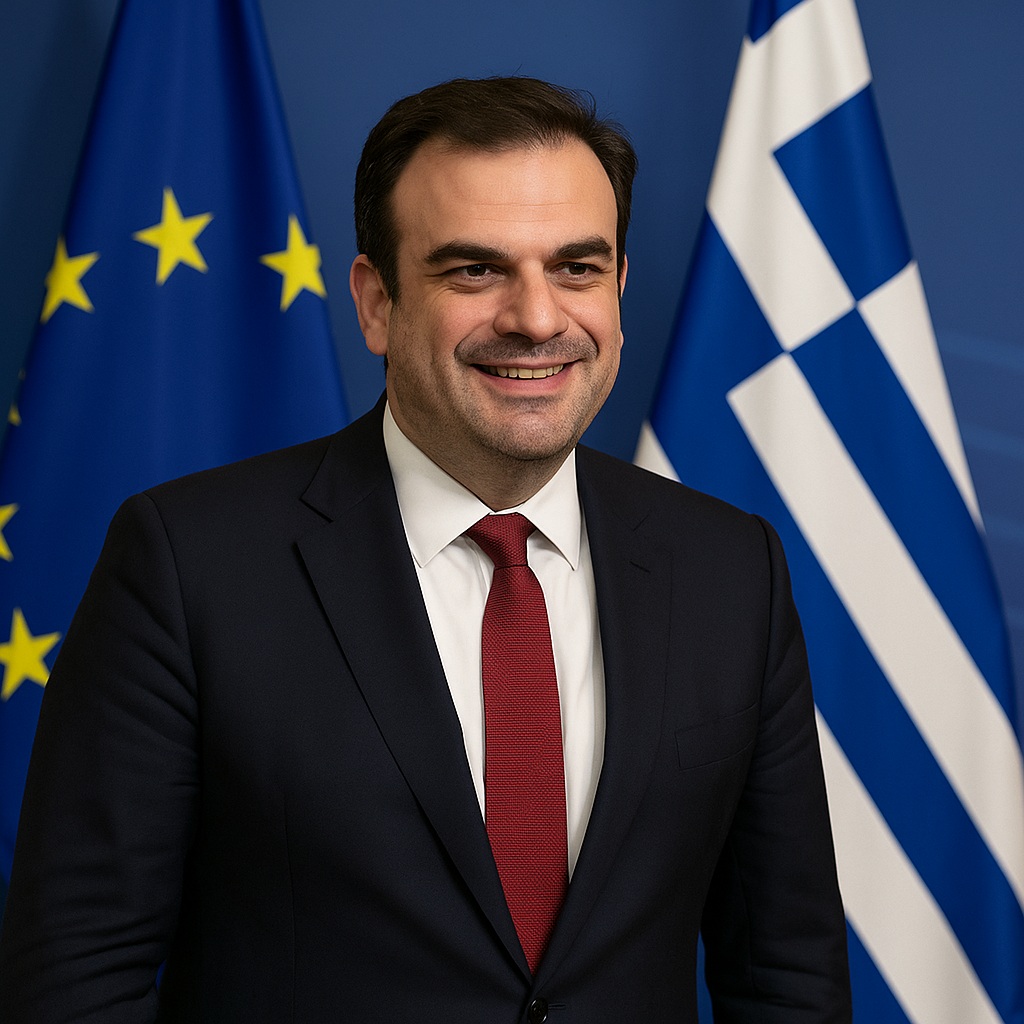
Kyriakos Pierrakakis’s election signals a profound shift in eurozone politics, underscoring Greece’s economic recovery and a changing balance of leadership within the single-currency bloc.

In a moment heavy with symbolism for Europe’s monetary union, Greece’s finance minister, Kyriakos Pierrakakis, has been elected president of the Eurogroup. For a country that once stood at the epicenter of the eurozone’s sovereign debt crisis, the development marks not merely a personal achievement for Pierrakakis, but a broader political and economic turning point for Greece itself.
The Eurogroup, which brings together the finance ministers of the euro area, plays a decisive role in shaping fiscal coordination, economic governance, and crisis management across the bloc. Its presidency, while formally a coordinating role, carries substantial agenda-setting power and moral authority. That authority now rests with a representative of a country that, little more than a decade ago, was viewed as a systemic risk to the single currency.
Pierrakakis’s election reflects how far Greece has traveled since the years of bailouts, austerity, and social strain. International markets that once questioned Athens’ credibility now largely treat Greek debt as stable. Economic growth, though uneven, has returned. Public finances have been repaired, and the country has regained a measure of policy autonomy that seemed unattainable during the height of the crisis. Within European institutions, Greece is no longer spoken of as a problem to be managed, but as a partner capable of leadership.
The political message of the vote was unmistakable. Eurozone finance ministers signaled their willingness to entrust the bloc’s internal coordination to a figure from the southern periphery, challenging long-standing assumptions about where authority in Europe resides. For years, leadership of the eurozone has been dominated by officials from its largest and wealthiest economies. Pierrakakis’s elevation suggests a recalibration, one that acknowledges both competence and experience forged in crisis.
At the heart of this shift lies Pierrakakis himself. Known for his technocratic approach and reform-minded profile, he has built a reputation as a pragmatic operator capable of bridging political divides. His tenure as finance minister has been characterized by an emphasis on digital modernization, fiscal discipline, and investment-friendly policies, combined with a careful sensitivity to social cohesion. These qualities have resonated in a eurozone grappling with slower growth, geopolitical uncertainty, and persistent debates over fiscal rules.
As Eurogroup president, Pierrakakis steps into the role at a delicate juncture. The euro area faces the challenge of balancing debt sustainability with the need for investment in defense, energy security, and technological competitiveness. Inflationary pressures, while no longer at crisis levels, continue to shape monetary and fiscal coordination. Meanwhile, disagreements between fiscally conservative and more expansionary-minded member states remain unresolved.
Greece’s recent past gives its new prominence particular resonance in these debates. Having lived through the most stringent adjustment programs ever imposed within the eurozone, Athens brings hard-earned credibility when discussing fiscal responsibility. At the same time, the social costs of that adjustment lend moral weight to arguments for flexibility and solidarity. Pierrakakis is thus uniquely positioned to frame compromises that acknowledge both discipline and growth.
Beyond economics, the election carries a deeper political meaning. It challenges the narrative of irreversible hierarchies within the European Union and reinforces the idea that reform and perseverance can restore influence. For Greek citizens, the symbolism is powerful: a country once portrayed as a cautionary tale is now helping steer the eurozone’s collective course.
Yet expectations will be high, and the role offers little room for error. The Eurogroup presidency demands neutrality, consensus-building, and resilience under pressure. National interests must be balanced against the collective good, and political credit is often scarce. Success will depend less on bold declarations than on the patient orchestration of agreement among diverse economies with competing priorities.
Still, the broader significance is already clear. Pierrakakis’s election stands as a marker of Greece’s rehabilitation within Europe and of a eurozone increasingly willing to recognize leadership beyond its traditional centers. In an era of uncertainty, the choice reflects confidence not only in an individual, but in the capacity of the European project to evolve.
As the eurozone looks ahead, Greece’s presence at the helm of the Eurogroup serves as a reminder that crisis does not preclude renewal. On the contrary, it may, over time, become the foundation for a more balanced and inclusive form of leadership within Europe’s monetary union.



 The Tower Post