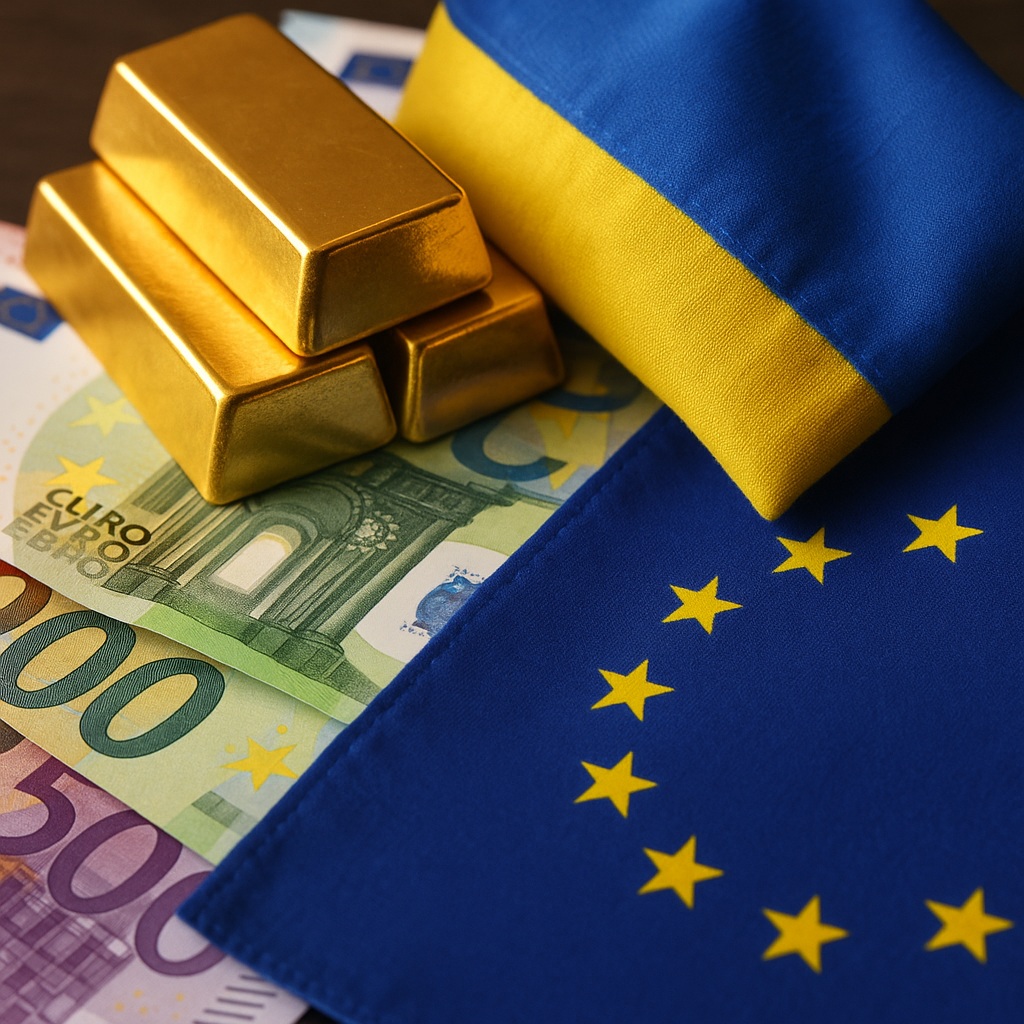
Leaders remove renewal hurdles on roughly €210 billion held in Europe, unlocking long-term financing for Kyiv while bracing for legal and diplomatic pushback.
BRUSSELS — In a move that reshapes Europe’s financial response to the war in Ukraine, European Union leaders have agreed to indefinitely freeze Russian central bank assets held within the bloc, clearing the way for a large, long-term loan package to support Kyiv’s military defense and civilian recovery.
The decision, endorsed after weeks of negotiation among member states, locks in restrictions on an estimated €210 billion in Russian sovereign reserves immobilized since the early days of the invasion. By making the freeze open-ended, the EU removes the need for periodic renewals that had threatened to complicate financing plans and expose the bloc to political brinkmanship at regular intervals.
At the heart of the agreement is a mechanism to use the extraordinary profits generated by the frozen assets as collateral for a substantial loan to Ukraine. The funds are expected to support a broad range of needs, from sustaining battlefield capabilities to repairing energy infrastructure and stabilizing public finances under the strain of war.
European officials framed the move as a matter of strategic endurance. With the conflict grinding on and international attention divided, the EU is signaling that its support for Ukraine is not contingent on short-term political cycles. “This is about predictability and credibility,” one senior diplomat said. “Ukraine needs to know that assistance will not be hostage to procedural deadlines.”
Until now, the asset freeze required unanimous renewal by member states at regular intervals, a process that had become increasingly fraught as domestic politics in several countries shifted. Any delay or veto risked unsettling markets and undermining the legal basis for using the assets’ proceeds. The new arrangement, by contrast, is designed to be durable, offering lenders and investors greater certainty.
The assets themselves remain the property of the Russian central bank and are not being confiscated outright. Instead, the EU is targeting the windfall profits earned as interest accumulates while the funds sit immobilized in European financial institutions. Those profits, officials say, can be leveraged without crossing the legal red lines associated with outright seizure.
Still, the decision is not without controversy. Legal experts warn that Moscow is likely to challenge the move in European and international courts, arguing that an indefinite freeze amounts to de facto expropriation. Russian officials have already denounced the plan as theft and vowed retaliation against Western interests.
Within the EU, some member states had expressed concern about setting a precedent that could unsettle global confidence in the euro as a reserve currency. Countries with large financial sectors worried about potential capital flight if sovereign assets were perceived as vulnerable to political decisions. The final compromise reflects months of technical work aimed at insulating the measure from such risks.
The European Commission has argued that the extraordinary circumstances of Russia’s invasion justify extraordinary measures. By anchoring the policy in existing sanctions law and limiting its scope to profits rather than principal, the EU believes it has built a defensible framework. Whether courts will agree remains an open question.
For Ukraine, the agreement offers a measure of relief at a critical juncture. As the war stretches into another winter, the country faces mounting costs to keep its economy functioning and its defenses supplied. Traditional aid packages have become harder to pass in some donor countries, making innovative financing mechanisms increasingly attractive.
Ukrainian officials welcomed the decision, describing it as a sign that Europe understands the scale and duration of the challenge. “This is not just about money,” one official said. “It is about the message that aggression will not be rewarded and that support will endure.”
The move also carries geopolitical implications beyond Europe. Allies in the Group of Seven have been coordinating closely on how to use frozen Russian assets without triggering financial instability. The EU’s decision is expected to reinforce parallel efforts elsewhere, even as some partners remain more cautious about the legal risks.
Critics, however, argue that relying on asset-derived financing could complicate future peace negotiations. They warn that tying reconstruction funds to frozen Russian reserves may reduce incentives for compromise or entrench hard positions on both sides. European officials counter that any settlement would, by necessity, address reparations and accountability.
As markets absorb the news, the immediate financial impact has been muted, reflecting the fact that the assets have been frozen for years. The longer-term significance lies in the precedent: a major economic bloc committing to an open-ended constraint on a rival’s sovereign wealth in service of another country’s survival.
For the EU, the agreement underscores a broader shift from emergency measures to structural support for Ukraine. By removing renewal hurdles and embracing a longer horizon, the bloc is betting that legal resilience and political unity can be maintained over time.
Whether that bet pays off will depend on courtrooms as much as council chambers. For now, Europe has chosen to harden its stance, transforming frozen assets into a pillar of sustained aid—and signaling that, as the year draws to a close, its approach to the conflict is entering a more permanent phase.



 The Tower Post