
A mid-December snapshot shows a softer FTSE and renewed scrutiny of financial resilience amid global tech shifts and geopolitical uncertainty.
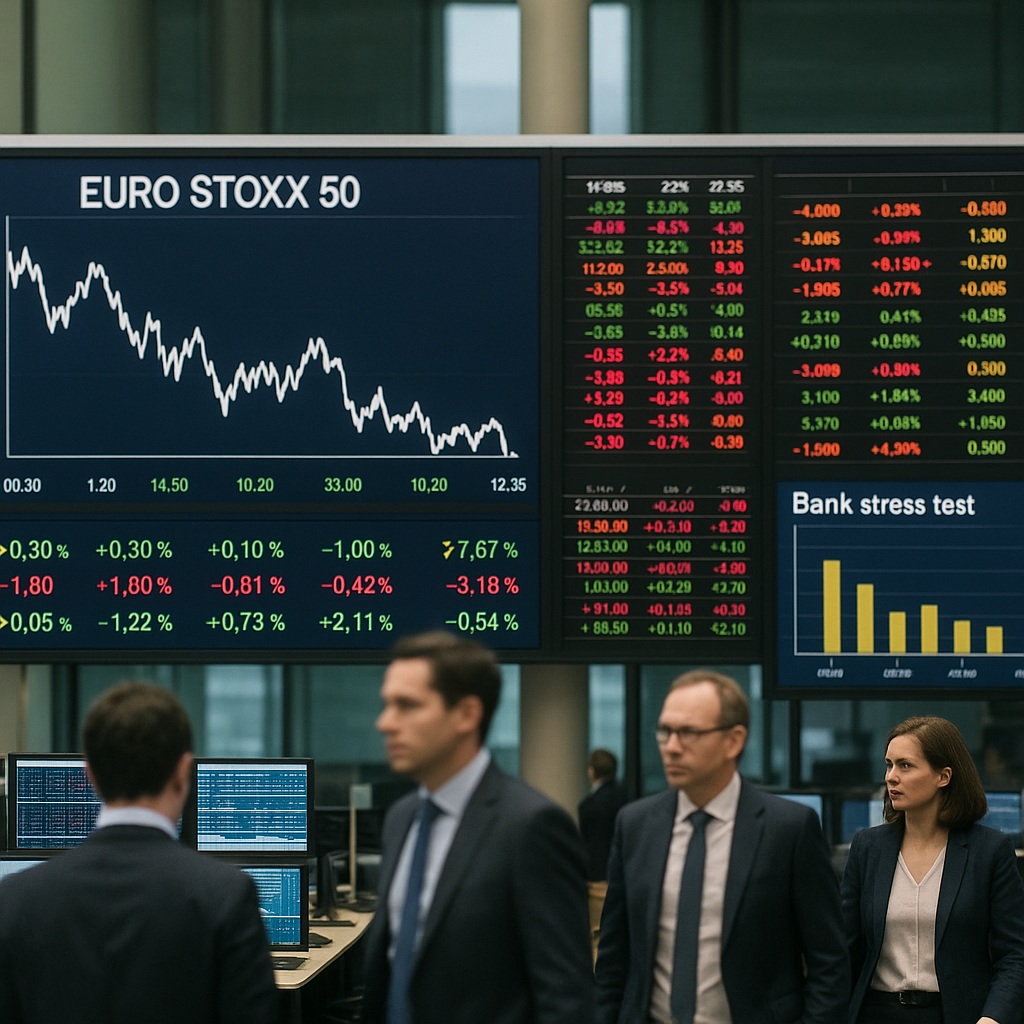
European stock markets enter the heart of December with a cautious tone, reflecting a convergence of global technology volatility, geopolitical unease, and renewed attention on the health of the banking sector. The mood is not one of panic, but of recalibration, as investors reassess risk at a moment when policy signals, earnings expectations, and regulatory stress tests intersect.
In London, the FTSE has struggled to find consistent upward momentum. Heavyweight sectors such as financials, energy, and consumer staples have offered limited support, while internationally exposed firms remain sensitive to shifts in global demand. The index’s softer performance stands in contrast to earlier optimism that easing inflation and stabilizing interest rates would provide a clearer runway for equities into the year’s final stretch.
Across continental Europe, the picture is mixed. Core markets show pockets of resilience, particularly among exporters tied to industrial automation, defense, and selective green technologies. Yet gains are uneven and often short-lived, as traders respond quickly to headlines from abroad. The European market narrative is increasingly shaped not just by domestic fundamentals, but by developments in global technology and geopolitics that can swiftly alter sentiment.
Technology remains a central risk vector. The global tech sector has undergone sharp repricing in recent months, driven by questions around artificial intelligence investment cycles, semiconductor supply chains, and regulatory oversight. European markets, while less tech-heavy than their US counterparts, are not immune. Valuations of software, chip-related, and digital infrastructure firms have been pulled into broader volatility, reinforcing a defensive bias among institutional investors.
At the same time, geopolitical uncertainty continues to cast a long shadow. Ongoing conflicts near Europe’s borders, fragile diplomatic negotiations, and shifting trade alignments have added layers of unpredictability. Energy security remains a strategic concern, influencing both corporate cost structures and government fiscal planning. These factors combine to limit risk appetite, particularly for sectors dependent on stable cross-border trade flows.
Against this backdrop, bank stress tests have returned to the center of market attention. Regulators’ assessments of how banks would cope with severe economic shocks are being closely watched by investors looking for reassurance on financial system resilience. While European banks enter this period with stronger capital buffers than in past crises, concerns linger about exposure to commercial real estate, sovereign debt dynamics, and the long-term impact of higher-for-longer interest rates.
Banking stocks have reflected this tension. On one hand, improved net interest margins and disciplined cost management have supported earnings. On the other, stress test scenarios highlighting potential losses under adverse conditions have capped enthusiasm. The result is a sector trading with heightened sensitivity to regulatory commentary and macroeconomic signals.
The FTSE’s composition amplifies these dynamics. With a significant weighting in financials and globally oriented companies, the index acts as a barometer of international confidence. When global tech falters or geopolitical risks rise, London-listed firms often feel the impact quickly. This has reinforced a cautious trading pattern, with investors favoring dividends and balance-sheet strength over growth narratives.
Market participants describe the current environment as one of selective engagement. Portfolio managers are not exiting equities wholesale, but they are adjusting exposures, trimming riskier positions, and favoring companies with clear cash flows and pricing power. Defensive sectors and infrastructure-linked assets have attracted renewed interest, while more speculative themes face tougher scrutiny.
Looking ahead, the immediate outlook for European equities remains finely balanced. Much depends on how global tech trends evolve, whether geopolitical tensions stabilize or escalate, and how convincingly banks can demonstrate resilience under regulatory stress scenarios. Central bank communication will also be critical, as investors seek clarity on the trajectory of monetary policy into the new year.
For now, the mid-December snapshot suggests a market taking stock rather than charging ahead. Lower levels in the FTSE and the renewed focus on bank stress tests are not signals of crisis, but reminders that risk remains present and unevenly distributed. As the year draws to a close, Europe’s financial markets appear steady, cautious, and acutely aware that global forces continue to shape local outcomes.


 The Tower Post