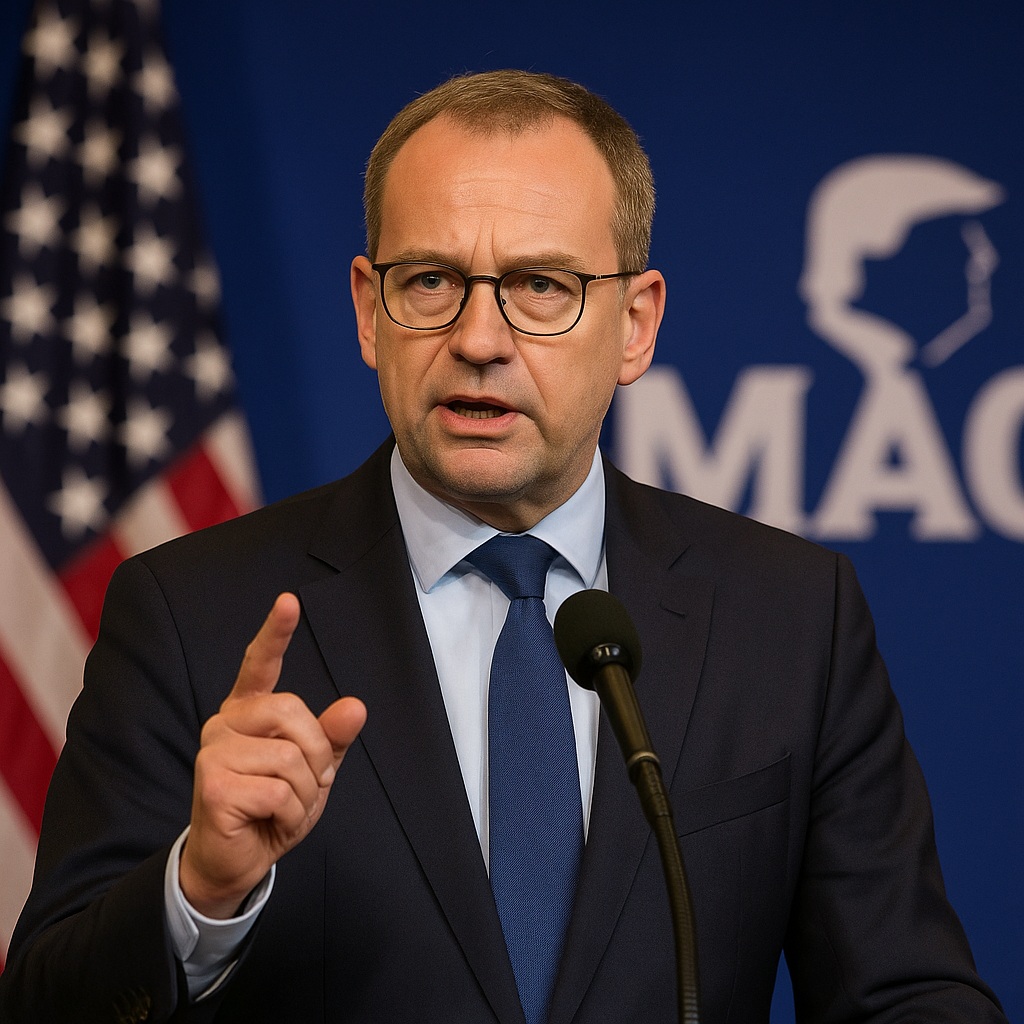
At a MAGA-aligned gathering in the United States, a far-right German lawmaker called for closer cooperation between nationalist movements on both sides of the Atlantic, highlighting the growing confidence and coordination of populist forces.

In a hotel ballroom draped in red, white, and blue, the slogans were unmistakably American. Yet among the speakers invoking national rebirth and cultural sovereignty was a voice from Europe. A far-right German lawmaker took the stage at a MAGA-aligned event in the United States this week, urging nationalist parties in Germany and America to see themselves not as isolated actors, but as part of a shared political project.
The appearance marked one of the clearest public appeals yet for a transatlantic alliance among nationalist movements. Speaking to an audience receptive to anti-establishment rhetoric, the German politician framed cooperation with U.S. conservatives as both natural and necessary in what he described as a global struggle against “liberal elites,” migration, and supranational governance.
“We face the same challenges,” he told the crowd, according to attendees and recordings circulated online. “Our nations, our borders, and our traditions are under pressure. The answer cannot stop at national lines.”
The remarks were met with applause, underscoring how ideas once confined to domestic political debates are increasingly circulating across borders. For years, far-right parties in Europe have admired the messaging and mobilization strategies of the American MAGA movement. This week’s event suggested that admiration is evolving into something more explicit: an effort to coordinate narratives, strategies, and legitimacy.
The German lawmaker, a prominent figure within his party, has long argued that Europe should move away from deeper integration and return power to nation-states. At home, his party has gained ground by campaigning against immigration, climate regulations, and what it calls ideological “re-education” promoted by mainstream institutions. Abroad, he now appears eager to position his movement as part of a broader international front.
The setting was carefully chosen. The MAGA-aligned conference has become a magnet for politicians and activists who see former President Donald Trump’s movement as a template for electoral success. Speakers routinely frame politics as a battle between “the people” and corrupt elites, a narrative that resonates strongly with European populist audiences.
Analysts say the symbolism of a German nationalist addressing such a gathering should not be underestimated. Germany’s postwar political culture has been shaped by a deep suspicion of nationalism, and far-right actors have long struggled to escape social and institutional isolation. By appearing on a U.S. stage alongside influential conservative figures, the lawmaker signaled confidence that the stigma surrounding his movement is fading, at least among like-minded audiences abroad.
“This is about normalization,” said one European political scientist who tracks populist networks. “When these politicians share platforms and praise each other, they reinforce the idea that their views are not fringe, but part of a legitimate global trend.”
Critics, however, warn that such cooperation could deepen polarization and undermine democratic norms. German opposition politicians were quick to condemn the appearance, arguing that it damages the country’s international reputation and trivializes the historical dangers of nationalism. Some also expressed concern that foreign political movements are increasingly influencing domestic debates through social media, conferences, and informal networks.
In Washington, reactions were more muted, but the event highlighted an ongoing tension within U.S. politics. While nationalist rhetoric energizes a loyal base, it also raises questions about America’s role in supporting democratic values abroad. The presence of a European far-right lawmaker at a MAGA-aligned gathering illustrated how domestic political movements can have international ripple effects.
Behind the speeches and slogans lies a practical motivation. Nationalist parties across Europe have watched the American right’s success in fundraising, media outreach, and grassroots mobilization with keen interest. Cooperation offers opportunities to exchange tactics, from social media campaigning to legal strategies for challenging election results or public health measures.
The German politician hinted at such exchanges in his remarks, praising American conservatives for their resilience and urging continued dialogue. He stopped short of announcing any formal alliance, but his language suggested an ambition to build lasting connections rather than one-off appearances.
Whether this transatlantic flirtation will translate into concrete cooperation remains uncertain. Legal systems, political cultures, and electoral rules differ sharply between the United States and Germany. Still, the symbolism of the moment is clear. Nationalist movements that once focused narrowly on their own borders are increasingly comfortable presenting themselves as part of a shared international cause.
As the applause faded and the conference moved on to its next speaker, the message lingered: populism is no longer just a local phenomenon. From Berlin to Washington, its advocates are testing the idea that nationalism, paradoxically, can thrive through global collaboration.

 The Tower Post