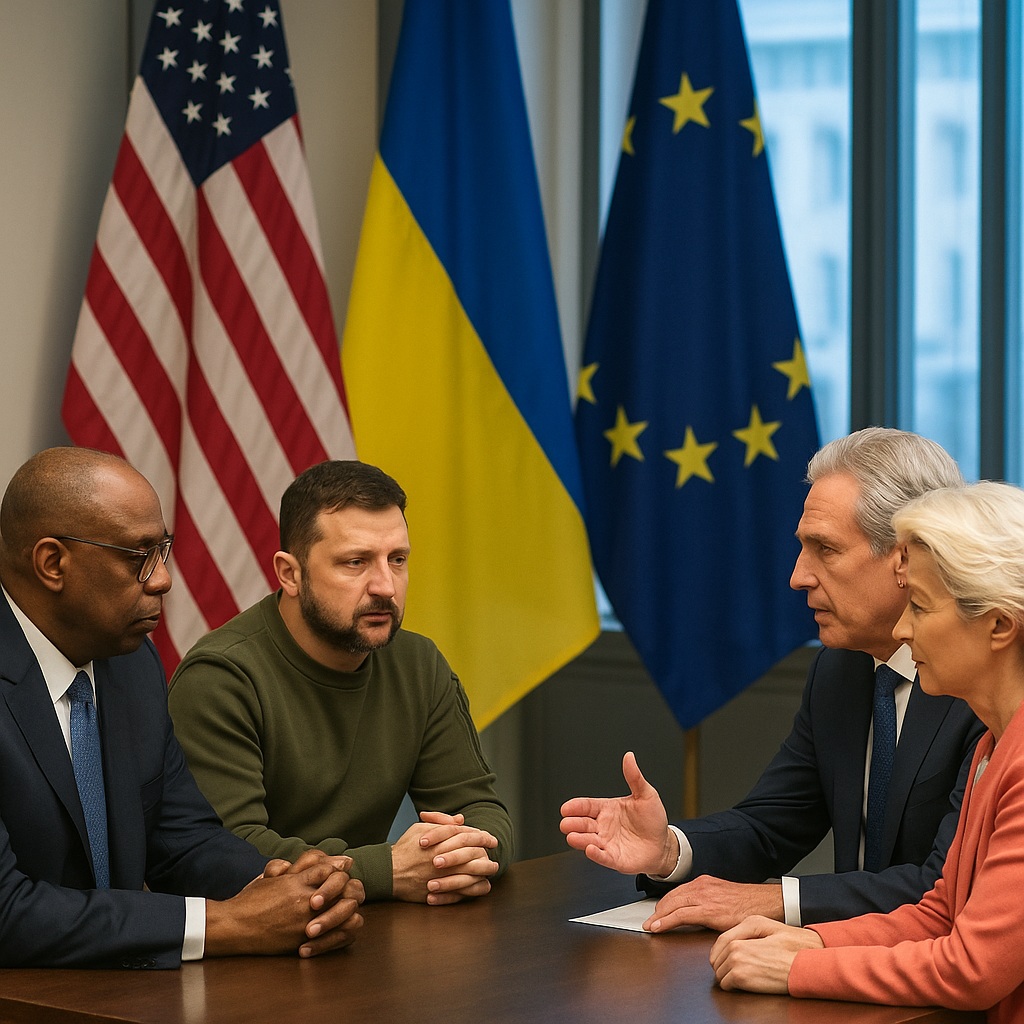
US envoy Steve Witkoff heads to talks with President Volodymyr Zelenskyy and European leaders, signaling renewed American engagement to shape the next stage of peace negotiations.
BERLIN — The United States is stepping up its diplomatic engagement on the war in Ukraine, dispatching a senior envoy to Europe for a series of high-level meetings aimed at reinforcing fragile peace efforts and aligning Western partners ahead of a broader international summit.
The White House has confirmed that Steve Witkoff, serving as a special US envoy, will meet Ukrainian President Volodymyr Zelenskyy as well as key European officials in Berlin this weekend. The visit comes at a moment when the conflict has entered a complex and uncertain phase, marked by battlefield stalemates, war fatigue among civilian populations, and increasing pressure on governments to explore viable paths toward de-escalation.
According to US officials, Witkoff’s mission is designed to “bolster ongoing peace discussions” and ensure that Washington, Kyiv, and European capitals remain closely coordinated. While expectations for a breakthrough remain cautious, the talks are seen as a critical step in shaping the agenda and tone of upcoming multilateral negotiations.
A DIPLOMATIC PUSH AMID STALEMATE
After years of intense fighting, neither side has achieved a decisive strategic victory. Front lines have shifted incrementally, but at enormous human and economic cost. In Ukraine, infrastructure damage and civilian displacement continue to weigh heavily, even as the country maintains its resistance with Western military and financial backing.
For the United States and its allies, the challenge has evolved from rapid crisis response to long-term conflict management. Officials in Washington increasingly emphasize diplomacy alongside deterrence, seeking to preserve Ukraine’s sovereignty while preventing further regional destabilization.
Witkoff’s meetings are expected to focus on confidence-building measures, humanitarian access, and the sequencing of potential ceasefire discussions. European diplomats say the goal is not to impose terms, but to clarify red lines, identify shared priorities, and reduce misunderstandings that could derail future talks.
EUROPE AT THE CENTER
Berlin’s role as host underscores Europe’s central position in the conflict’s diplomatic landscape. Germany, along with France and other major EU states, has acted as both a key supporter of Ukraine and a bridge between Washington and other international stakeholders.
European leaders face growing domestic debates over defense spending, energy security, and the long-term sustainability of support for Kyiv. At the same time, they remain acutely aware that any durable settlement will require European buy-in and security guarantees.
By convening meetings in Berlin, US officials are signaling respect for Europe’s leadership role while reinforcing transatlantic unity. “Coordination is essential,” said one European diplomat familiar with the preparations. “Disunity would only prolong the war.”
ZELENSKYY’S CALCULATED DIPLOMACY
For President Zelenskyy, the talks represent another balancing act. He must reassure allies of Ukraine’s commitment to democratic values and reform, while standing firm on core demands related to territorial integrity and security.
Ukrainian officials have repeatedly stressed that peace cannot come at the expense of sovereignty. Yet there is also recognition in Kyiv that diplomatic engagement is necessary to maintain international support and explore realistic off-ramps from the conflict.
Zelenskyy is expected to use the meetings to press for continued military assistance, economic aid, and a clear framework for postwar reconstruction—issues that remain closely tied to the trajectory of any peace process.
LOOKING AHEAD
The Berlin discussions are widely seen as preparatory rather than decisive. They are intended to set the stage for a larger summit where a broader group of international actors could engage more formally on the future of the conflict.
Still, the symbolism of the visit matters. By sending a high-profile envoy and publicly confirming the meetings, the White House is signaling that Ukraine remains a top foreign policy priority, even as global attention is pulled in multiple directions.
As winter deepens and the war grinds on, diplomacy is once again taking center stage—not as a substitute for security commitments, but as a parallel track aimed at preventing further escalation and, ultimately, ending the conflict.
Whether these efforts will translate into tangible progress remains uncertain. But for now, the message from Berlin is clear: the push for peace, however difficult, is far from abandoned.
 The Tower Post