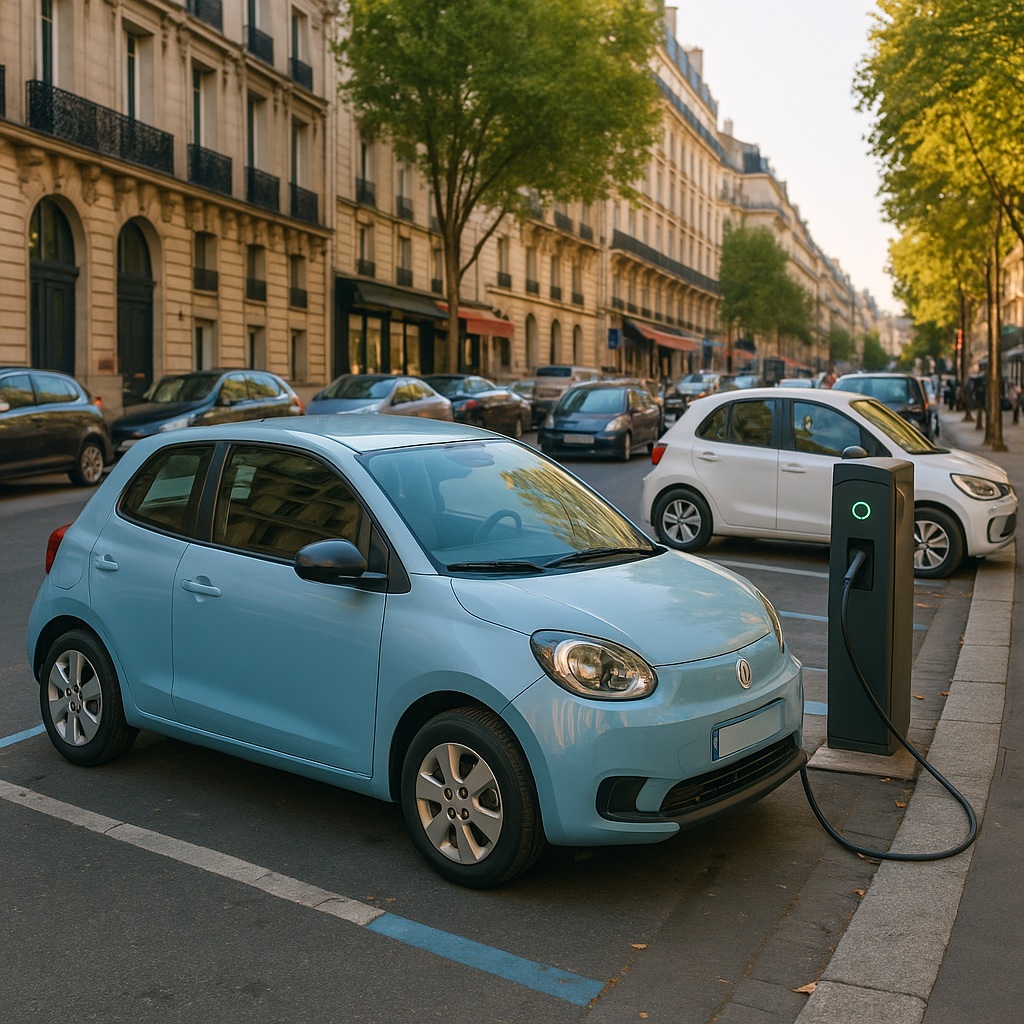
Brussels prepares incentives for European-built small electric vehicles, seeking to shore up the continent’s auto industry amid fierce global competition.

By mid-December, policy discussions in Brussels have taken a distinctly urban turn. European Union officials are advancing a package of incentives aimed at the smallest vehicles on the road—compact electric cars designed for dense cities and built within the EU. The idea is simple but politically charged: reward “Made in Europe” city cars with privileges that make daily life easier for drivers, while giving European manufacturers a fighting chance in an increasingly crowded global market.
At the heart of the plan are special parking and charging rights. Draft proposals circulating among member states envision dedicated on-street parking zones, preferential access to public charging points, and streamlined permitting for small electric vehicles assembled in Europe. In cities where space is scarce and congestion is a daily reality, these advantages could translate into real value for drivers and fleet operators alike.
The initiative comes at a delicate moment for the European automotive sector. Traditional carmakers are under pressure from multiple directions: slowing domestic demand, the high cost of transitioning to electric mobility, and intense competition from foreign manufacturers that have mastered the art of producing small, affordable electric cars at scale. European brands, by contrast, have often focused on larger, higher-margin vehicles, leaving the entry-level segment thinly served.
EU officials say the new measures are designed to close that gap without resorting to blunt protectionism. Rather than imposing tariffs or quotas, the bloc is looking to use urban policy levers—parking rules, charging access, and targeted subsidies—to tilt the market toward European-built vehicles that meet sustainability and safety standards. The approach reflects a broader shift in industrial policy, one that blends climate goals with strategic autonomy.
Small cars occupy a special place in Europe’s transport ecosystem. From Paris to Milan, from Barcelona to Berlin, narrow streets and limited parking have long favored compact vehicles. Electrification adds another layer to the equation. Battery-electric city cars promise lower emissions, reduced noise, and a smaller physical footprint, making them attractive tools for municipalities striving to meet climate targets while keeping traffic moving.
Under the emerging framework, eligibility would hinge on both size and origin. Vehicles would need to fall below defined thresholds for length and weight, and their final assembly would have to take place within the EU. Officials emphasize that the focus is not on excluding foreign brands per se, but on encouraging production investment inside Europe. Manufacturers that choose to build small electric models in European plants could benefit alongside established domestic players.
Financial incentives are also part of the discussion. Several member states are pushing for coordinated subsidies to lower purchase prices for qualifying vehicles, potentially complemented by tax breaks or reduced registration fees. While details remain under negotiation, the political momentum suggests a willingness to rethink how public money is used to shape the car market—especially in urban contexts where policy tools are most visible to citizens.
Critics warn of potential downsides. Consumer groups argue that tying benefits to place of manufacture could limit choice and slow innovation. Some city authorities worry about the administrative burden of enforcing new parking categories, while trade partners are watching closely for signs of discrimination. Brussels, for its part, insists that the measures will be compatible with international trade rules and grounded in environmental objectives.
Automakers are reacting with cautious optimism. European brands that have struggled to make small electric cars profitable see an opportunity to improve the business case. Dedicated parking and charging access could boost demand, while predictable subsidies might justify new investments in compact platforms. Suppliers, too, stand to gain if higher volumes revive local component production.
The proposal also intersects with broader debates about the future of urban mobility. Many cities are reducing space for private cars altogether, favoring public transport, cycling, and walking. In that context, officials frame the initiative not as a carte blanche for more vehicles, but as a way to ensure that the cars that remain are cleaner, smaller, and more compatible with dense urban life.
As discussions continue toward the end of the year, the contours of the plan are becoming clearer, even if final decisions are still pending. What is evident is a renewed willingness in Brussels to use everyday urban experiences—finding a parking spot, plugging in a charger—as tools of industrial strategy. For drivers, the promise is convenience. For manufacturers, it is a signal that Europe intends to compete not just at the top end of the market, but on the streets where mobility is lived day by day.




 The Tower Post