
Mass demonstrations in Budapest expose public fury over alleged abuse in state-run facilities and a widening crisis of trust in government oversight.
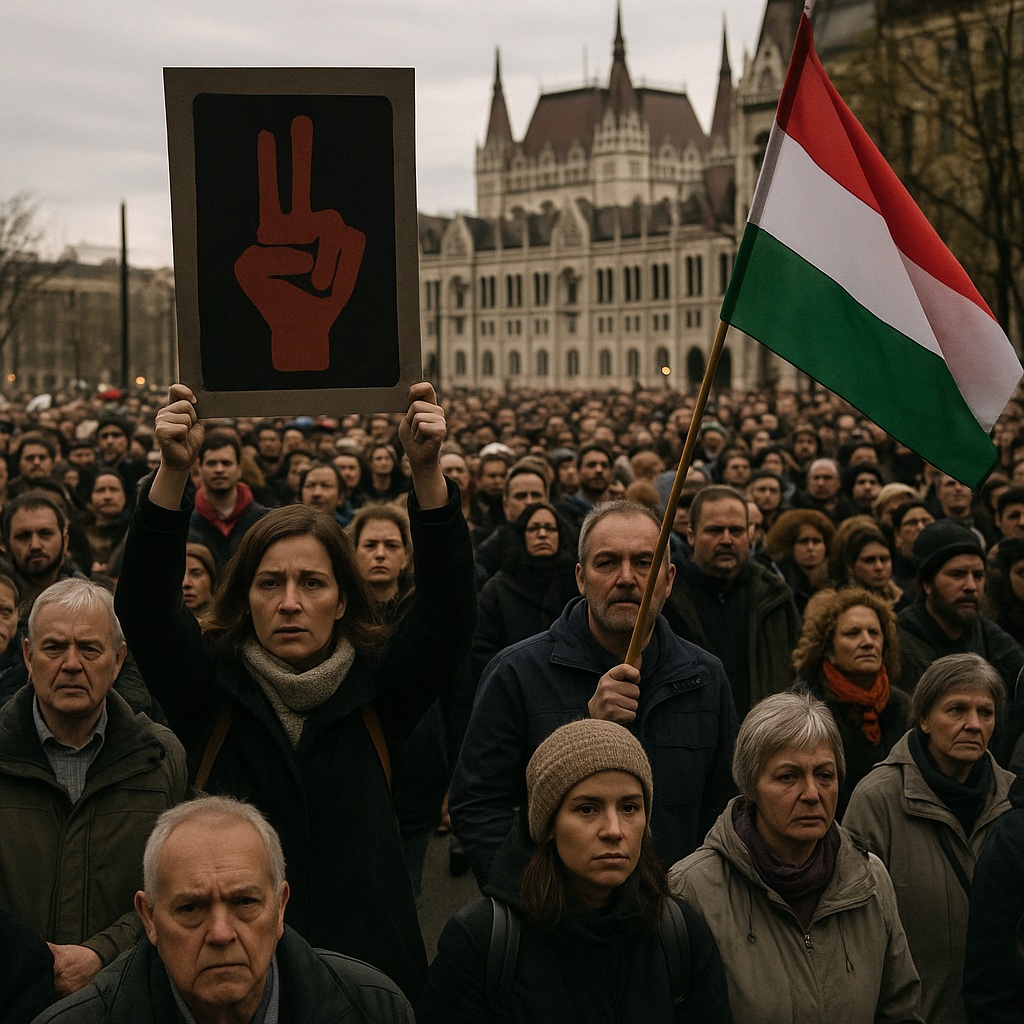
Budapest has become the epicenter of a rare and sustained wave of public anger, as thousands of people have poured into the streets to protest allegations of child abuse within Hungary’s state-run care system. The rallies, drawing families, students, social workers, and pensioners alike, have transformed central squares into forums of grief and defiance, with protesters demanding accountability from institutions long considered untouchable.
The demonstrations were sparked by revelations that children placed in residential care facilities were allegedly subjected to abuse and neglect over extended periods, despite repeated warnings and internal complaints. As details emerged through investigative reporting and whistleblower accounts, public outrage intensified, fueling protests that have continued to grow in size and urgency.
Marchers carried photographs, candles, and handwritten signs calling for justice for victims whose voices, they say, were ignored by authorities entrusted with their protection. While the rallies remained largely peaceful, the mood was unmistakably tense. Chants echoed through the capital, accusing officials of systemic failure and moral negligence.
At the heart of the scandal are allegations that abuse was not only perpetrated by individuals within the system but was also concealed through administrative inertia and political pressure. Former employees from child welfare institutions have described a culture in which complaints were discouraged and reputations prioritized over safeguarding children. Several have spoken publicly for the first time, saying they felt compelled to break their silence after years of frustration.
The government has acknowledged the public anger but has been careful in its wording. Senior officials have promised internal reviews and disciplinary measures, insisting that the protection of minors remains a national priority. Critics, however, argue that these statements fall short of the transparency and independent scrutiny required to restore trust.
For many protesters, the issue extends beyond individual cases of abuse. They see the scandal as symptomatic of deeper structural problems within Hungary’s social services, including chronic underfunding, staff shortages, and politicized oversight. Social workers attending the demonstrations described overwhelming caseloads and limited resources, conditions they say create an environment where vulnerable children can easily fall through the cracks.
Human rights organizations have echoed these concerns, calling for an independent investigation led by bodies outside direct government control. They warn that without systemic reform, any disciplinary actions will amount to little more than symbolic gestures. International child protection advocates have also taken notice, urging Hungarian authorities to align their practices with broader European standards of accountability and transparency.
The protests have also taken on a generational dimension. Young Hungarians, many of whom grew up amid years of political polarization, appear at the forefront of the movement. University students and youth organizations have organized marches and vigils, using social media to coordinate actions and share testimonies from survivors of institutional care.
Survivors themselves have played a crucial role in shaping the narrative of the protests. In public statements and interviews, some have recounted experiences of fear, isolation, and betrayal within the care system. Their stories, often delivered with visible emotion, have resonated deeply with the public, transforming abstract policy failures into human realities.
Opposition parties have seized upon the moment to criticize the ruling establishment, accusing it of fostering a climate in which accountability is weakened by political loyalty. Parliamentary debates have grown increasingly heated, with calls for resignations and the establishment of a parliamentary inquiry. Government supporters counter that the issue is being exploited for political gain, cautioning against what they describe as premature judgments.
Despite these divisions, the protests have revealed a rare point of convergence across Hungary’s polarized society: a shared conviction that children must be protected, regardless of political affiliation. Many demonstrators emphasized that their presence was not about party politics but about moral responsibility and the basic duty of the state to safeguard its most vulnerable citizens.
As night falls over Budapest, candles continue to flicker in public squares, symbolizing both mourning and resolve. The rallies show little sign of fading, suggesting that the scandal has tapped into a deeper well of frustration with governance and social justice in Hungary.
Whether the protests will lead to lasting reform remains uncertain. What is clear is that the allegations have shattered complacency and forced a national conversation that can no longer be deferred. For the families affected and the children whose lives were altered within institutional walls, the demand is simple yet profound: acknowledgment, accountability, and change.




 The Tower Post