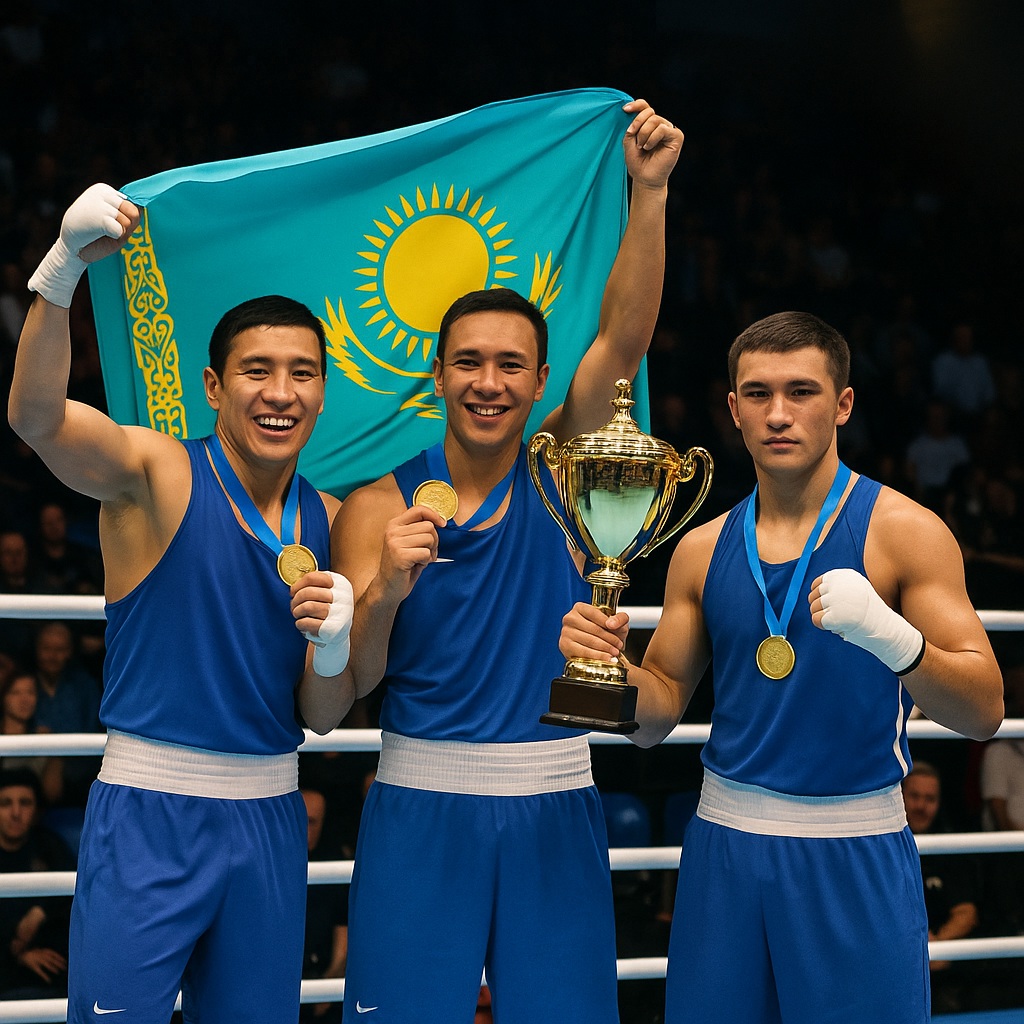
Seven gold medals at the World Boxing Championships underline Central Asia’s rise and reflect Europe’s widening sporting identity.
Liverpool’s docks and concert halls are more accustomed to music legends than uppercuts, but this winter the city became the epicenter of global boxing. Inside a packed arena reverberating with chants in dozens of languages, Kazakhstan emerged as the defining force of the World Boxing Championships, collecting seven gold medals and leaving a clear imprint on a tournament that showcased the full breadth of Europe’s sporting diversity.
The scale of Kazakhstan’s success was striking not only for the number of titles secured, but for the manner in which they were won. From the lighter divisions, where speed and precision ruled, to the heavier classes defined by power and composure, Kazakh boxers displayed a consistency that set them apart from the field. Their performances combined disciplined footwork, tactical patience, and an ability to control bouts under pressure—hallmarks of a system that has been steadily refined over the past decade.
For Kazakhstan, a nation that straddles Europe and Asia both geographically and culturally, the Liverpool championships represented more than a medal haul. They confirmed the country’s status as one of boxing’s modern powerhouses, capable of dominating on neutral ground against traditional giants from across the continent. Coaches and officials from rival teams acknowledged that the Kazakh squad arrived not merely to compete, but to dictate the rhythm of the tournament.
Yet the story of Liverpool was not solely about one flag rising above the rest. The championships unfolded as a vivid illustration of Europe’s sporting mosaic, with medalists hailing from Western Europe, the Balkans, the Caucasus, and Central Asia. Established boxing nations shared the podium with emerging programs, reinforcing the idea that elite performance is no longer confined to a handful of traditional centers.
In this sense, Kazakhstan’s triumph fitted seamlessly into a broader European narrative. The continent’s boxing scene has evolved into a network of diverse styles and philosophies, shaped by different histories and training cultures. Eastern European schools continue to emphasize technical fundamentals and ring intelligence, while Western programs increasingly integrate sports science and data-driven preparation. Central Asian teams, led by Kazakhstan, blend elements of both, producing fighters who are adaptable and resilient.
Liverpool provided the perfect backdrop for this convergence. The city’s long-standing connection to working-class sport and its multicultural identity resonated with the spirit of the championships. Fans filled the stands wearing scarves and jackets emblazoned with national colors, but rivalries remained largely respectful. Each final bout felt less like a clash of opposites and more like a conversation between styles.
Kazakhstan’s path to seven golds was built on depth as much as star power. Rather than relying on a single standout athlete, the team fielded contenders across multiple divisions, each supported by a coaching staff known for meticulous preparation. Analysts noted the fighters’ ability to adjust mid-bout, responding calmly to changes in tempo or strategy. This adaptability proved decisive in close contests, particularly in the later rounds when fatigue and nerves often take their toll.
The success also carried symbolic weight for the country’s sporting ambitions. Boxing has long been a source of national pride in Kazakhstan, but recent investments in youth development and international exposure appear to be paying dividends. Young athletes watching from home saw not just victories, but a blueprint for sustained excellence—one rooted in structure, education, and a clear competitive identity.
Across Europe, reactions to the championships reflected a mixture of admiration and motivation. Federations from neighboring regions spoke of the need to learn from Kazakhstan’s model, while reaffirming their own commitment to nurturing homegrown talent. The prevailing sentiment was not one of resignation, but of renewed competition. If anything, the Liverpool results raised the bar, challenging others to respond with innovation and long-term planning.
The tournament also highlighted the role of major international events in fostering cultural exchange. In corridors and warm-up areas, athletes shared training tips and stories, bridging linguistic and political divides through a shared passion. For many observers, this human dimension was as significant as the medal table, underscoring sport’s capacity to unite without erasing difference.
As the championships drew to a close, the image that lingered was of Kazakh boxers standing atop the podium, medals catching the light, faces marked by exhaustion and quiet satisfaction. Their dominance did not overshadow the event; it framed it. By setting such a high standard, they contributed to a competition that felt genuinely global and unmistakably European in its diversity.
Looking ahead, the implications of Liverpool will extend well beyond this winter. For Kazakhstan, the challenge will be to sustain momentum and manage expectations as attention intensifies. For Europe as a whole, the championships served as a reminder that sporting excellence thrives on variety. Different paths can lead to the same destination, and the health of the game depends on welcoming them all.
In that sense, the World Boxing Championships in Liverpool offered a snapshot of boxing’s present and a hint of its future. A Central Asian nation stood at the summit, a European city played host, and a continent revealed itself not as a single tradition, but as a vibrant collection of voices—each contributing to the enduring appeal of the sport.



 The Tower Post