
Leadership transition at the athleticwear giant lifts investor confidence and ripples through the global fashion business
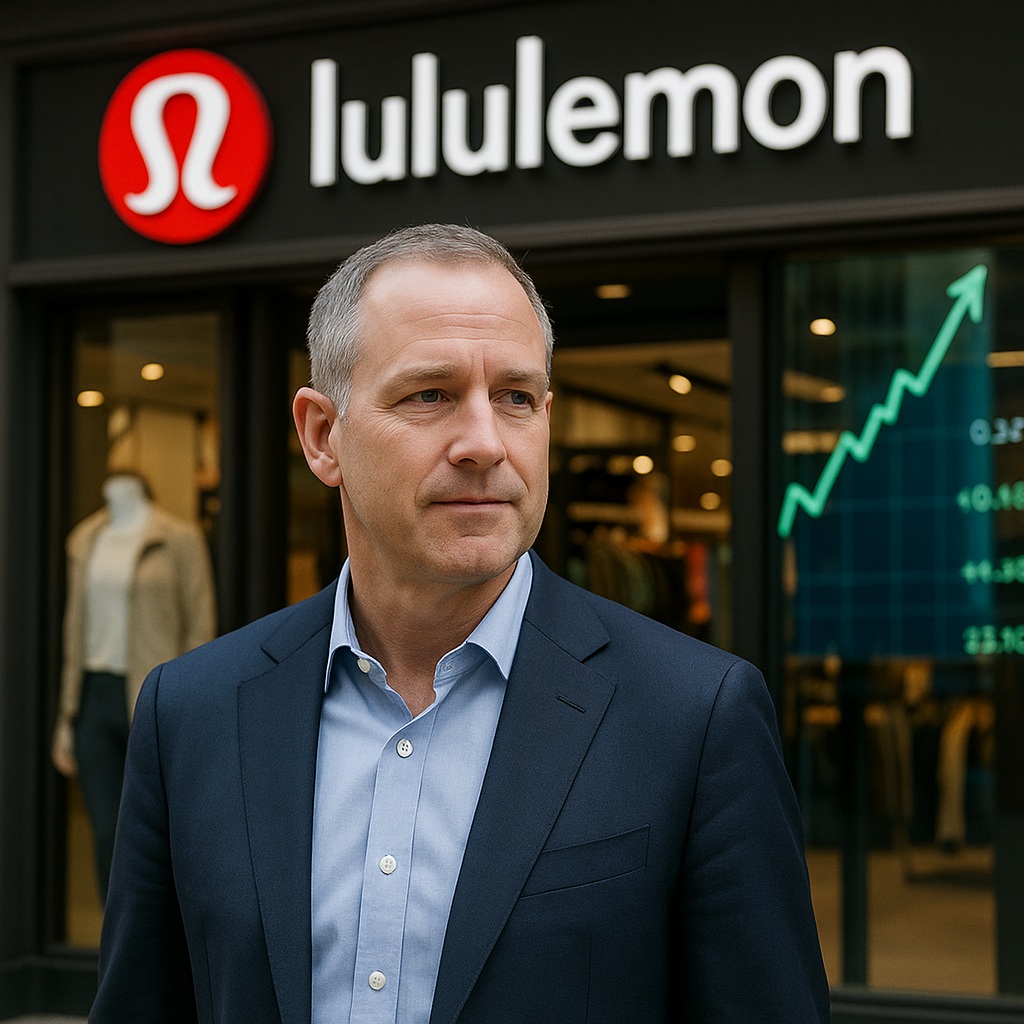
The athleticwear industry woke up to a jolt of optimism as Lululemon Athletica confirmed that its chief executive officer will step down, setting off a rally that lifted the company’s shares by roughly ten percent in early trading. The move, announced before markets opened, immediately reshaped sentiment around one of the most influential brands in modern fashion, underscoring how leadership transitions can act as catalysts not only for stock performance but for broader industry confidence.
For years, Lululemon has occupied a rare position at the intersection of fashion, performance, and lifestyle branding. Its evolution from a yoga-focused niche label into a global athleisure powerhouse has been closely tied to executive leadership that emphasized disciplined growth, community-driven marketing, and premium positioning. News of the CEO’s planned departure could have triggered uncertainty. Instead, investors responded with enthusiasm, reading the transition as a chance for renewal rather than disruption.
Market analysts pointed to the clarity of the succession process as a key factor behind the positive reaction. The company signaled continuity in strategy while leaving room for fresh perspectives at the top. In a sector grappling with uneven consumer demand, rising costs, and rapid shifts in digital commerce, stability paired with the promise of innovation can be a powerful combination.
The immediate stock surge reflects more than confidence in a single executive change. It highlights Lululemon’s status as a bellwether for the athletic and fashion markets. When the brand shows resilience, it often lifts sentiment across the segment, influencing competitors, suppliers, and even unrelated apparel companies whose fortunes are tied to discretionary spending trends.
From a fashion business standpoint, the leadership change arrives at a pivotal moment. Athleisure, once considered a pandemic-era boom category, has matured into a core wardrobe staple. Consumers now expect performance apparel that transitions seamlessly from workouts to everyday life, placing pressure on brands to balance innovation with restraint. Lululemon’s next CEO will inherit a company that is profitable and globally recognized, but also one facing heightened competition from legacy sportswear giants and digitally native upstarts.
Industry executives watching the transition note that leadership changes at major brands often signal broader shifts. A new CEO can accelerate international expansion, recalibrate pricing strategies, or rethink sustainability commitments. Each of these decisions carries implications far beyond a single balance sheet, shaping supplier relationships and influencing how fashion capital flows.
The market’s upbeat response suggests investors believe Lululemon is well positioned to navigate these choices. The company has spent recent years strengthening its direct-to-consumer channels, investing in experiential retail, and expanding its men’s and lifestyle categories. Those initiatives have helped cushion the impact of slower growth in some regions and reinforced the brand’s premium image.
In conversations across trading floors and fashion offices alike, the share price jump was interpreted as a vote of confidence in governance as much as in brand equity. Clear communication around leadership transitions can reduce uncertainty, a valuable currency in volatile markets. By signaling an orderly handover, Lululemon avoided the speculation that often weighs on stocks when executive departures come as a surprise.
The ripple effects were visible beyond the company itself. Shares of other athletic and lifestyle brands ticked higher, and fashion-focused investors cited the news as evidence that the sector still holds upside potential. After a period marked by cautious forecasts and uneven earnings, any sign of renewed momentum carries outsized psychological impact.
For employees and partners, the transition marks both an end and a beginning. The outgoing CEO leaves behind a legacy of scaling a brand without diluting its identity, a challenge that has tripped up many fast-growing fashion companies. The incoming leadership will be tasked with preserving that culture while adapting to new realities, from evolving consumer values to advances in materials and supply-chain technology.
As the story continues to unfold, one thing is clear: leadership matters. In fashion, where brand perception can shift overnight, the people at the top play an outsized role in steering narrative and performance. Lululemon’s share price reaction serves as a reminder that markets often reward companies that treat change not as a risk to be hidden, but as an opportunity to be managed with confidence.
Looking ahead, investors and industry insiders will watch closely for signals about strategic priorities under new leadership. Whether the focus turns to deeper international penetration, product diversification, or sharper sustainability goals, the decisions made in the coming months will shape how the brand competes in an increasingly crowded landscape.
For now, the surge in Lululemon’s stock offers a snapshot of market psychology in late 2025: cautious, but ready to believe in well-executed change. In a fashion business defined by cycles and reinvention, the company’s leadership transition has become a case study in how uncertainty, when handled transparently, can translate into renewed confidence rather than retreat.




 The Tower Post