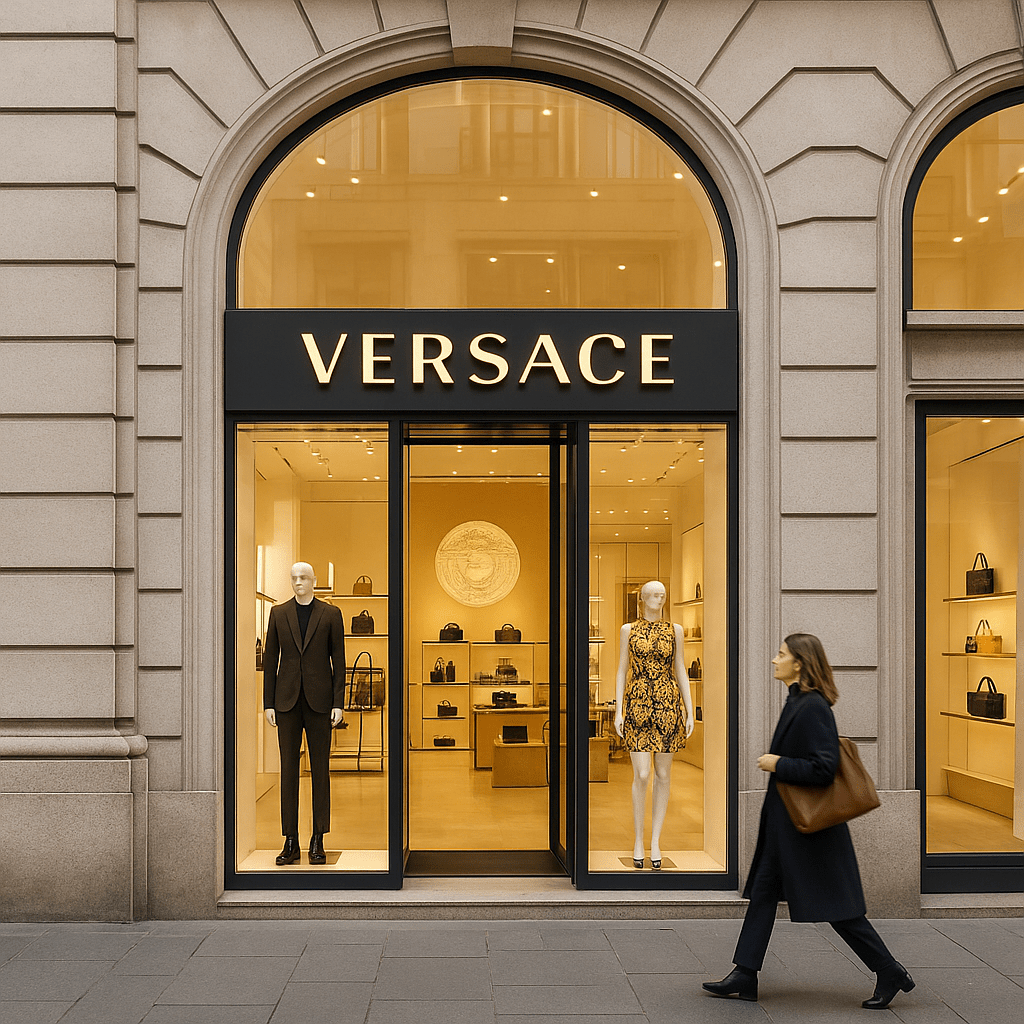
The U.S. luxury group closes a $1.375 billion exit from Versace, signaling a strategic pivot as the global fashion industry recalibrates for a new cycle.
Capri Holdings has completed one of the most consequential transactions in its recent history, finalizing the divestiture of Versace in a deal valued at approximately $1.375 billion. The move marks a decisive reshaping of the U.S.-based fashion group’s luxury portfolio and underscores a broader strategic reset underway across the global high-end apparel sector.
The transaction closes a chapter that began when Capri, then operating under the Michael Kors banner, acquired Versace with ambitions of building a multi-brand luxury powerhouse. For several years, Versace stood alongside Michael Kors and Jimmy Choo as pillars of a group designed to rival Europe’s dominant conglomerates. The latest divestiture, however, reflects a changing assessment of scale, focus, and value creation in an increasingly volatile luxury market.
Industry analysts view the sale as both pragmatic and symbolic. Pragmatic, because it delivers a substantial inflow of capital at a time when fashion groups are under pressure to strengthen balance sheets and streamline operations. Symbolic, because it acknowledges the limits of the American luxury conglomerate model when measured against the entrenched ecosystems of European rivals.
For Capri Holdings, the exit from Versace is less a retreat than a recalibration. Executives have emphasized that the group is sharpening its focus on core brands with clearer growth trajectories and stronger operating synergies. By shedding a capital-intensive couture-driven house like Versace, Capri reduces exposure to the high fixed costs and creative volatility that often accompany heritage luxury brands.
The deal also comes at a moment of reassessment for the global luxury industry. After years of post-pandemic expansion, demand has softened in key markets, particularly in aspirational segments. Consumers are becoming more selective, tourist flows are uneven, and wholesale channels remain under strain. In this context, portfolio discipline has emerged as a defining theme among fashion groups seeking resilience rather than sheer scale.
Versace, for its part, leaves Capri with renewed autonomy under its new ownership structure. The Italian house remains one of the most recognizable names in global fashion, synonymous with bold aesthetics, celebrity culture, and a distinctly Mediterranean vision of luxury. Freed from the financial and strategic priorities of a U.S. parent company, Versace is expected to pursue a more focused long-term strategy centered on brand elevation, product coherence, and selective expansion.
Observers note that Versace’s journey under Capri delivered mixed results. While the brand gained operational rigor and expanded its accessories and menswear categories, it also faced challenges in translating cultural relevance into consistent financial performance. The tension between creative ambition and commercial discipline proved difficult to resolve within a group balancing mass-luxury and high-luxury identities.
From a financial perspective, the divestiture strengthens Capri’s flexibility. Proceeds from the transaction are expected to be used to reduce debt, invest in brand development, and reinforce digital and direct-to-consumer capabilities. These priorities align with a broader industry shift toward leaner structures and tighter control over distribution, as brands seek to protect margins in an uncertain macroeconomic environment.
The sale also reignites debate about the future of American-owned luxury houses. While the United States has produced globally successful fashion brands, sustaining European-style heritage luxury over generations has proven elusive. The Versace divestiture suggests a recognition that ownership structures deeply rooted in European industrial and cultural frameworks may be better suited to steward such maisons over the long term.
For Capri, the focus now returns to redefining its identity. Michael Kors remains the group’s flagship, with a renewed emphasis on elevating brand perception while preserving scale. Jimmy Choo continues to operate as a niche luxury player, benefiting from disciplined growth and strong recognition in footwear. Together, these brands form a more concentrated portfolio, one that management believes can deliver sustainable performance without overstretching creative or financial resources.
Market reaction to the completed transaction has been cautiously positive. Investors and analysts alike have highlighted the clarity it brings to Capri’s strategic narrative. Rather than chasing the ambition of becoming a sprawling luxury conglomerate, the group appears committed to refining what it already does well, while maintaining optionality for future moves.
Beyond Capri, the Versace divestiture adds to a growing list of portfolio reshuffles reshaping the fashion landscape. As capital becomes more expensive and consumer behavior more unpredictable, ownership models are evolving. Strategic buyers, private investors, and family-backed entities are increasingly active, seeking assets with strong brand equity that can be patiently developed outside the glare of quarterly earnings pressure.
In this environment, the Versace transaction stands as a case study in strategic timing. By exiting at a moment when the brand retains global visibility and cultural cachet, Capri secures value while avoiding the risks associated with prolonged turnaround efforts. For Versace, the transition opens a new phase, one defined by renewed focus and the opportunity to reinforce its status as a singular luxury house.
As the year draws to a close, the completed divestiture underscores a central reality of the current fashion cycle: growth is no longer just about expansion, but about precision. For Capri Holdings, letting go of Versace may ultimately prove as significant as acquiring it once was—a reminder that in luxury, restraint can be as strategic as ambition.



 The Tower Post