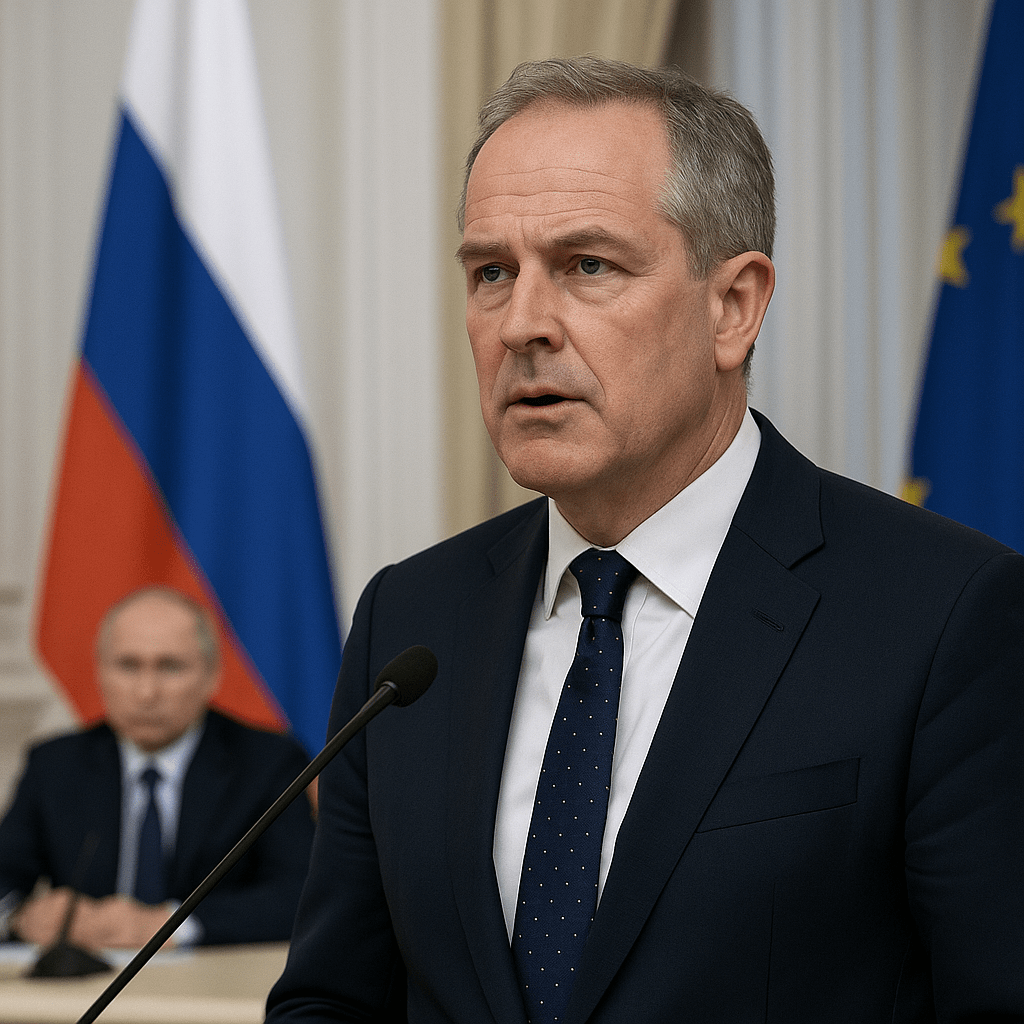
Britain’s intelligence chief pledges sustained pressure on the Kremlin while Ukraine–Russia negotiations reach a pivotal moment, signaling Western resolve to deter further aggression.
As fragile peace talks between Ukraine and Russia edge into a decisive phase, Britain’s intelligence chief has delivered a stark message to the Kremlin: pressure will not ease, and the West’s vigilance will not waver. Speaking against the backdrop of intensive diplomatic engagement, the head of MI6 said Moscow should harbor no illusions that dialogue would blunt the consequences of continued aggression.
The warning came as negotiators reconvened for a crucial continuation of talks, a moment many diplomats describe as a narrow opening after months of grinding conflict and deepening mistrust. While the discussions remain confidential, the atmosphere surrounding them has been anything but quiet. Intelligence chiefs, defense officials, and political leaders across Europe and North America have used the moment to reaffirm their positions, keenly aware that any settlement—or collapse—will reshape the continent’s security landscape.
The MI6 chief, newly installed and eager to set a firm tone, framed the talks not as a concession but as a test. “Dialogue does not absolve responsibility,” the chief said in prepared remarks shared with allied counterparts. “The Kremlin’s choices are watched closely, and consequences will follow actions, not words.” The message was unmistakably aimed at President Vladimir Putin, whose calculus, Western officials believe, remains rooted in endurance and pressure.
Behind the scenes, intelligence assessments continue to paint a sobering picture. Analysts in London and allied capitals say Russia’s military posture shows little sign of a strategic retreat, even as diplomats search for common ground. Cyber activity, disinformation campaigns, and covert influence operations remain active, reinforcing concerns that Moscow views talks as one track among many rather than a singular path to peace.
For Britain, the stance reflects a broader recalibration of intelligence priorities shaped by years of confrontation with Russia. MI6 has expanded its focus on countering hostile state activity, working in concert with domestic agencies and international partners. Officials emphasize that intelligence-sharing with Ukraine and NATO allies has become routine, faster, and more integrated than at any point in recent memory.
The West’s message, officials say, is designed to be consistent: support for Ukraine’s sovereignty is unwavering, and negotiations will not be used as cover for renewed pressure or territorial consolidation. “Peace requires credibility,” said one senior European diplomat familiar with the talks. “That credibility depends on deterrence as much as diplomacy.”
In Washington, Brussels, and other capitals, the MI6 chief’s comments were read as reassurance rather than escalation. Western leaders are keen to avoid the perception that intelligence agencies are driving policy, yet they rely heavily on their assessments to navigate the narrow corridor between compromise and coercion. The British intervention underscored that intelligence services see themselves as guardians of that balance, ensuring talks proceed without naivety.
The Kremlin’s response was predictably muted. Russian officials reiterated long-standing positions about security guarantees and regional stability, while state media dismissed Western warnings as “theatrics.” Yet analysts caution against taking the public posture at face value. Historically, Moscow has paid close attention to signals from intelligence chiefs, particularly when delivered in coordination with allies.
As negotiations continue, the stakes are evident. A breakthrough could halt the bloodshed and begin a painstaking process of reconstruction and reconciliation. Failure, however, risks entrenching divisions and prolonging a conflict that has already redrawn Europe’s political and economic map.
For the MI6 chief, the moment is defining. By coupling guarded optimism about talks with an unambiguous warning to Putin, Britain’s top spy has sought to project steadiness and resolve. The message to Moscow is that the door to peace remains open—but it is flanked by watchful eyes and firm red lines.
Whether those signals will influence decisions in the Kremlin remains uncertain. What is clear is that, as talks press on, the intelligence war continues in parallel, shaping perceptions, informing leaders, and reminding all sides that peace, if it comes, will be secured not just at the negotiating table, but through sustained vigilance long after the headlines fade.



 The Tower Post