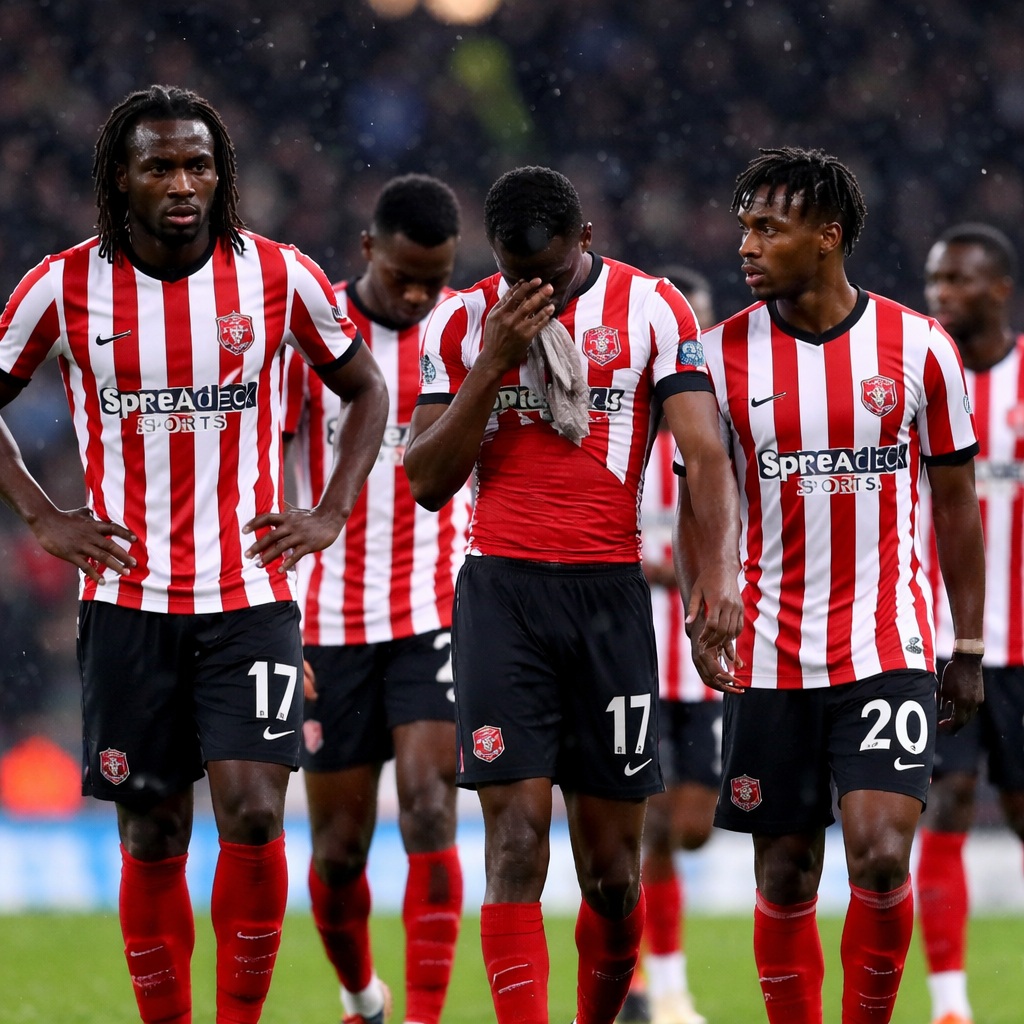
Six departures expose the strain on European clubs as continental tournaments collide with the winter calendar
As winter settles across the English football calendar, Sunderland find themselves grappling with an absence crisis that cuts deeper than most. The release of six first-team players to the African Cup of Nations has left the Wearside club stretched thin, reshaping match-day plans and intensifying a debate that has long simmered beneath the surface of the European game.
The departures come at a moment when rhythm matters. Fixtures stack up, recovery windows shrink, and squads rely on continuity to grind out results. For Sunderland, the timing has been particularly unforgiving. Key figures across multiple positions have departed simultaneously, leaving head coach and analysts scrambling to plug gaps with youth promotions and tactical compromises.
Within the club’s training ground, the mood has been one of pride mixed with apprehension. Representing one’s country remains a career pinnacle, and Sunderland have publicly celebrated the call-ups. Yet privately, staff acknowledge the competitive toll. Losing six players at once is not merely a test of depth; it is a disruption to chemistry painstakingly built over months.
On the pitch, the effects are immediate. Rotations become necessities rather than choices, and partnerships—especially in central areas—are broken apart. Sunderland’s recent performances have reflected this imbalance, with moments of promise undermined by lapses that betray unfamiliar line-ups. Supporters have noticed the difference, too, as the team’s intensity ebbs during decisive phases of matches.
The situation highlights a broader strain across Europe. As the African Cup of Nations overlaps with the winter period, clubs in England, France, Spain, and beyond face similar dilemmas. Holiday schedules, congested fixtures, and commercial commitments collide with the legitimate international ambitions of players. For clubs operating without the financial cushion of elite squads, the impact is amplified.
Sunderland’s predicament has become a case study. Unlike wealthier rivals, the club cannot simply dip into the transfer market or lean on an army of internationals-in-waiting. Every absence is felt. Young players are thrust into pressure situations, veterans are asked to shoulder extra minutes, and the margin for error narrows considerably.
Players remaining with the squad have spoken of the challenge. Training sessions take on a sharper edge, with coaches emphasizing adaptability and resilience. There is also an unspoken understanding that results during this period may hinge less on fluency and more on grit. In the stands, patience is being tested, though many fans acknowledge the circumstances with a sense of realism.
Beyond Sunderland, the debate over calendar alignment has regained urgency. Club executives argue that releasing players during critical domestic stretches undermines competitive balance. African federations counter that the tournament’s timing reflects climatic realities and historical precedence. Caught in the middle are players, whose loyalties to club and country are both deeply personal and professionally binding.
For African football, the tournament remains a showcase of identity and excellence, drawing global audiences and celebrating a continent’s talent. For European clubs, it is an annual reckoning with globalization’s costs. Sunderland’s losses underscore how interconnected the modern game has become—and how unevenly those connections are felt.
As the season grinds on, Sunderland’s response will define their winter narrative. Survival through this period depends on tactical pragmatism, squad unity, and perhaps a measure of fortune. When the six return, they will bring experience sharpened on an international stage. Until then, the club must endure.
The coming weeks will not decide a season outright, but they will leave a mark. For Sunderland, the African Cup of Nations is more than a distant tournament; it is a present reality, shaping performances, conversations, and expectations. In the broader European landscape, it serves as a reminder that football’s global calendar remains a puzzle still searching for its fairest fit.


 The Tower Post