
In Brussels, the European Commission president calls for strategic autonomy as shifting geopolitics and uncertainty over allies force the EU to rethink its defence future.

BRUSSELS — Europe can no longer assume that its security will be guaranteed by others. That was the clear message delivered by European Commission President Ursula von der Leyen, as she urged the European Union to take full responsibility for its own defence at a moment of profound geopolitical change.
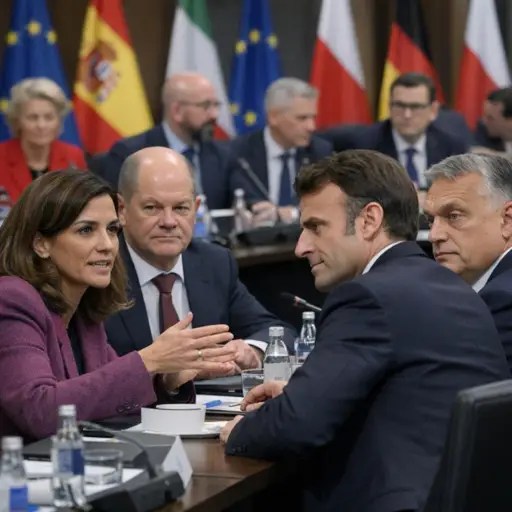
Speaking in Brussels amid renewed debate over defence spending, military readiness, and Europe’s place in an increasingly fragmented world order, von der Leyen stressed that the EU must accelerate efforts toward what she described as “strategic autonomy” in security and defence. The concept, long discussed in European policy circles, has taken on new urgency as global alliances face strain and long-standing assumptions are questioned.
“For decades, Europe relied on a security architecture shaped by others,” von der Leyen said, according to officials familiar with her remarks. “That era is ending. Europe must now take charge of its own security, with the responsibility and credibility that this requires.”
Her comments reflect a broader shift in tone from EU leadership, moving away from cautious incrementalism toward a more assertive vision of Europe as a security actor in its own right. While NATO remains central to European defence, von der Leyen made clear that reliance alone is no longer sufficient in a world marked by unpredictable power politics, technological disruption, and regional instability.
The debate comes at a sensitive moment. Across Europe, governments are grappling with rising defence costs, competing budgetary pressures, and public concerns over economic uncertainty. Yet conflict on the EU’s eastern flank, instability in neighboring regions, and growing global tensions have underscored how interconnected European security has become with world events.
Von der Leyen argued that Europe’s economic strength must be matched by military and industrial capability. “We are an economic giant,” she said, “but we must also be able to protect ourselves.” That, she added, requires coordinated investment, a stronger European defence industrial base, and closer cooperation among member states.
Over recent years, the EU has taken steps in that direction, including joint procurement initiatives, increased funding for defence research, and closer coordination through common defence frameworks. Still, progress has often been slowed by national interests, fragmented markets, and differing threat perceptions across the bloc.
Analysts note that von der Leyen’s message is as much political as strategic. With uncertainty surrounding future transatlantic commitments and shifting priorities among traditional allies, European leaders are increasingly aware that credibility depends on their ability to act independently if necessary.
“Strategic autonomy is no longer an abstract idea,” said one senior EU diplomat. “It is becoming a practical requirement. The question is whether member states are ready to align their budgets and policies with that reality.”
Von der Leyen emphasized that taking responsibility for Europe’s security does not mean turning inward or weakening alliances. Instead, she framed a stronger European defence posture as a contribution to global stability and to collective security arrangements.
“A Europe that can defend itself is a stronger partner,” she said, suggesting that greater European capability would help rebalance international relationships rather than undermine them.
Significant challenges remain. Defence procurement is still largely national, interoperability gaps persist among European armed forces, and public opinion remains divided on higher military spending. Smaller member states worry about being sidelined, while larger ones debate how far integration should go.
Yet the direction of travel appears clear. As the year draws to a close and leaders look ahead to a more uncertain global landscape, von der Leyen’s remarks signal that security will remain at the top of the European agenda. The era of assuming protection from outside powers is fading, replaced by a growing consensus that Europe must increasingly stand on its own.
Whether the European Union can turn that consensus into concrete capabilities will shape its role on the world stage in the years ahead.


 The Tower Post