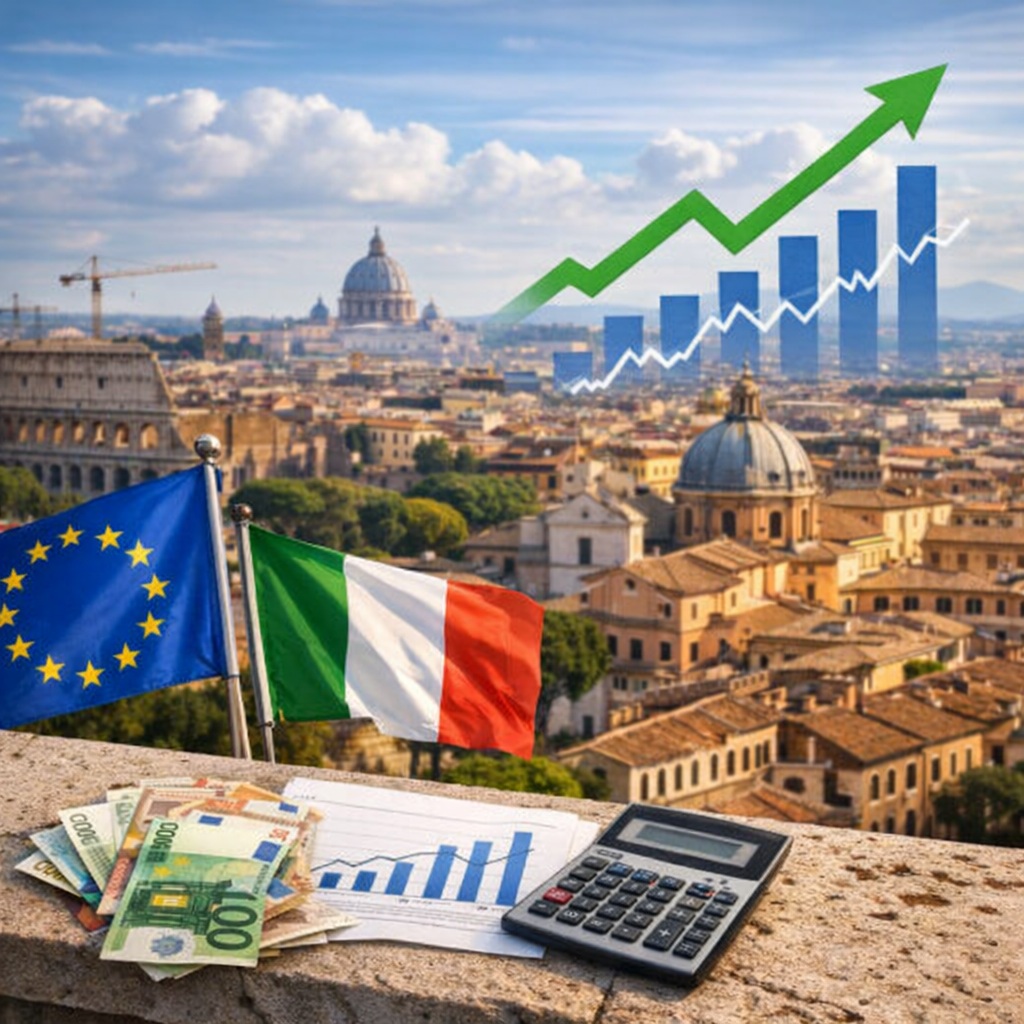
As inflation cools and borrowing costs ease, forecasts point to a familiar pattern: nimble, tourism‑ and services‑heavy economies outpacing the eurozone core, while headline figures still hide deep structural divides.
The eurozone heads into the closing weeks of the year with cautious optimism. Inflation has eased from its post‑pandemic peaks, energy prices are no longer the existential threat they once were, and the era of relentless monetary tightening is drawing to a close. Yet Europe’s economic pulse remains uneven. Growth is returning, but slowly, and the question animating policymakers, investors and businesses alike is deceptively simple: which European economy will grow fastest in 2026–27?
The latest round of forecasts from European institutions and major economic research bodies suggest the answer depends on how growth is measured and where one looks. Across the euro area as a whole, expansion is expected to remain moderate rather than spectacular. But beneath that calm surface, a familiar pattern is emerging: small, flexible economies built around services, tourism and EU‑funded investment are set to outpace the bloc’s industrial heavyweights, where ageing populations, high debt and structural adjustment continue to weigh on momentum.
A fragile but improving baseline
At the aggregate level, the outlook is one of gradual improvement rather than a sharp rebound. As borrowing costs ease and real wages recover, domestic demand is forecast to strengthen across much of the eurozone. Public investment, particularly projects financed through the EU’s recovery funds, continues to support activity, even as governments begin to consolidate their finances after years of crisis spending.
Still, the scars of high inflation linger. Households remain cautious, companies are refinancing debt accumulated at much higher interest rates, and global trade is less predictable than it was before the pandemic. The eurozone’s growth race, therefore, is not about breakneck expansion, but about which economies can consistently outperform an otherwise subdued average.
Small economies, big numbers
Among euro‑area members, Malta stands out most clearly in the growth tables. Forecasts suggest it will remain one of the fastest‑growing economies through 2026–27, supported by tourism, cross‑border business services and investment. Its size amplifies the impact of individual projects: a strong tourist season, a wave of digital‑services investment or port upgrades can quickly translate into above‑average GDP growth.
But Malta’s advantages also highlight the risks facing fast‑growing small economies. Labour shortages, infrastructure bottlenecks and environmental constraints are increasingly visible. Growth remains robust, but capacity limits mean it is unlikely to accelerate indefinitely.
Spain: the large economy that still runs fast
Among the eurozone’s major economies, Spain continues to stand apart. After emerging from the pandemic with surprising momentum, Spain is expected to maintain above‑average growth through 2026–27, even as its pace cools from recent highs. The drivers are familiar but powerful: resilient private consumption, a labour market supported by immigration, and sustained investment linked to EU recovery funds.
Spain’s growth model has also become more balanced than in the past. Banks are better capitalised, the housing market is more regulated, and public investment is more closely tied to productivity‑enhancing projects. While external demand remains uncertain, domestic activity is forecast to keep Spain ahead of France, Germany and Italy in growth rankings.
The convergence economies
Eastern and southern European member states that are still “catching up” with the EU income average are also expected to post relatively strong growth. Croatia is a notable example. With tourism, construction and EU‑financed infrastructure projects continuing to support activity, its economy is forecast to grow faster than the eurozone average over the next two years.
These convergence stories share common features: high investment rates, rising services exports and strong links to EU funding. They also share vulnerabilities. Labour shortages, narrow production bases and sensitivity to external shocks mean their growth advantage can evaporate quickly if conditions deteriorate.
Portugal and Greece fall into a similar category. Both are expected to grow steadily, supported by investment and tourism, though at a pace that gradually converges toward the eurozone norm as recovery‑fund spending peaks and capacity constraints tighten.
The Ireland exception
No discussion of European growth rankings is complete without Ireland, whose GDP figures are famously distorted by the activities of multinational corporations. Headline growth rates can swing dramatically depending on accounting flows, intellectual‑property relocations and export timing, often bearing little resemblance to conditions experienced by households or small businesses.
When adjusted measures of domestic demand are used instead, Ireland still looks like a strong performer, but not an outlier. For analysts seeking to understand where growth is genuinely felt on the ground, these alternative indicators matter far more than the headline GDP numbers that dominate league tables.
Why the core lags behind
Germany, France and Italy illustrate why the fastest growth is likely to remain concentrated outside the eurozone core. While forecasts point to a recovery driven by domestic demand and public investment, particularly in infrastructure and defence, growth in these large economies is expected to remain modest.
Structural factors explain much of this restraint. Ageing populations, industrial restructuring and high public‑debt burdens limit how fast output can expand. Even when the core recovers, it does so at a pace that sets a relatively low benchmark for smaller, more dynamic economies to beat.
What could change the picture
Forecasts for 2026–27 rest on several critical assumptions. The first is that interest rates continue to ease without reigniting inflation, allowing credit conditions to improve. The second is a stable external environment: trade tensions, geopolitical shocks or renewed energy volatility could quickly derail growth, particularly in open economies.
The third is capacity. The economies expected to grow fastest are also those most likely to run into physical and labour constraints. Without productivity gains, their growth advantage may narrow sooner than forecasts suggest.
The bottom line
Europe’s growth race in 2026–27 is less about a single champion than about structural differences within the bloc. Small, service‑oriented economies such as Malta are set to top the tables, while Spain remains the standout among the large eurozone members. Convergence economies continue to close the gap, supported by investment and EU funds, even as the core recovers at a slower pace.
In a continent shaped by demographic headwinds and geopolitical uncertainty, the real measure of success will not be who grows fastest in any given year, but who converts this period of easing inflation and lower rates into lasting productivity and resilience.



 The Tower Post