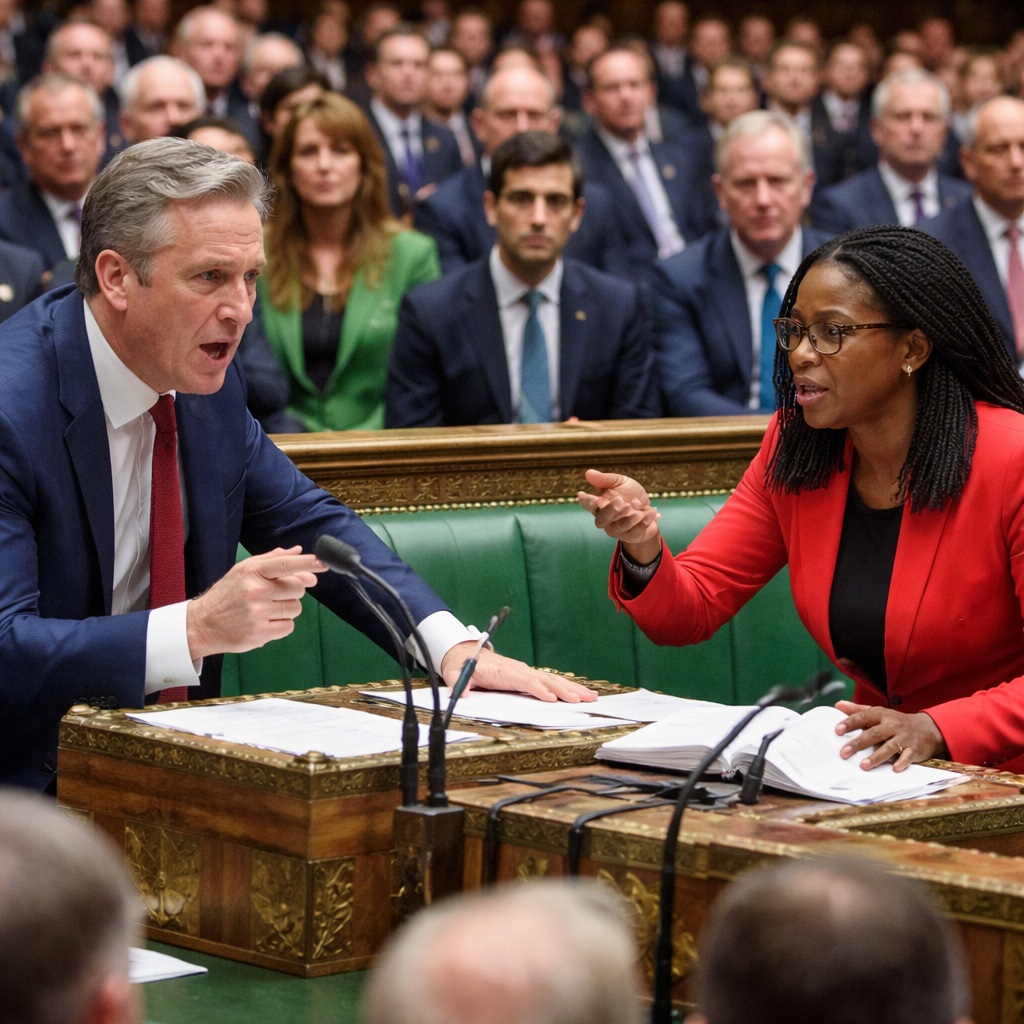
A bruising end-of-year showdown in the Commons exposes political fault lines as Labour stumbles in Wales and the Conservatives sharpen their attack.
The chamber was loud even before the first question was asked. MPs crowded the green benches, voices overlapping, anticipation hanging thick in the air. The final Prime Minister’s Questions of the year delivered exactly what Westminster had come to expect: a sharp, theatrical clash between Prime Minister Keir Starmer and Conservative leader Kemi Badenoch, each keen to frame the political narrative heading into the winter recess.
Starmer entered the session under visible pressure. While Labour continues to dominate national polling, recent surveys pointing to weakening support in Wales have unsettled the party’s leadership. Badenoch, emboldened by those figures, wasted little time in turning regional fragility into a central line of attack.
Rising to her feet amid cheers from the Conservative benches, Badenoch accused the Prime Minister of taking traditional Labour voters for granted. She pointed to economic stagnation in post-industrial communities and warned that Labour’s promises were “thinning the closer they get to power exercised, not just power imagined.” Her tone was measured but unrelenting, a contrast to the sharper edges she has shown earlier in the year.
Starmer responded with controlled irritation. He dismissed the Welsh polling as a “snapshot, not a verdict,” and accused the Conservatives of opportunism after years of neglect. The Prime Minister leaned heavily on recent legislative wins, citing reforms on workers’ rights and public investment as evidence of delivery rather than rhetoric. “This government,” he said, “is focused on rebuilding trust where your party left only damage.”
The exchange set the rhythm for the rest of the session. Questions on the cost of living, NHS waiting lists, and public sector pay cuts were punctuated by jeers and laughter, as both leaders played to their respective benches. Starmer sought to project calm competence, repeatedly returning to the language of stability and long-term planning. Badenoch, by contrast, framed herself as the voice of accountability, pressing the Prime Minister on timelines and unmet expectations.
Wales loomed large throughout. Several MPs from across the House raised concerns about economic confidence in the region, giving further oxygen to a narrative Labour would rather have avoided at year’s end. Starmer acknowledged frustrations but insisted that “change takes more than one budget cycle,” a remark that drew groans from opposition MPs but nods from his own side.
Behind the noise, the session revealed deeper strategic tensions. For Starmer, the challenge is maintaining a broad coalition while governing cautiously, aware that missteps could erode support in areas once considered secure. For Badenoch, PMQs offered a platform to redefine Conservative opposition as sharper, younger, and less apologetic about ideological contrast.
As the Speaker brought proceedings to a close, there was a sense of performance completed rather than resolution achieved. MPs filtered out, conversations spilling into corridors, already reframing the exchanges for media clips and constituency newsletters.
The final PMQs of the year did not alter parliamentary arithmetic, but it crystallised the mood. A government defending its record under growing scrutiny. An opposition sensing openings, however narrow. And a political landscape heading into the new year with momentum still contested, particularly beyond Westminster’s walls.
If this session was meant to draw a line under the year, it did so in bold ink. The arguments aired will not fade over the recess. They will return, sharpened, when Parliament reconvenes and the country’s patience with its leaders is tested once again.



 The Tower Post