
Debate intensifies over lending €210 billion to Ukraine as security fears ripple across Europe
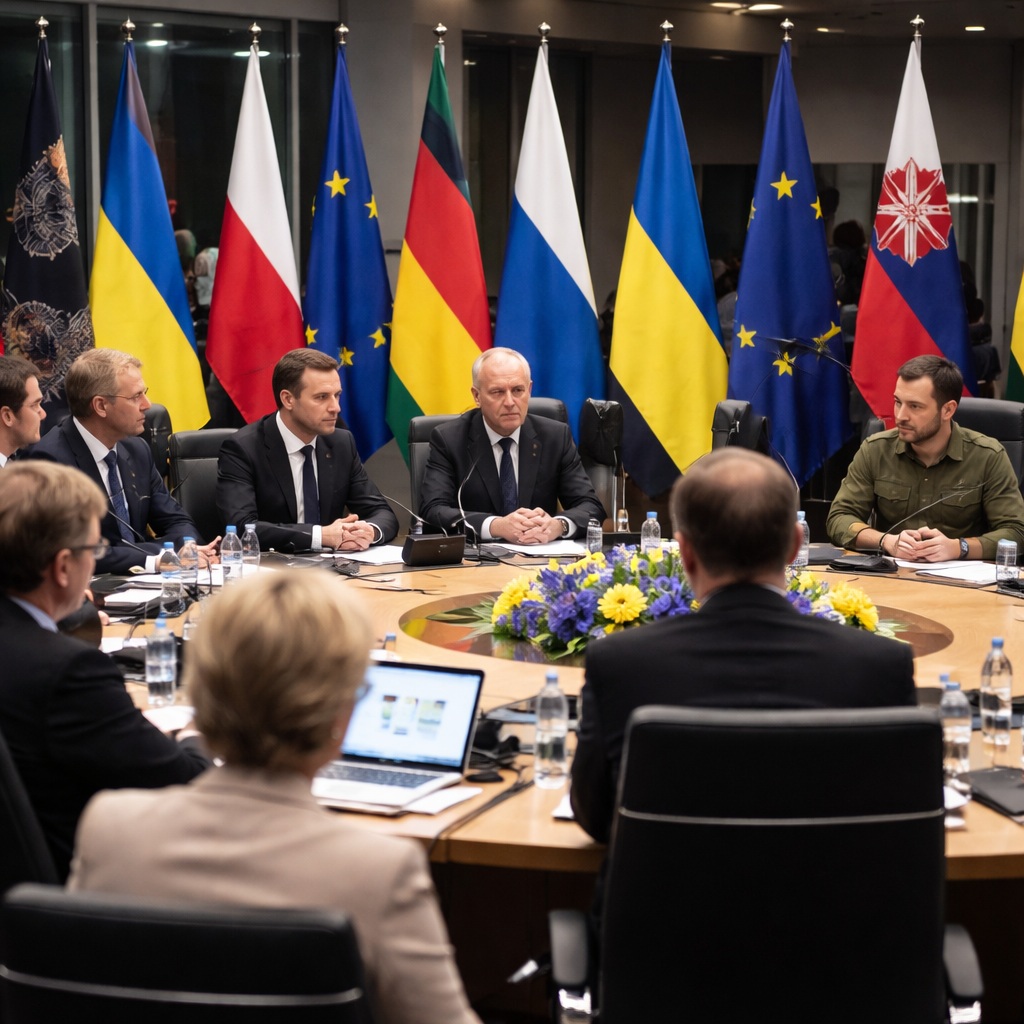
By late December, European Union leaders find themselves confronting one of the most consequential financial and political decisions of the war in Ukraine: whether to mobilize frozen Russian central bank assets to sustain Kyiv’s defense and stabilize its economy. The proposal on the table would see roughly €210 billion—mostly immobilized in European financial institutions—used as collateral or lent directly to Ukraine, transforming a legal and moral debate into an urgent test of European resolve.
The issue has moved rapidly from the margins of policy discussion to the center of high-level summits. With the conflict grinding on and Western support under strain, advocates argue that the frozen assets represent both a practical solution and a principled response to aggression. Critics counter that the move could undermine financial norms, provoke retaliation, and expose the bloc to legal risk.
At stake is not only Ukraine’s ability to continue resisting Russia’s invasion, but also the credibility of Europe’s security architecture. “If we hesitate now, we invite greater danger later,” a senior diplomat from Eastern Europe said privately, echoing a sentiment increasingly voiced by governments closest to the conflict.
Most of the frozen funds belong to Russia’s central bank and were immobilized after the invasion under sweeping sanctions. Until now, the EU has limited itself to using the interest generated by these assets, channeling the proceeds toward Ukrainian support. The current proposal goes much further, effectively leveraging the principal itself—without formally confiscating it—to provide Ukraine with substantial, predictable financing.
Supporters frame the plan as a loan mechanism rather than outright seizure. Under this model, Ukraine would receive funds backed by the frozen assets, with repayment deferred and potentially linked to future reparations from Russia. Proponents say this approach balances urgency with legal caution, allowing Europe to act decisively while maintaining a veneer of compliance with international law.
Poland has emerged as one of the most forceful advocates. Its leaders argue that Ukraine’s fight is inseparable from Europe’s own security, warning that failure to act decisively would embolden Moscow and expose frontline states to greater risk. “This is not charity,” a Polish official said. “It is self-defense.”
The argument resonates across the Baltic states and parts of Scandinavia, where memories of Soviet domination remain vivid and the threat from Russia is perceived as existential. For these countries, the debate is less about legal theory than about deterrence. They fear that a faltering Ukraine would shift the strategic balance eastward, forcing Europe into a far costlier confrontation later.
Yet resistance remains strong among several large EU economies. Concerns center on the sanctity of sovereign assets and the precedent that using them could set. Central bankers and legal experts warn that even a carefully structured loan could be challenged in international courts, potentially exposing European institutions to claims and eroding trust in the eurozone as a safe haven for reserves.
There is also anxiety about retaliation. Russia has hinted that it could seize Western assets within its reach or escalate economic pressure in response. While Moscow’s leverage has diminished under sanctions, skeptics argue that Europe should not underestimate its capacity for disruption, particularly in energy markets and cyber domains.
Behind the scenes, the debate reflects deeper divisions over Europe’s role in a prolonged conflict. Some governments worry about “Ukraine fatigue” among voters facing high living costs and political uncertainty. They fear that a dramatic financial move could become a lightning rod for populist backlash, especially if framed as risking taxpayers’ money or financial stability.
Others counter that the political cost of inaction would be higher. Allowing Ukraine to falter for lack of funds, they argue, would signal weakness and disunity at a moment when Europe’s strategic autonomy is already under scrutiny. The credibility of sanctions themselves is also at stake: frozen assets that sit idle risk being seen as symbolic rather than consequential.
The United States and other allies are watching closely. While Washington has explored similar mechanisms, Europe holds the bulk of the immobilized Russian reserves, making its decision pivotal. A coordinated transatlantic approach could amplify the impact and share the political risk, but a fragmented response would expose divisions that Moscow could exploit.
As discussions intensify, technical details loom large. How would the loan be structured? Which institution would manage it? What safeguards would protect the EU budget and financial system? These questions are being hammered out by finance ministers and legal teams, even as political leaders weigh the broader implications.
For Ukraine, the stakes could not be higher. The funds would help cover military procurement, support critical infrastructure, and stabilize public finances battered by years of war. Ukrainian officials have stressed that predictable, long-term financing is essential to planning both defense and reconstruction.
The decision now confronting EU leaders is emblematic of the war’s evolution. What began as an emergency response has become a long-term strategic contest, demanding tools and choices once considered unthinkable. Using frozen Russian assets would mark a profound shift, signaling that Europe is willing to redefine financial norms in the face of aggression.
As the year draws to a close, the question is no longer whether the debate will continue, but whether Europe can translate its rhetoric into action. For countries like Poland, the answer carries immediate security implications. For the EU as a whole, it will shape the continent’s role in a world where economic power and military conflict are increasingly intertwined.

 The Tower Post