
Brussels signals a reset in relations with Pristina, aiming to stabilize the Western Balkans and reassert the bloc’s influence in a fragile region.
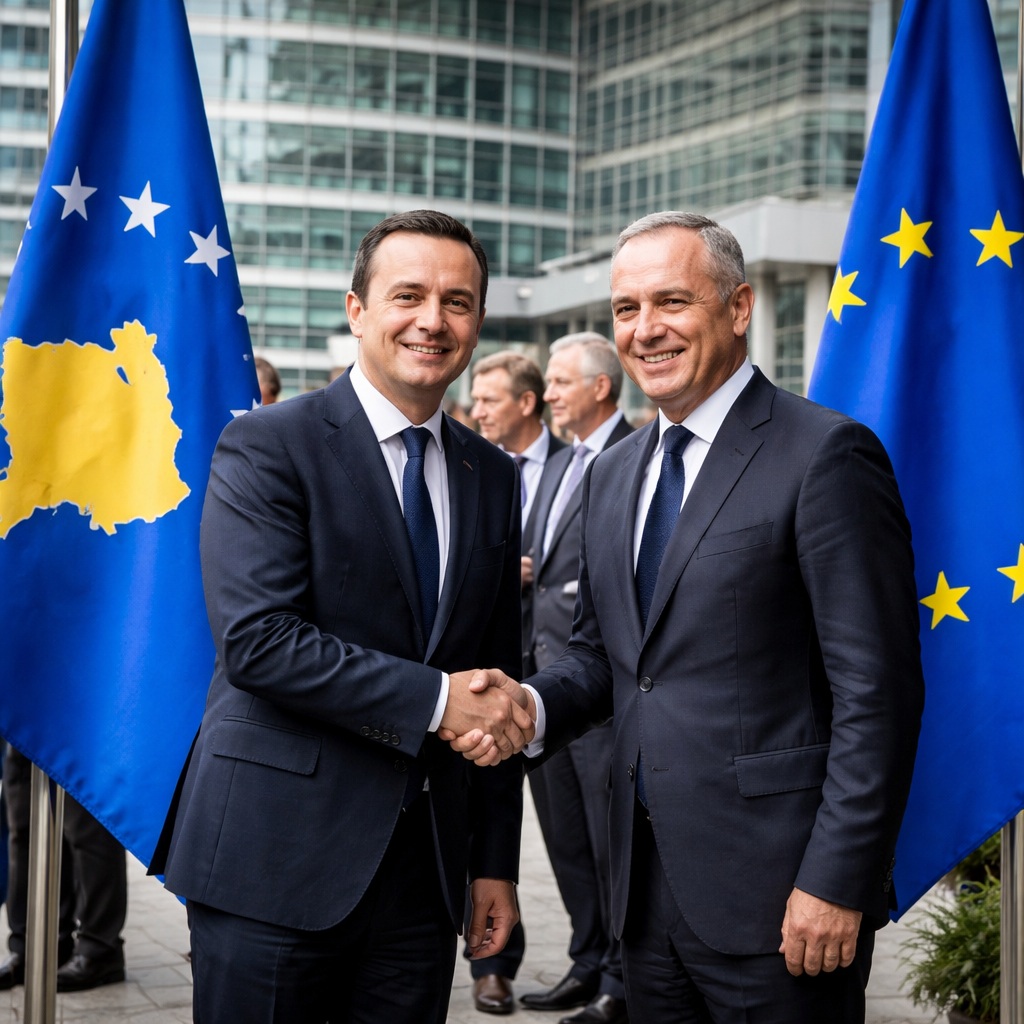
The European Union is preparing to lift the restrictive measures imposed on Kosovo in the aftermath of the political crisis that erupted two years ago, a move that will also unlock delayed financial assistance and mark a significant shift in Brussels’ approach to the Western Balkans. The decision, expected to take effect imminently, reflects growing confidence within EU institutions that conditions on the ground have improved enough to justify a gradual normalization of engagement with Pristina.
The sanctions, introduced after violent incidents and political deadlock in northern Kosovo, had frozen parts of EU funding and slowed the country’s path toward deeper integration with European structures. At the time, Brussels framed the measures as temporary and reversible, contingent on steps to de‑escalate tensions, strengthen local governance, and re‑engage in dialogue with Serbia.
Now, as the year draws to a close, EU officials say those conditions are largely being met. Diplomatic sources point to improved coordination between Kosovo authorities and international partners, a more cautious security posture in sensitive areas, and renewed participation in EU‑facilitated talks as key factors behind the change in tone.
The release of financial aid is particularly significant for Kosovo’s economy. EU funds support infrastructure development, energy transition projects, public administration reform, and youth employment programs. Their suspension had weighed heavily on growth prospects and strained public finances, at a time when citizens were already grappling with inflationary pressures and limited job opportunities.
For Brussels, the move is about more than economics. It is also a strategic signal. The Western Balkans remain a region where unresolved disputes, nationalist rhetoric, and external influences can quickly destabilize fragile political balances. By lifting sanctions and restoring assistance, the EU is seeking to reassert its role as the primary mediator and long‑term partner for countries aspiring to join the bloc.
“Engagement, not isolation, is the most effective tool we have,” said one senior EU diplomat, speaking on condition of anonymity. “The objective is to keep Kosovo firmly anchored to the European path while encouraging responsible behavior from all sides.”
Relations between Kosovo and Serbia remain at the heart of regional tensions. Despite years of EU‑brokered dialogue, progress has been uneven, and trust between the two sides remains fragile. Recent months, however, have seen cautious steps toward lowering rhetoric and avoiding provocations, helped in part by stronger involvement from European and transatlantic partners.
The decision to lift sanctions is also intended to send a message to Belgrade. EU officials emphasize that constructive engagement will be rewarded, while actions that undermine stability could once again trigger restrictive measures. In this sense, the Kosovo decision is being closely watched across the region as a test of the EU’s credibility and consistency.
Inside Kosovo, the announcement has been welcomed by business leaders and civil society groups, who argue that renewed EU support is essential for sustaining reforms and preventing political polarization. Some opposition figures, however, caution that lifting sanctions should not be seen as a blank check, warning that unresolved governance issues and community tensions still require careful management.
Analysts note that the timing is deliberate. As Europe enters the winter period amid broader geopolitical uncertainty, Brussels is keen to prevent new flashpoints on its southeastern flank. Stabilizing Kosovo, they argue, reduces the risk of spillover effects and reinforces the EU’s message that the future of the Western Balkans lies within a European framework.
While challenges remain, the lifting of sanctions represents a symbolic and practical reset. For Kosovo, it restores access to vital resources and reopens a channel of trust with its most important partner. For the EU, it is a reminder that its influence in the region depends on balancing firmness with engagement — a delicate task that will continue to shape the Balkans in the months ahead.

 The Tower Post