
Tony Blair and JPMorgan Chase CEO Jamie Dimon warn that without deep, coordinated reforms, the European Union risks falling behind the United States and China in a rapidly fragmenting global economy.

By late December, a familiar anxiety has returned to Brussels. The European Union, once the world’s most ambitious experiment in shared sovereignty, is again confronting doubts about its ability to compete, innovate and project influence in an era defined by scale and speed. This time, the warning comes not only from within the bloc’s institutions, but from two figures who rarely share the same stage: former UK prime minister Tony Blair and JPMorgan Chase chief executive Jamie Dimon.
Speaking separately but with strikingly similar conclusions, Blair and Dimon argue that incremental change will no longer suffice. The EU, they say, must undertake comprehensive reforms—economic, regulatory and political—or risk sliding into global irrelevance as the United States and China consolidate their dominance.
Blair, long an advocate of European cooperation despite Britain’s departure from the bloc, frames the challenge in geopolitical terms. In his view, the world has entered a period of strategic competition in which size, coherence and decisiveness matter more than ever. Fragmented decision-making, he argues, leaves Europe slow to respond to crises and ill-equipped to shape global rules on trade, technology and security.
Dimon, one of the most influential voices in global finance, approaches the issue from a market perspective. Europe, he notes, remains home to extraordinary talent, world-class universities and deep pools of capital. Yet these strengths are diluted by a patchwork of regulations, underdeveloped capital markets and a persistent reluctance to embrace risk at scale. The result, he warns, is that European companies too often grow up only to move abroad.
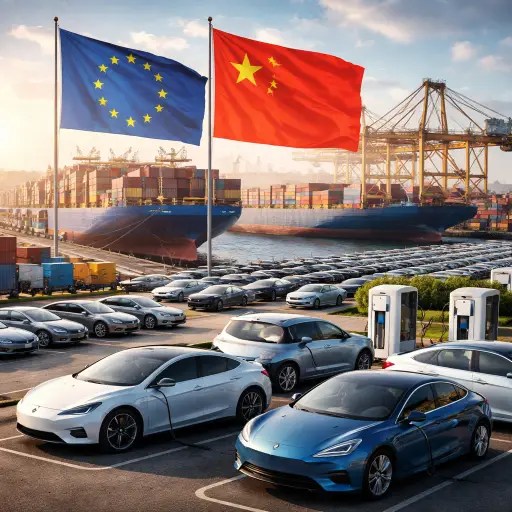
At the heart of both critiques lies the same concern: competitiveness. While Washington deploys massive industrial incentives and Beijing mobilises state-backed investment, Europe continues to debate the fine print of internal rules. Blair and Dimon argue that this imbalance is no longer sustainable. Strategic autonomy, a phrase often invoked in Brussels, cannot be achieved without faster decision-making and a willingness to pool resources more boldly.
One area of consensus is the urgent need to deepen the single market, particularly in services, finance and digital technologies. Despite decades of integration, barriers persist that prevent companies from operating seamlessly across borders. Dimon has repeatedly pointed to the absence of a truly unified capital markets union, which he says limits Europe’s ability to fund innovation and compete with Wall Street.
Blair, meanwhile, stresses governance. He argues that unanimity requirements in key policy areas have become a brake on action, allowing individual states to block initiatives of collective importance. Reforming these mechanisms, he acknowledges, would be politically sensitive. But without change, he warns, the EU will struggle to respond effectively to external shocks, from energy crises to security threats.
The timing of these interventions is significant. As the year draws to a close, European leaders are taking stock of a turbulent global landscape marked by war on the continent’s borders, economic uncertainty and accelerating technological change. The sense that Europe is being squeezed between larger powers has sharpened debates about its future direction.
Critics of sweeping reform caution against overreaction. They argue that Europe’s social model, environmental standards and regulatory safeguards are sources of long-term strength, not weakness. Rapid deregulation, they warn, could undermine public trust and social cohesion. Blair and Dimon do not dismiss these concerns, but insist that preserving Europe’s values requires an economy capable of sustaining them.
What distinguishes the current moment, they suggest, is the narrowing window for action. Demographic pressures, rising defence needs and the capital demands of the green and digital transitions leave little room for complacency. Without reform, Europe may retain its cultural influence and quality of life, but lose its ability to shape the global order.
For Blair, the message is ultimately political: Europe must decide whether it wants to be a serious power or a well-intentioned bystander. For Dimon, it is economic: capital will flow to where it is treated best, and talent will follow opportunity. Both converge on the same conclusion—Europe still has a choice, but not unlimited time.
As policymakers gather for year-end discussions, the warnings resonate beyond elite circles. They reflect a broader unease about Europe’s place in the world and a growing recognition that the status quo is no longer enough. Whether the EU can translate this moment of clarity into decisive action remains the unanswered question as the year comes to a close.

 The Tower Post