
Brussels reaches compromise funding deal for Kyiv as frozen Russian asset debate endures
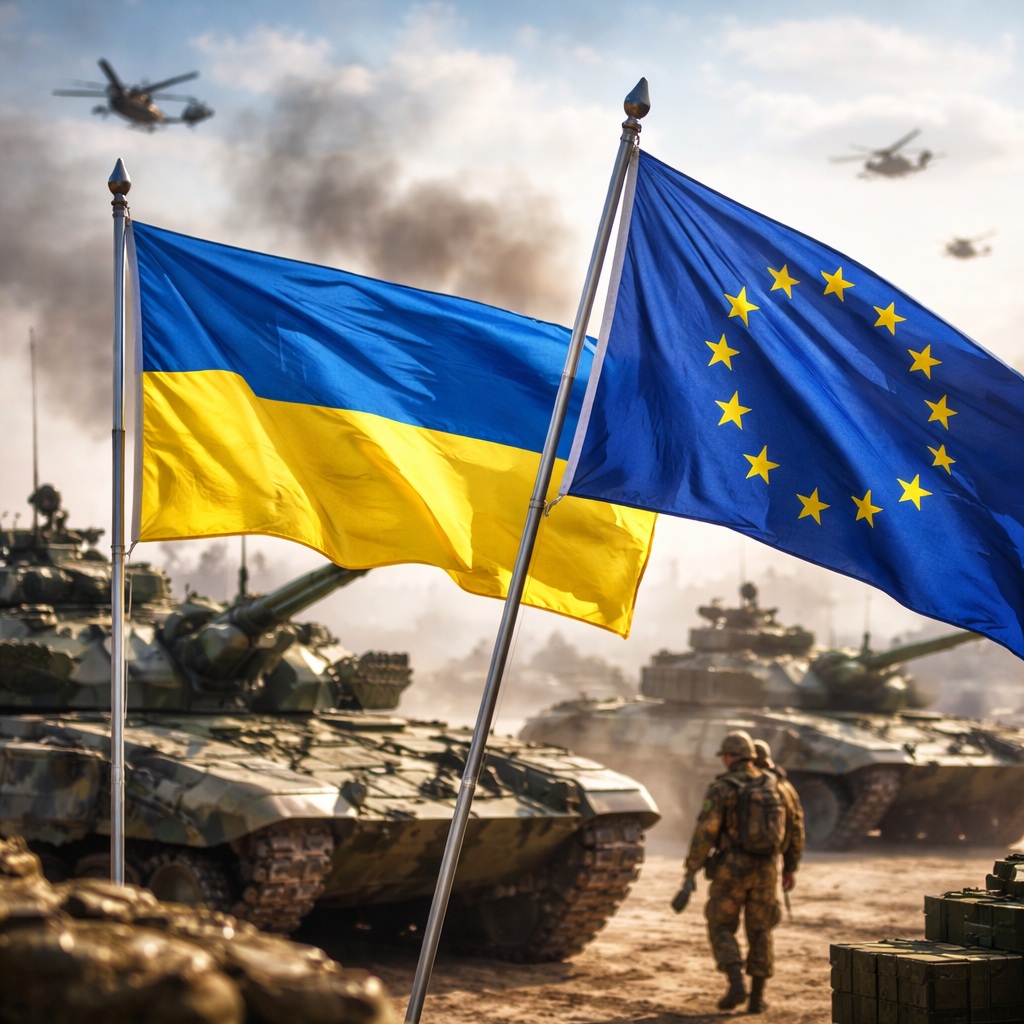
Brussels/Berlin/Kyiv — European Union leaders have unveiled a far‑reaching defence funding package aimed at keeping Ukraine financially and militarily supplied well into 2026–27, sidestepping a bitter dispute over the bloc’s frozen Russian sovereign assets. The announcement, finalised after extended summit talks in Brussels, signals continued European commitment to Kyiv’s defence against the Russian invasion while highlighting persistent political and legal divisions within the EU.
At the core of the agreement is a new EU‑backed financial mechanism designed to provide predictable, long‑term support for Ukraine’s armed forces and state budget. The package relies on common EU borrowing, allowing funds to be raised on international markets and channelled to Kyiv without placing immediate strain on national budgets. Officials described the approach as a pragmatic solution to ensure continuity of aid at a moment when uncertainty looms over other international funding streams.
European leaders stressed that Ukraine’s war effort depends not only on weapons deliveries but also on stable financing for salaries, logistics, training, and industrial production. The new framework is intended to give Ukrainian planners greater certainty, enabling them to look beyond short‑term survival toward sustained defence and recovery.
A central point of contention during negotiations was whether to make direct use of frozen Russian sovereign assets held within EU jurisdictions. Several governments argued that redirecting those funds would be morally justified and strategically effective, forcing Moscow to shoulder the financial consequences of the war it launched. Others, however, warned that such a move could expose the EU to legal challenges, undermine confidence in European financial institutions, and trigger retaliatory measures.
Belgium, which hosts a large share of the immobilised Russian reserves through its financial infrastructure, voiced particular concern over potential legal liabilities. These fears were reinforced by ongoing court actions linked to the frozen assets, highlighting the complex legal terrain surrounding their potential use. In the end, leaders opted to keep the assets frozen while deferring any decision on their direct mobilisation.
Instead, the agreed package relies on traditional EU instruments, backed by the bloc’s long‑term budgetary framework. While this approach avoids immediate legal risks, it leaves unresolved the broader question of how and when frozen Russian funds might be used in the future. Several officials signalled that interest generated by those assets could eventually play a role in supporting Ukraine or servicing related debts, pending further legal clarity.
Reactions across Europe were mixed but largely supportive. Leaders from major member states described the deal as a necessary compromise that preserves unity while delivering concrete assistance. They emphasised that the EU could not afford delays or internal paralysis while Ukraine remains under sustained military pressure.
In Kyiv, the announcement was welcomed as a sign that European backing remains firm. Ukrainian officials highlighted the importance of multi‑year commitments, noting that predictable funding strengthens both military resilience and public confidence. Eastern European member states, many of which view Ukraine’s defence as integral to their own security, also praised the agreement as a strategic investment in regional stability.
Not all member states will participate equally in the financing scheme. A small number of governments secured opt‑outs, reflecting domestic political constraints and differing views on collective borrowing. Nonetheless, EU officials underscored that the package enjoys broad support and represents a shared political commitment to Ukraine’s defence.
Looking ahead, the new funding framework is expected to anchor EU‑Ukraine cooperation through a critical phase of the conflict. It also reflects a broader shift in European defence policy, with greater emphasis on long‑term planning, joint financing, and industrial capacity. As debates over frozen Russian assets continue, the agreement illustrates the EU’s balancing act between legal caution and strategic urgency.
For now, Brussels has chosen stability over confrontation, signalling that its support for Ukraine is not a temporary gesture but a sustained policy. Whether this approach will evolve to include more assertive financial measures against Russia remains an open question, but the message to Kyiv is clear: European backing is set to endure.

 The Tower Post