
Paris urges a holiday pause as protests strain transport routes and national supply chains
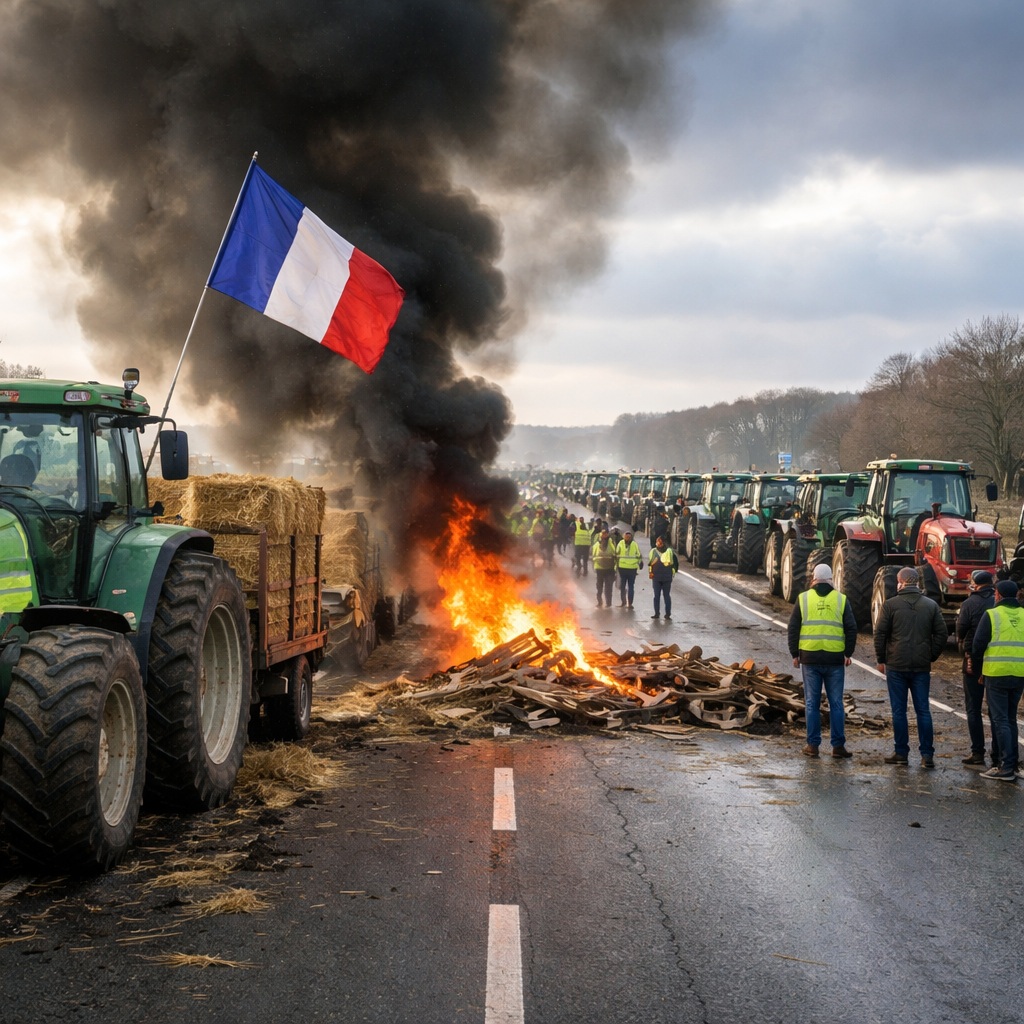
PARIS — As the holiday season approaches, the French government is calling for a temporary easing of farmer-led blockades that have disrupted transport, food distribution, and industrial supply chains across the country. The appeal for a Christmas truce reflects mounting concern in Paris that prolonged protests risk compounding economic pressure at a moment traditionally marked by heightened consumption and family travel.
Over recent weeks, convoys of tractors and makeshift barricades have become a familiar sight on highways, ring roads, and access points to logistics hubs. Farmers, angered by what they describe as unsustainable production costs, administrative burdens, and competition from cheaper imports, have sought to force concessions by targeting the arteries of the national economy. While demonstrations have largely remained peaceful, their cumulative impact has been significant, slowing deliveries and creating bottlenecks for retailers and manufacturers alike.
Government officials say the call for a holiday pause is not an attempt to silence grievances but a gesture aimed at reducing tension during a sensitive period. In public statements, ministers have emphasized respect for the right to protest while urging agricultural unions to show “responsibility and solidarity” in the days surrounding Christmas. The message from Paris is clear: talks can continue, but the country should be spared further paralysis during the holidays.
The timing of the appeal underscores the political delicacy of the situation. Farmers enjoy broad public sympathy in France, where agriculture carries deep cultural and economic significance. Yet patience among consumers and businesses has been tested as delays ripple through supply chains, affecting everything from supermarket shelves to export schedules. Transport operators warn that prolonged blockades could have lasting consequences well beyond the festive season.
Behind the scenes, negotiations between the government and farming representatives have intensified. Officials point to recent commitments on easing regulatory constraints, reviewing fuel taxation, and pressing at the European level for stronger safeguards against what farmers see as unfair competition. Union leaders acknowledge these discussions but insist that concrete measures, not promises, are needed to restore confidence in the sector’s future.
The prospect of a Christmas truce also carries symbolic weight. Temporary cessations of protest during the holidays have precedent in French social movements, often serving as a reset before renewed mobilization in the new year. Analysts note that such pauses can lower tensions and create space for compromise, though they do not guarantee lasting resolution.
For now, the government’s appeal places the decision squarely in the hands of protest leaders on the ground. Some regional groups have signaled openness to scaling back actions temporarily, while others remain skeptical, arguing that pressure must be maintained to secure results. The coming days will test whether the spirit of the season can translate into a brief calm on France’s roads—and whether dialogue can succeed where disruption has reached its limits.
As France heads toward Christmas, the balance between social protest and national continuity hangs in the balance. Whether the tractors withdraw, even briefly, may determine not only the tone of the holidays but also the trajectory of one of the most consequential disputes facing the country’s agricultural sector.

 The Tower Post