
A large-scale rescue off Crete underscores mounting migration pressure across the Mediterranean at the height of winter.
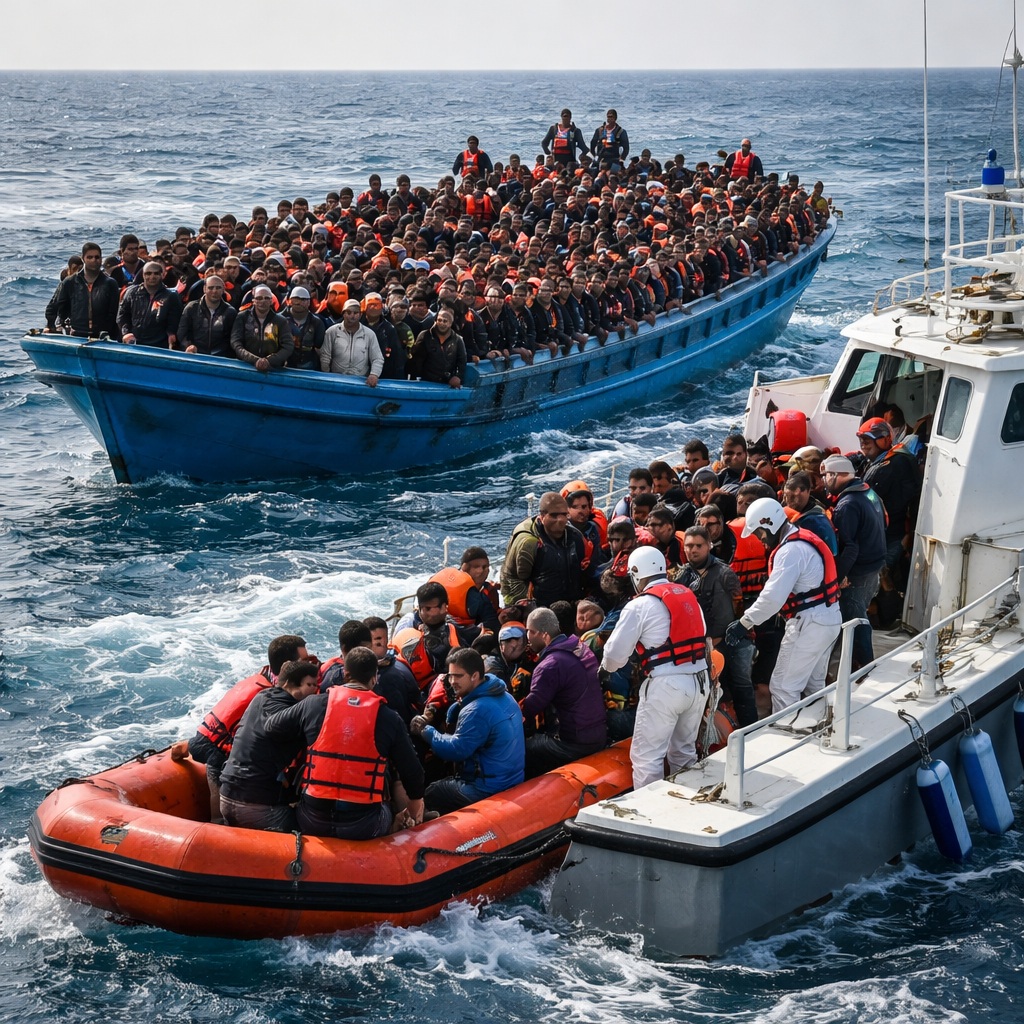
Rescue vessels cut through rough winter seas south of Crete this week as Greece mounted one of its largest maritime operations of the season, bringing more than 500 migrants to safety after overcrowded boats ran into trouble in the open Mediterranean. The operation, coordinated by Greek authorities with support from European partners, highlighted both the human cost of irregular migration and the growing strain on frontline states as winter crossings intensify rather than subside.
According to officials involved in the operation, distress calls began arriving in rapid succession from multiple vessels navigating dangerous routes toward Greek waters. Many of those on board were asylum seekers who had departed from the North African coast, hoping to reach Europe despite deteriorating weather conditions. Strong winds, low visibility, and heavy seas complicated rescue efforts, forcing crews to work through the night to locate and evacuate those at risk.
Survivors described journeys lasting several days, marked by shortages of food, water, and fuel. Some boats were reported to be barely seaworthy, packed well beyond safe capacity. Rescue teams transferred migrants onto patrol ships and commercial vessels pressed into service, before transporting them to reception facilities on Crete. Medical personnel treated cases of hypothermia, dehydration, and exhaustion, while authorities worked to identify vulnerable individuals, including unaccompanied minors and families with small children.
Greek officials said the scale of the rescue reflected a broader trend across southern Europe, where migration pressures have continued to rise even during the winter months. Traditionally, colder weather reduced crossings, but recent years have seen a shift, driven by persistent conflict, economic hardship, and instability in parts of the Middle East, Africa, and Asia. Smuggling networks, experts note, increasingly encourage departures year-round, often downplaying the risks posed by winter seas.
“This was a complex and demanding operation carried out under extremely challenging conditions,” a senior coast guard official said, adding that saving lives at sea remains a legal and moral obligation. The official also emphasized that Greece cannot manage the situation alone, calling for greater solidarity among European Union member states in sharing responsibility for reception, asylum processing, and relocation.
Crete, better known as a tourist destination, has found itself on the front line of these movements. Local authorities and residents have expressed concern about the pressure placed on infrastructure and services, particularly during peak rescue periods. At the same time, humanitarian organizations operating on the island praised the swift response of emergency crews and volunteers, stressing that timely rescues are often the difference between life and death.
Across the Mediterranean, similar scenes have unfolded in recent weeks, with Italy, Spain, and Malta reporting increased arrivals. European agencies monitoring migration flows say the central and eastern Mediterranean routes remain among the most dangerous in the world, with thousands of lives lost over the past decade. Winter operations, they warn, carry heightened risk for both migrants and rescuers.
The latest rescue comes amid renewed debate within the European Union over migration and asylum policy. Efforts to reform the system have moved slowly, hindered by disagreements over border controls, responsibility-sharing, and returns. Frontline states argue that without a coordinated approach, large-scale rescues will continue to place disproportionate burdens on a handful of countries.
For those pulled from the sea near Crete, the rescue marked the end of one perilous chapter and the beginning of another uncertain journey. After initial processing, many are expected to apply for asylum, while others may face transfer or return procedures depending on their status. Human rights groups have urged authorities to ensure fair and swift processing, particularly for those fleeing war or persecution.
As the year draws to a close, the operation serves as a stark reminder that migration across the Mediterranean does not pause for winter. Instead, it adapts, driven by forces far beyond Europe’s shores. For Greece and its neighbors, the challenge remains balancing border management with humanitarian duty, even as the seas grow colder and the crossings more dangerous.




 The Tower Post