
Taipei’s cultural outreach across European cities highlights freedom, diversity and artistic exchange, strengthening people-to-people ties amid a shifting global landscape.

As winter settles across Europe, galleries glow a little warmer and concert halls hum with unfamiliar yet inviting sounds. From contemporary dance performances to film retrospectives and culinary showcases, the “Taiwan Culture in Europe” campaign has steadily woven Taiwan’s creative voice into the cultural fabric of major European cities. The initiative, led by Taipei’s cultural institutions in cooperation with European partners, reflects a deliberate effort to deepen mutual understanding at a moment when culture has become an essential language of diplomacy.
The campaign is not a single festival or touring exhibition. Instead, it unfolds as a constellation of events across capitals and regional hubs, inviting European audiences to encounter Taiwan through its arts, history and living social debates. Organizers describe it as an open platform rather than a promotional roadshow, one that emphasizes exchange and dialogue over spectacle.
At its core, the campaign presents Taiwan as a society shaped by freedom and diversity. Exhibitions feature Indigenous artists alongside digital innovators; film programs move fluidly from intimate personal stories to reflections on identity, memory and democracy. In doing so, the initiative resists a monolithic portrayal of Taiwanese culture and instead foregrounds its plurality.
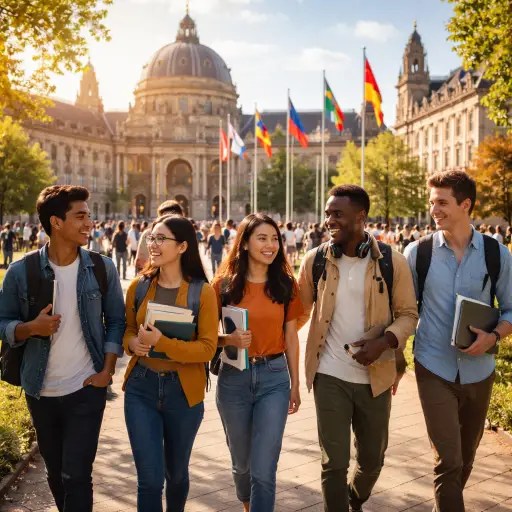
European curators involved in the program say this diversity resonates strongly with local audiences. Many visitors arrive with limited knowledge of Taiwan, often framed only through economics or geopolitics. Culture offers another entry point: one that humanizes abstract headlines and replaces distance with familiarity. A contemporary art installation or a music performance can convey social values more directly than any policy statement.
Taiwanese officials involved in the campaign have been clear about its broader significance. While firmly rooted in the arts, the initiative is also an exercise in soft power, designed to support deeper people-to-people connections and, by extension, stronger diplomatic engagement. In an era marked by heightened geopolitical tension, cultural exchange becomes both safer and more potent than formal negotiation.
The timing of the campaign has amplified its impact. Europe is reassessing its cultural and political relationships across the Indo-Pacific, while Taiwan continues to seek meaningful international engagement despite its complex diplomatic status. Cultural collaboration offers a space where partnership can flourish without the constraints of protocol.
Importantly, the campaign works through European institutions rather than around them. Museums, theaters and universities co-curate programs with Taiwanese counterparts, ensuring local relevance and long-term relationships. These partnerships often extend beyond the initial events, evolving into future residencies, research projects and educational exchanges.
Artists themselves describe the experience as transformative. For many Taiwanese creators, Europe represents both a historical reference point and a contemporary testing ground. Presenting work abroad invites new interpretations, challenges assumptions and encourages experimentation. European artists, in turn, gain access to networks and perspectives shaped by Taiwan’s unique social and political evolution.
Food, design and everyday culture also play a role. Pop-up kitchens and design showcases highlight how tradition and innovation coexist in Taiwanese daily life. These elements, accessible and immediate, often draw in audiences who might not otherwise attend a formal exhibition or concert.
As the year draws to a close, the “Taiwan Culture in Europe” campaign stands as a reminder that culture can move where politics sometimes cannot. It builds familiarity without insisting on agreement, and connection without erasing difference. In doing so, it reflects Taiwan’s own self-image: open, resilient and deeply engaged with the world.
Looking ahead, organizers see the campaign not as a conclusion but as a foundation. By embedding Taiwanese culture more firmly within Europe’s artistic circuits, they hope to sustain dialogue well beyond the current season. In a fragmented global environment, such sustained cultural presence may prove one of the most durable forms of connection.
 The Tower Post