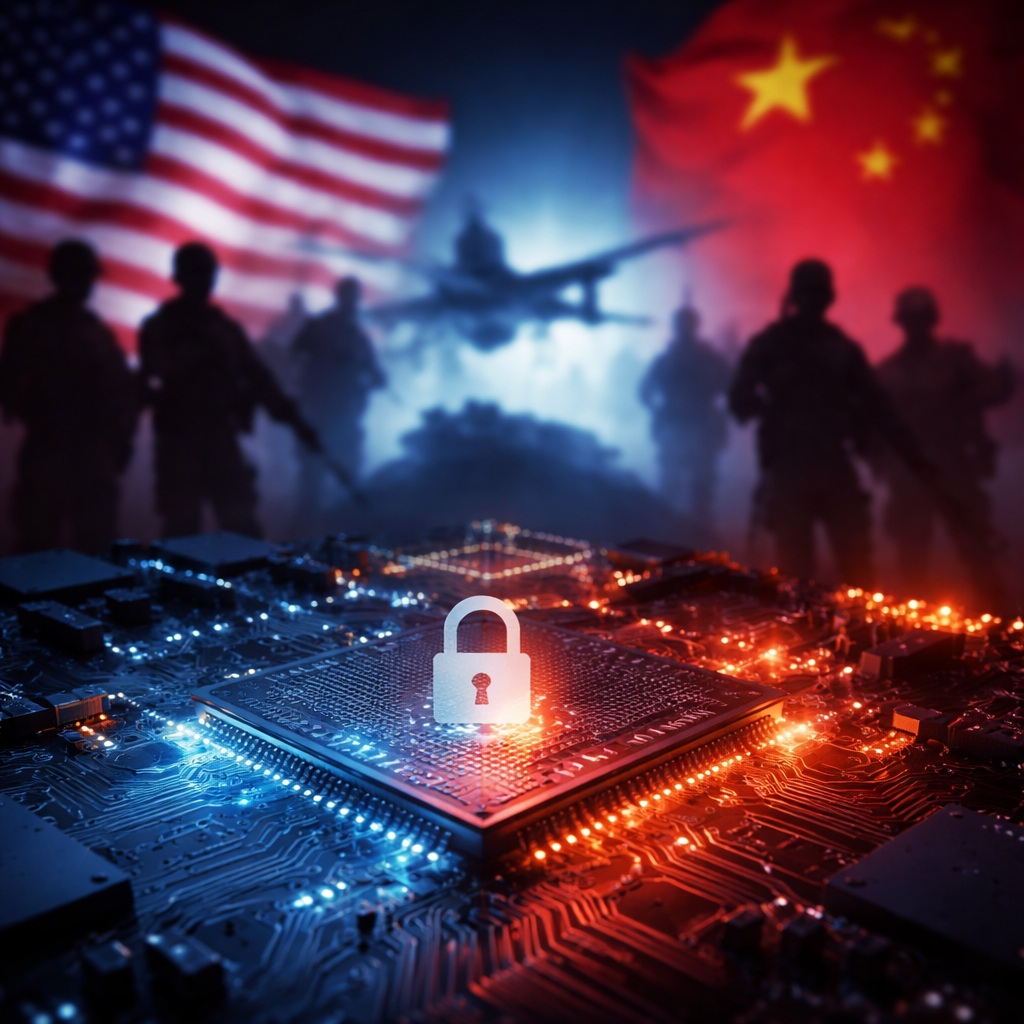
Bipartisan push seeks to curb access to U.S. defense markets for companies tied to Beijing’s modernization drive
WASHINGTON — A bipartisan group of U.S. lawmakers is urging the Department of Defense to bar a slate of Chinese technology companies from doing business with the Pentagon, arguing that advances in artificial intelligence, semiconductors and robotics are blurring the line between civilian innovation and military power. The appeal reflects mounting concern in Congress that U.S. dollars, data and know‑how could indirectly accelerate the modernization of a foreign military seen as America’s primary strategic competitor.
In a letter sent to senior defense officials, lawmakers from both parties called for the addition of 17 Chinese firms to the Pentagon’s list of companies deemed to have ties to the People’s Liberation Army. The list, which restricts access to U.S. defense contracts and can trigger broader scrutiny across government agencies, has become a central tool in Washington’s effort to insulate sensitive supply chains from geopolitical risk.
The companies named by lawmakers span fast‑moving sectors that sit at the heart of contemporary warfare. Artificial intelligence systems increasingly underpin battlefield decision‑making and intelligence analysis. Advanced chips power everything from missile guidance to encrypted communications. Robotics technologies, long a feature of civilian manufacturing, are now critical to logistics, surveillance and autonomous operations.
“Technology is no longer a neutral commodity,” said one congressional aide familiar with the letter. “When firms operate in an ecosystem where the state directs industrial capacity toward military ends, the distinction between commercial and defense activity collapses.”
The push comes as Washington continues to recalibrate its economic relationship with Beijing. Over the past several years, the U.S. government has tightened export controls on high‑end chips, limited outbound investment in sensitive technologies, and expanded screening of foreign acquisitions. The Pentagon blacklist, though narrower in scope, carries symbolic and practical weight: it signals to U.S. companies and allies which partners pose elevated security risks.
Supporters of the move argue that the targeted firms benefit from state support, data access or research partnerships that bind them to China’s defense establishment. They contend that allowing such companies to operate freely in U.S. defense supply chains creates vulnerabilities, from embedded hardware risks to long‑term dependencies that could be exploited in a crisis.
Critics, however, warn that the approach risks overreach. Some industry groups caution that sweeping restrictions could disrupt global technology ecosystems, raise costs for U.S. manufacturers, and provoke retaliation against American firms operating abroad. Others argue that evidence linking individual companies to direct military work should be transparent and subject to review.
The Pentagon has been measured in its public response, emphasizing that any additions to its blacklist must meet statutory criteria and withstand legal challenge. Previous listings have been contested in court, with mixed outcomes, underscoring the complexity of drawing firm lines in an era of dual‑use technology.
Still, the political momentum is unmistakable. Concerns about foreign military modernization now cut across partisan divides, uniting lawmakers who otherwise disagree on trade, industrial policy and the role of government in markets. The letter frames the issue as one of prudence rather than punishment, urging the Defense Department to act preemptively as technologies converge.
Beyond immediate procurement rules, the debate points to a larger shift in how Washington views technological leadership. Once celebrated primarily for its economic benefits, innovation is now treated as a strategic asset to be guarded. The question facing policymakers is how to protect national security without stifling the openness that has long powered U.S. technological strength.
As the Pentagon reviews the lawmakers’ request, allies are watching closely. Decisions taken in Washington often ripple outward, shaping standards and restrictions across partner nations. Whether the 17 firms are ultimately added to the blacklist or not, the episode underscores a new reality: in the contest between major powers, code, chips and machines have become as consequential as ships and planes.




 The Tower Post