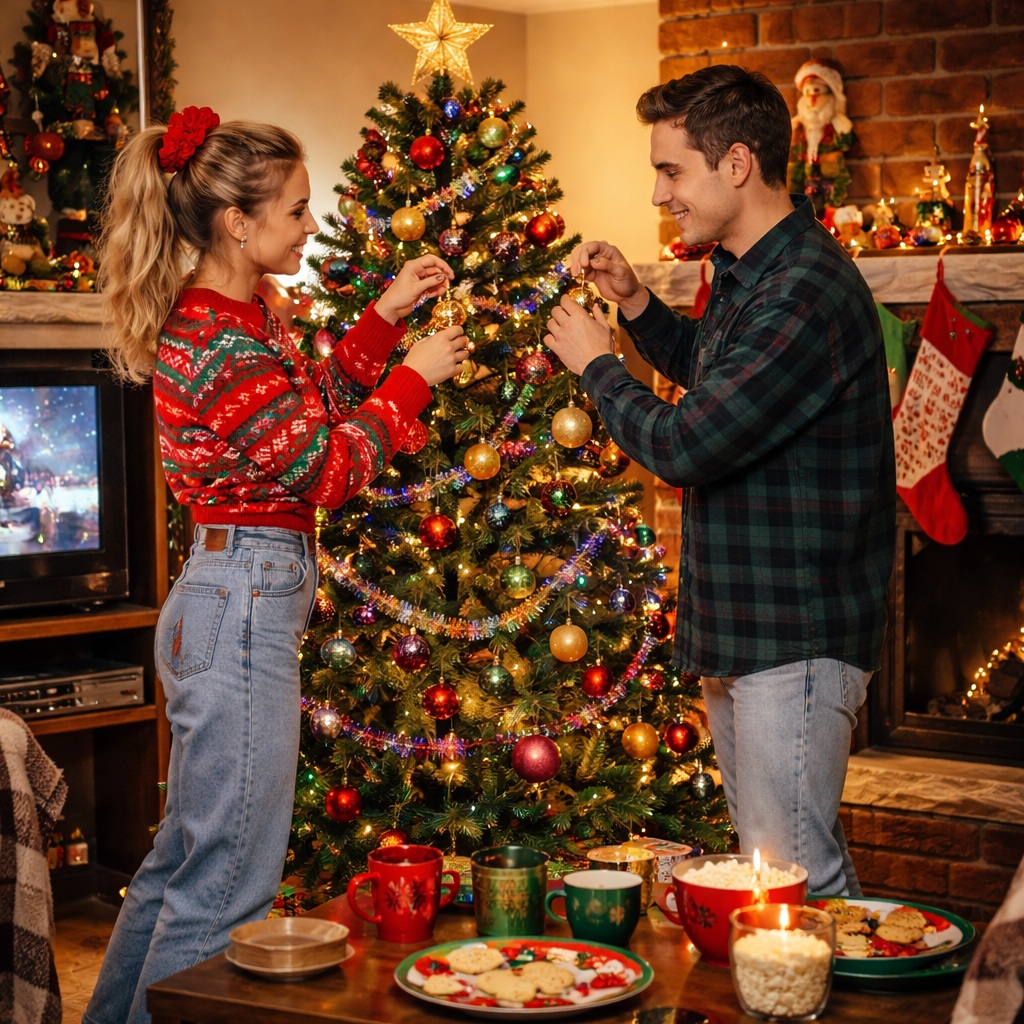
The viral #90sChristmas trend revives a decade of holiday style, blending retro warmth with modern flair
As homes glow a little warmer this holiday season, a familiar shimmer has returned to living rooms, closets, and social feeds. A viral TikTok movement known as #90sChristmas is reshaping how people dress, decorate, and imagine the holidays, pulling visual cues from a decade remembered for its maximalism, sentimentality, and analog charm. The revival is less about strict nostalgia and more about remixing the past into something that feels comforting, playful, and current.
On TikTok, creators pan across living rooms dressed in foil tinsel, multicolored string lights, and ornaments that feel delightfully mismatched. Inflatable snowmen share space with ceramic figurines, while oversized stockings hang from mantels regardless of whether a fireplace is present. The look is instantly recognizable: a rejection of the sparse, neutral holiday aesthetic that has dominated interiors in recent years, replaced by color, clutter, and cheer.
The trend has struck a chord because it feels emotional as much as visual. Many users describe recreating decorations they remember from childhood homes, thrift stores, or old family photos. In a digital culture often defined by speed and polish, #90sChristmas leans into imperfection. Blinking lights don’t need to match. Wrapping paper can clash. The result is a space that feels lived-in and welcoming rather than staged.
Fashion has followed a similar path. Social feeds are filled with chunky knit sweaters, novelty prints, plaid trousers, and fuzzy accessories that recall holiday sitcoms and school concerts. These retro elements are rarely worn straight. Instead, they’re styled with contemporary tailoring, sleek boots, or minimalist makeup, creating a balance between irony and sincerity. What could feel like costume becomes everyday winter wear with personality.
Brands have taken notice. Vintage-inspired sweaters, colorful ornaments, and throwback gift wrap are appearing across both mass-market and boutique collections. Some labels are reissuing designs inspired by old catalogs, while others are sourcing deadstock materials to create limited runs that feel authentic rather than manufactured. The commercial response underscores how quickly a social media aesthetic can translate into real-world demand.
Yet the popularity of #90sChristmas is not only about consumption. Many creators emphasize reusing decorations found in attics or bought secondhand. Thrift hauls and DIY tutorials are central to the trend’s appeal, aligning nostalgia with a more sustainable mindset. Old decorations gain new value when reframed as culturally relevant rather than outdated.
Culturally, the revival speaks to a broader desire for comfort and familiarity during an uncertain time. The 1990s, often remembered as a period of relative stability and optimism, offer visual language that feels reassuring. By revisiting that aesthetic, users are not trying to relive the past exactly as it was, but to borrow its warmth and sense of abundance.
As the season reaches its peak, #90sChristmas continues to evolve. Some creators lean heavily into kitsch, others prefer subtle nods through color or texture. What unites them is a shared rejection of minimalism in favor of joy. The trend suggests that holiday style does not have to be sleek to feel modern; it can be loud, layered, and deeply personal.
This return to tinsel, color, and playful excess shows how social media can reshape traditions without erasing them. By blending retro references with contemporary sensibilities, #90sChristmas has become less about looking back and more about redefining what festive means now. In doing so, it turns memory into material and nostalgia into a living, evolving style.



 The Tower Post