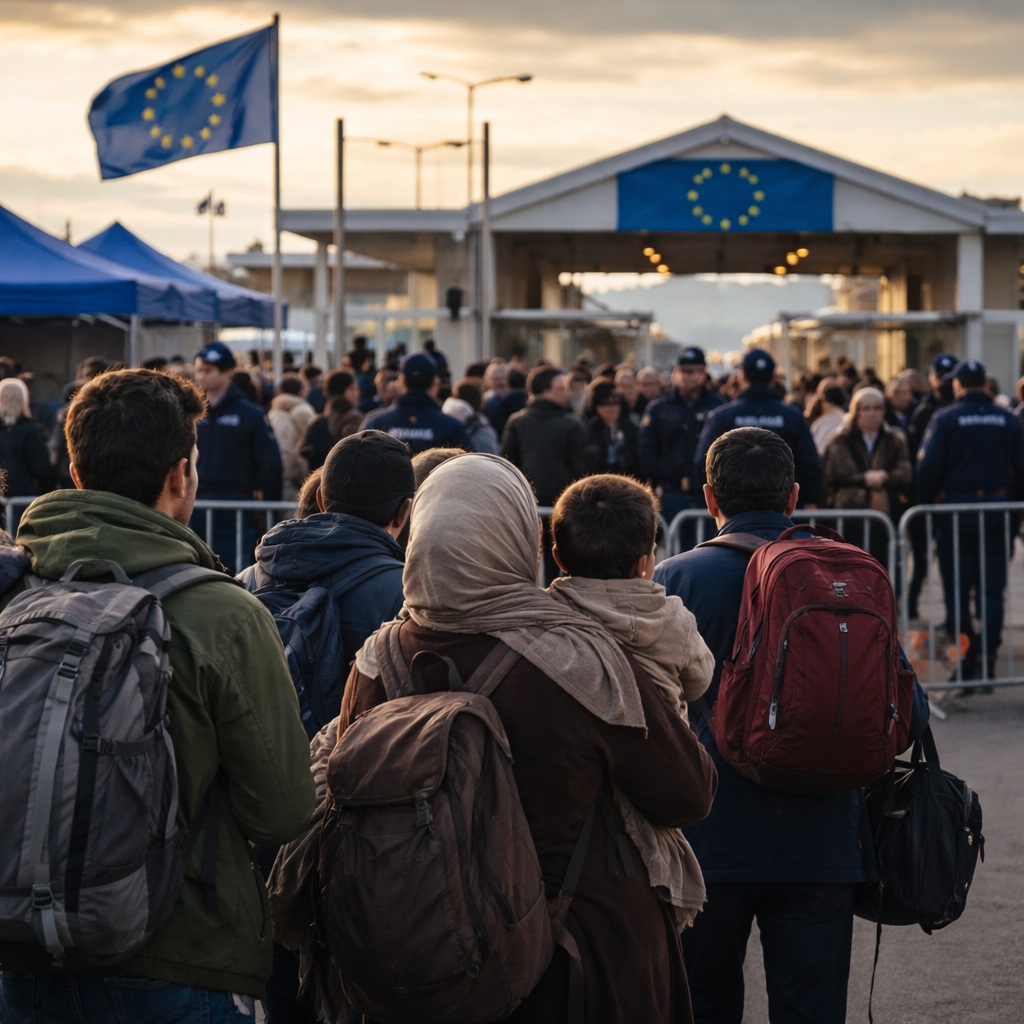
Brussels seals a politically charged compromise that reshapes asylum procedures across the bloc, signalling a tougher migration stance as implementation approaches.
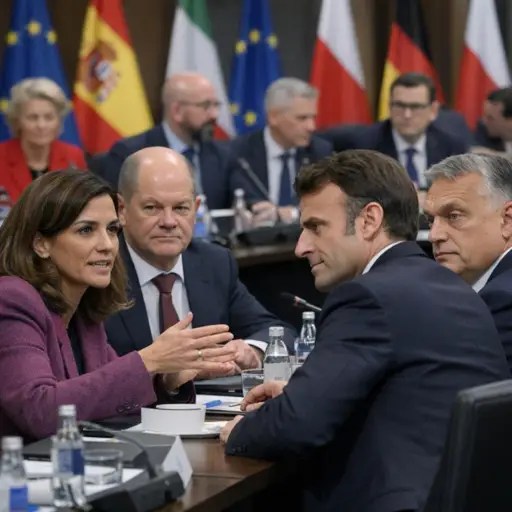
Brussels — As the European Union edges toward the end of a politically intense year, lawmakers and national governments have sealed a long-awaited compromise on one of the most sensitive pillars of migration policy: a common EU list of so‑called safe countries of origin. The agreement, reached after protracted negotiations between the European Parliament and the Council, marks a decisive moment in the bloc’s effort to streamline asylum procedures while responding to mounting domestic pressure to tighten migration controls.
The deal introduces, for the first time at EU level, a harmonised list of countries deemed generally safe for their nationals. Asylum seekers originating from these states will see their applications fast‑tracked, with authorities operating under the presumption that protection is not required. While this presumption can be challenged on an individual basis, the political signal is clear: the EU is seeking faster decisions, fewer appeals, and quicker returns.
Supporters of the agreement argue that the absence of a common list has long undermined the credibility of the EU asylum system. Member states have relied on divergent national lists, producing inconsistent recognition rates and encouraging secondary movements across borders. By aligning criteria and procedures, EU officials say the new framework will reduce asylum backlogs and restore public confidence.
“This is about order and fairness,” one senior EU diplomat involved in the talks said. “Those who genuinely need protection must receive it quickly, while those who do not should not remain in limbo for years.”
Yet the path to consensus was far from smooth. The European Parliament initially resisted a broad safe origin list, warning that it could erode the right to asylum and oversimplify complex human rights realities. Lawmakers pushed for stronger safeguards, insisting that the designation of safety must remain flexible and responsive to political changes, conflicts, or democratic backsliding in countries concerned.
The final compromise reflects those tensions. While the list will apply across the bloc, it will be subject to regular review and emergency suspension mechanisms. If conditions deteriorate in a listed country, the EU can swiftly halt its designation as safe. In addition, vulnerable applicants — including minorities facing systemic discrimination — retain the right to demonstrate personal risk.
Even so, human rights organisations remain sceptical. Several groups warn that labelling countries as “safe” risks marginalising individual stories in favour of administrative efficiency. They point to recent global trends in which democratic standards have weakened rapidly, arguing that safety can never be assumed in absolute terms.
“This deal prioritises speed over protection,” said a spokesperson for a European refugee advocacy network. “Fast‑track procedures often mean limited access to legal assistance and higher rejection rates.”
Politically, the agreement underscores a broader shift within the EU. Migration has once again risen to the top of the political agenda, driven by renewed arrivals along Mediterranean routes and growing anxiety among voters. Governments facing electoral pressure have demanded tougher controls, while insisting that reforms remain compatible with international law.
The safe origin list fits squarely into that narrative. By accelerating decisions and returns, EU leaders hope to demonstrate control without reopening divisive debates over mandatory relocation or border closures. It is a policy instrument designed to be technical in appearance, yet deeply political in effect.
National capitals are already preparing for the operational impact. Asylum authorities will need to adapt procedures, train caseworkers, and adjust reception systems. For frontline states, the promise is faster processing and reduced strain. For destination countries further north, the expectation is fewer secondary movements and clearer outcomes.
The agreement also reinforces the EU’s external messaging. By standardising assessments, Brussels aims to send a deterrent signal to potential migrants from countries considered safe, while strengthening cooperation with origin and transit states on readmission.
Critics, however, caution that deterrence narratives rarely address root causes. Economic hardship, political repression, and climate stress continue to drive migration, regardless of procedural hurdles. They warn that an overreliance on safe origin designations could push people into irregular pathways rather than reducing arrivals.
As winter settles over Europe, the timing of the deal is no coincidence. With implementation on the horizon, institutions are eager to show tangible progress on a dossier that has stalled for years. The agreement allows leaders to claim momentum and unity, even as debates over migration remain polarising.
Whether the safe country list will deliver on its promises remains uncertain. Much will depend on how rigorously safeguards are applied and how quickly the EU responds to changing realities abroad. What is clear, however, is that the compromise marks a turning point: the EU is no longer merely debating reform, but actively reshaping the mechanics of asylum.
As the bloc looks ahead, the new framework stands as both a test and a statement. A test of the EU’s ability to balance efficiency with protection, and a statement that migration control has become central to its political identity. The coming months will reveal whether that balance can be sustained.



 The Tower Post