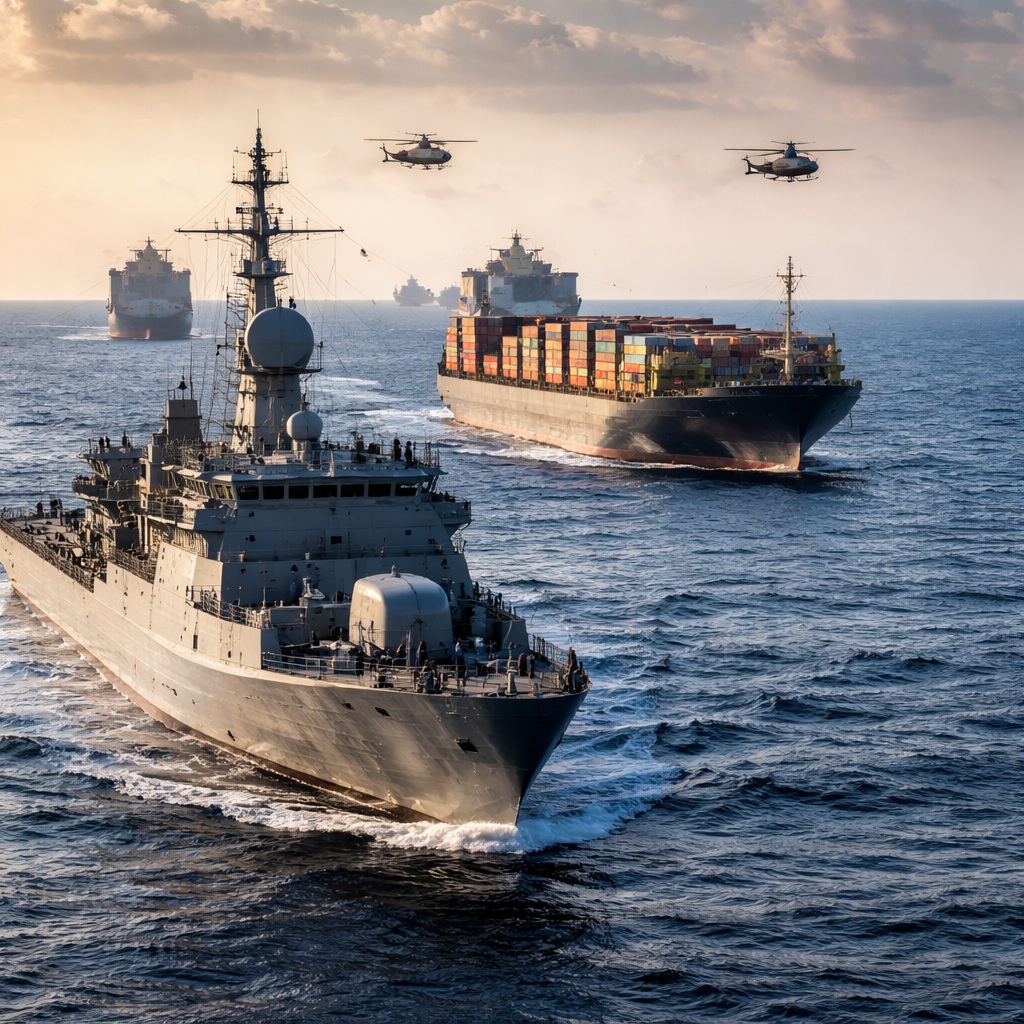
Debate intensifies in Brussels over how far the European Union should go in responding to Houthi attacks on shipping, exposing a broader shift in Europe’s external security ambitions.

As commercial vessels continue to divert away from the Red Sea, Europe finds itself confronting an uncomfortable reality: one of the world’s most vital maritime corridors can no longer be taken for granted. What began as a regional security shock linked to the war in Gaza has evolved into a sustained disruption of global shipping, forcing European policymakers to reconsider the scope and purpose of the Union’s naval power.
In recent weeks, discussions in Brussels have taken on a sharper tone. Diplomats and defense officials are debating whether Europe’s existing naval presence in the Red Sea and Gulf of Aden is sufficient, or whether a more assertive posture is required to deter further attacks by Yemen’s Houthi rebels. The group’s repeated strikes on merchant vessels, framed by its leadership as acts of solidarity with Palestinians, have had far‑reaching economic consequences well beyond the Middle East.
For Europe, the stakes are particularly high. Roughly a third of the EU’s external trade normally transits through the Red Sea and the Suez Canal. As shipping companies reroute around the Cape of Good Hope, delivery times have lengthened, insurance costs have surged, and supply chains already strained by geopolitical instability have come under renewed pressure. European manufacturers, retailers, and energy importers are all feeling the effects.
Against this backdrop, pressure is mounting to formally designate the Houthis as a direct threat to European security. Several member states argue that such a step would provide a clearer legal and political basis for stronger naval action, including more robust escort missions and, potentially, limited strikes aimed at protecting freedom of navigation. Others remain cautious, warning that escalation could draw Europe deeper into a volatile regional conflict.
The debate has exposed familiar fault lines within the EU. France and Italy, both with significant naval capabilities and long-standing interests in the Mediterranean and beyond, have signaled openness to an expanded role. Northern and eastern member states, while alarmed by the economic impact of the disruptions, have questioned whether the Union should prioritize distant maritime operations at a time when Russia’s war in Ukraine continues to dominate Europe’s security agenda.
Yet there is growing recognition that these challenges are interconnected. Officials note that Europe’s dependence on secure sea lanes is a strategic vulnerability, one that adversaries can exploit far from the continent’s borders. The Red Sea crisis, in this view, is not a distraction but a warning—highlighting how instability in one region can rapidly translate into economic and political pressure at home.
The EU already maintains a naval footprint in the area through its long-running anti-piracy mission off the Horn of Africa. That operation, once seen as a niche security effort, is now being reassessed as a foundation for a broader maritime strategy. Proposals under discussion include enhancing intelligence-sharing with allies, deploying more advanced air-defense assets aboard European vessels, and tightening coordination with U.S.-led coalitions operating in the region.
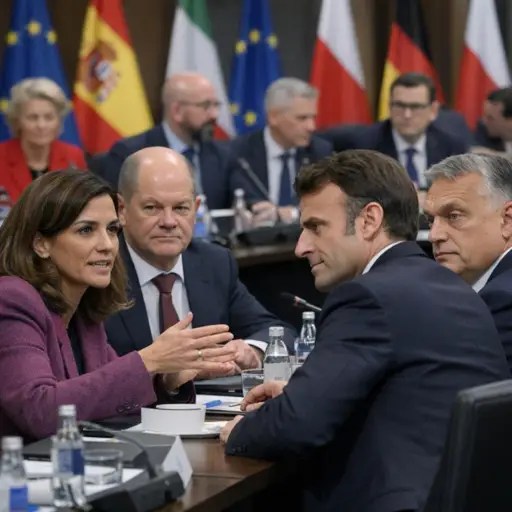
Still, the question of political will looms large. Unlike NATO, the EU lacks a unified command structure and relies on consensus among its members for military action. Any decision to label the Houthis as a security threat would require careful diplomatic choreography, balancing the desire for decisive action against fears of internal division and external backlash.
Beyond the immediate crisis, the Red Sea tensions are fueling a deeper conversation about Europe’s role as a global security actor. For years, EU leaders have spoken of “strategic autonomy,” often in abstract terms. Now, the concept is being tested on the open seas, where protecting trade routes may demand capabilities and risks that Europe has historically preferred to outsource to allies.
As the year draws to a close, no definitive decision has emerged. What is clear, however, is that the Red Sea disruptions have shifted the tone of Europe’s security debate. The question is no longer whether events beyond Europe’s borders matter, but how far the Union is prepared to go to defend its interests when they are threatened far from home.



 The Tower Post