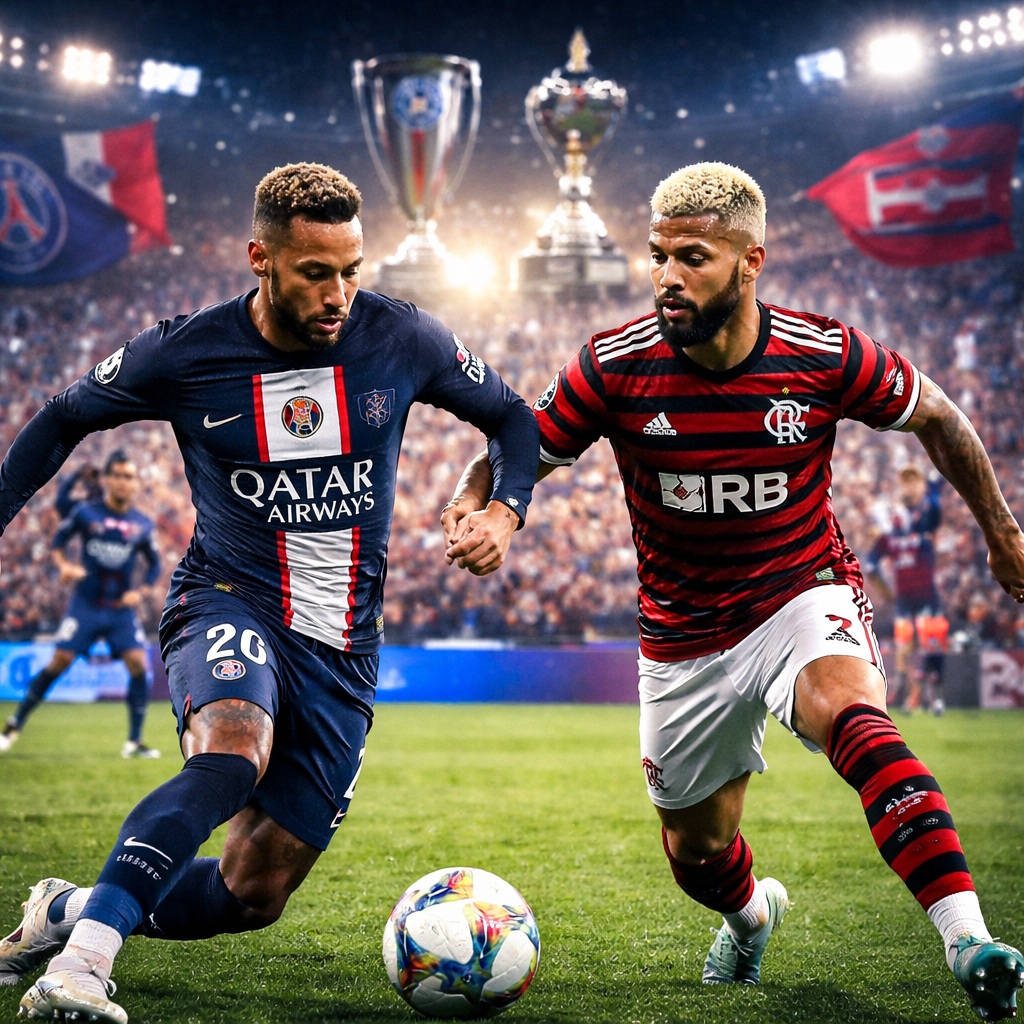
European finesse meets South American fire as club football’s old rivalry is renewed on the world stage in Doha
Under the bright winter skies of Doha, world club football turns its attention to a final that feels both timeless and distinctly modern. European champions Paris Saint-Germain are preparing to meet South American winners Flamengo in the FIFA Intercontinental Cup final, a match-up that taps into decades of continental rivalry while reflecting the globalized reality of today’s elite game.
For PSG, the occasion represents more than another trophy opportunity. The Parisian club arrives with the weight of expectation that follows Europe’s reigning kings, carrying a squad shaped by technical precision, tactical discipline, and the experience of recent triumphs on the biggest stages. Training sessions have been intense but controlled, with an emphasis on rhythm and balance rather than spectacle. Inside the camp, the message is clear: dominance in Europe must now be translated into authority on the global stage.
Flamengo, by contrast, travel with a sense of continental pride and emotional momentum. South American champions are rarely short on belief, and the Rio de Janeiro giants embody that tradition fully. Their journey to this final has been fueled by attacking verve, passionate support, and a collective identity forged in pressure-filled environments. For Flamengo, this is not simply about defeating a European powerhouse; it is about reaffirming South America’s enduring relevance in club football’s hierarchy.
The Intercontinental Cup, revived with renewed prestige, offers a rare and compelling contrast of styles. PSG’s structured buildup and positional discipline are set against Flamengo’s fluid movement and instinctive creativity. Analysts see the midfield battle as decisive, where control, tempo, and emotional management could tilt the balance. In finals such as this, fine margins often separate champions from runners-up.
Beyond tactics, the setting itself adds to the narrative. Doha has positioned itself as a crossroads of global sport, and this final fits seamlessly into that vision. Fans from Europe, South America, and beyond are converging, bringing with them songs, colors, and expectations that transform the occasion into a true celebration of football culture.
There is also a symbolic undertone to this encounter. For all the talk of modern tournaments and expanded formats, the essence of the Intercontinental Cup remains unchanged: a direct contest between continental champions, stripped of safety nets. Win, and you claim global supremacy. Lose, and the questions linger long after the final whistle.
As preparations intensify, anticipation continues to build. PSG seek validation of their status at the summit of club football, while Flamengo aim to write another proud chapter in South America’s storied relationship with the world game. When they finally step onto the pitch, the result will resonate far beyond Doha, echoing across continents and into football’s collective memory.



 The Tower Post