
Moscow warns that attempts to reshape Washington’s proposal risk prolonging the war, as fighting and diplomacy intensify across multiple fronts.
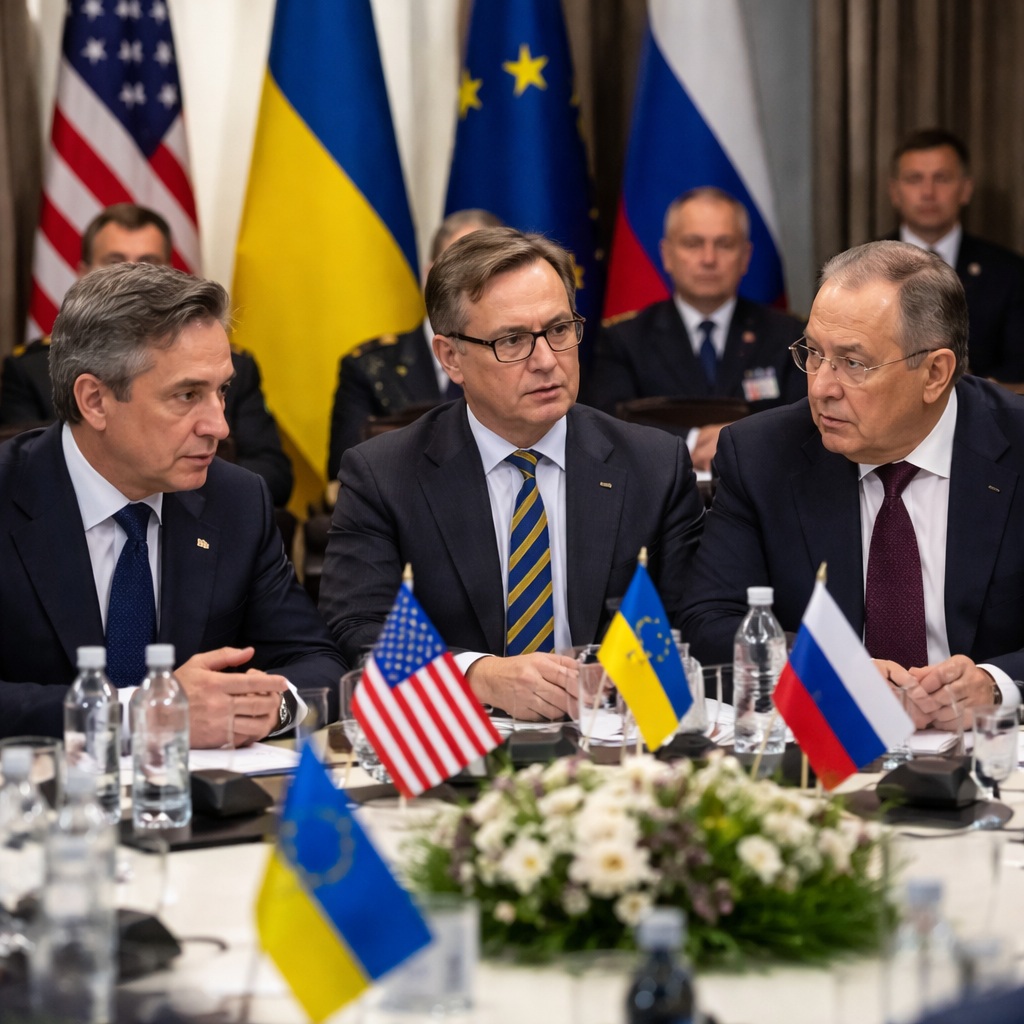
As the year draws to a close, diplomatic tensions around the war in Ukraine are sharpening once again. The Kremlin has issued a pointed warning that European and Ukrainian efforts to revise a U.S.-led peace proposal could undermine fragile prospects for ending the conflict, even as fighting continues in parts of northeastern Ukraine and international diplomacy accelerates behind the scenes.
Russian officials say the American initiative, presented as a framework to halt hostilities and open the way for longer-term negotiations, is being diluted by what Moscow describes as “political add-ons” from Kyiv and its European partners. According to the Kremlin, these proposed amendments introduce conditions that Moscow considers unacceptable, ranging from security guarantees to territorial formulations that, in its view, prejudge the outcome of any talks.
From Moscow’s perspective, the message is blunt: altering the core of the U.S. plan risks turning a potential compromise into another missed opportunity. Russian spokespersons argue that peace initiatives only work when all parties resist the temptation to harden positions for domestic or alliance-based reasons. In recent statements, they have accused European governments of encouraging Ukraine to push for maximalist demands, thereby prolonging the conflict rather than bringing it closer to resolution.
Kyiv and its European allies strongly reject this framing. Ukrainian officials maintain that any peace proposal must reflect the realities on the ground and uphold Ukraine’s sovereignty and security. European diplomats echo that stance, insisting that revisions to the U.S. plan are not meant to derail talks but to ensure that any settlement is durable and just. They argue that freezing the conflict without clear guarantees would merely postpone future violence.
While diplomats trade arguments, the war itself grinds on. In the northeastern Sumy region, close to the Russian border, fighting has persisted with renewed intensity. Local authorities report artillery exchanges, drone strikes, and sporadic ground clashes affecting rural communities. Ukrainian officials accuse Russian forces of carrying out forced relocations of civilians from contested areas, alleging that residents are being moved deeper into Russian-controlled territory under pressure.
Moscow denies these accusations, saying evacuations are voluntary and intended to protect civilians from ongoing combat. Nevertheless, humanitarian groups warn that displacement in border regions is adding to an already severe civilian toll, compounding shortages of housing, medical care, and basic services during the winter period.
Against this backdrop, diplomatic activity has intensified. Washington continues to position itself as a central mediator, holding parallel consultations with Kyiv, European capitals, and Moscow. Contacts between U.S. officials and counterparts in Paris and Washington are described by diplomats as frequent and focused, reflecting a push to maintain unity among Western partners while keeping channels open with Russia.
European leaders, particularly in France, have sought to play a bridging role, emphasizing dialogue while maintaining pressure on Moscow through political and economic means. In Washington, officials stress that the U.S. proposal is not a take-it-or-leave-it document but a starting point designed to stop the bloodshed and create space for negotiations.
Still, the gap between positions remains wide. For Russia, the priority is securing recognition of its security concerns and gains, while Ukraine insists on full territorial integrity and robust guarantees against future aggression. Europe, caught between these positions, is attempting to balance solidarity with Kyiv and the strategic imperative of ending a war that continues to destabilize the continent.
As the holiday season approaches, there is little sign of an immediate breakthrough. Yet diplomats on all sides acknowledge that the current moment is critical. The coming weeks may determine whether the U.S.-led initiative evolves into a genuine peace process or becomes another entry in the long list of failed attempts to end the conflict.
For now, the Kremlin’s criticism underscores a familiar reality of this war: peace efforts are as contested as the battlefield itself. With lives still at risk in places like Sumy and negotiations unfolding in distant capitals, the struggle to align diplomacy with reality remains one of the defining challenges of the conflict’s third winter.


 The Tower Post