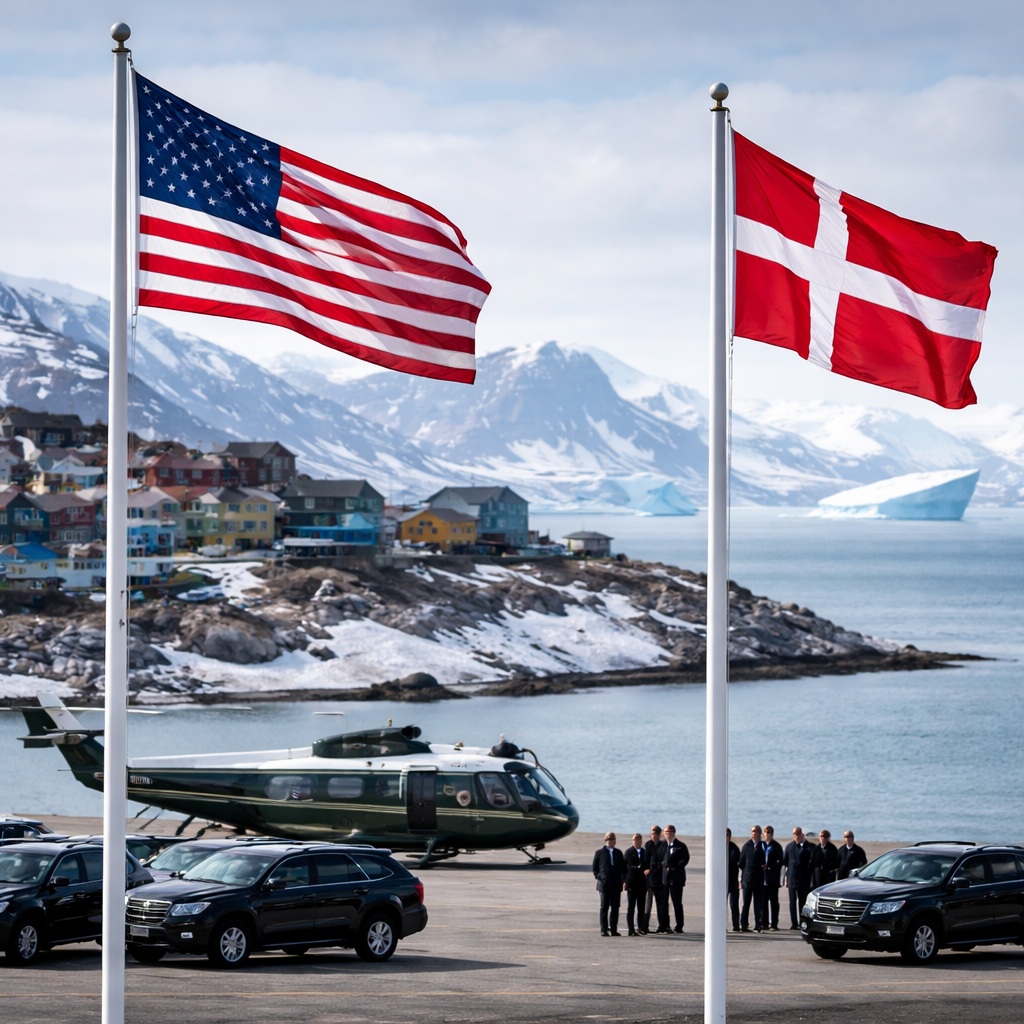
Washington’s choice of Louisiana Governor Jeff Landry as special envoy reignites sovereignty fears in Copenhagen and sharpens debate over Greenland’s future.

The quiet stretch between Christmas and the New Year has rarely been calm in Arctic diplomacy, but Washington’s latest move has injected fresh tension into relations between the United States, Denmark, and Greenland. The decision by President Donald Trump to appoint Louisiana Governor Jeff Landry as special envoy to Greenland has been met with sharp concern in Copenhagen, where officials warn that the gesture carries implicit threats to Danish territorial integrity.
According to Danish diplomats, the appointment revives anxieties first aired during Trump’s earlier presidency, when the idea of purchasing Greenland was floated openly and dismissed just as publicly by Denmark as “absurd.” While no such proposal accompanies the new envoy role, the symbolism is unmistakable. Greenland, an autonomous territory within the Kingdom of Denmark, occupies a strategic position in the Arctic at a time when melting ice is opening new shipping routes and exposing untapped natural resources.
In Washington, officials describe Landry’s appointment as a pragmatic step aimed at “deepening dialogue” with Greenlandic authorities and strengthening cooperation on security and economic development. Landry, a close political ally of Trump with a reputation for combative rhetoric, is expected to focus on Arctic security, rare earth minerals, and the expansion of US military infrastructure tied to missile defense and space surveillance.
Danish leaders see the matter differently. The foreign ministry lodged a formal protest, stressing that any US engagement with Greenland must respect the constitutional framework that binds the island to Denmark. Privately, diplomats say the choice of a high-profile political figure rather than a career diplomat suggests Washington is signaling leverage rather than partnership.
Greenland’s own government has reacted with caution. While welcoming international interest that could translate into investment and jobs, Greenlandic leaders reiterated that decisions about the island’s future must rest with its people. The envoy appointment, they argue, risks bypassing Nuuk in favor of great-power bargaining.
The issue cuts to the heart of Greenland’s long-running sovereignty debate. Over the past decade, calls for eventual independence from Denmark have grown louder, driven by economic aspirations and a desire for greater control over natural resources. Yet independence remains fraught, given Greenland’s reliance on Danish subsidies and the geopolitical pressure that would accompany full statehood.
For Denmark, the timing is particularly sensitive. As the Arctic emerges as a frontline of competition among the United States, Russia, and China, Copenhagen has sought to position itself as a responsible steward of Greenlandic autonomy while maintaining strong ties with Washington. Landry’s appointment threatens to upset that balance by framing Greenland less as a partner and more as a strategic asset.
Analysts note that Trump’s approach to foreign policy has long favored unconventional appointments and transactional diplomacy. In this context, the Greenland envoy role appears designed to keep options open and pressure points visible without committing to formal negotiations. That ambiguity, however, is precisely what alarms Danish officials.
As winter darkness settles over the Arctic, the diplomatic chill is palpable. Whether Landry’s mission leads to cooperation or confrontation will depend on how openly Washington engages with Copenhagen and Nuuk alike. What is clear is that Greenland’s status, once a peripheral issue, has become a live flashpoint in transatlantic relations—one unlikely to thaw anytime soon.


 The Tower Post