Assassination follows a string of targeted attacks blamed on Ukrainian forces, deepening security fears at the heart of the Russian capital.
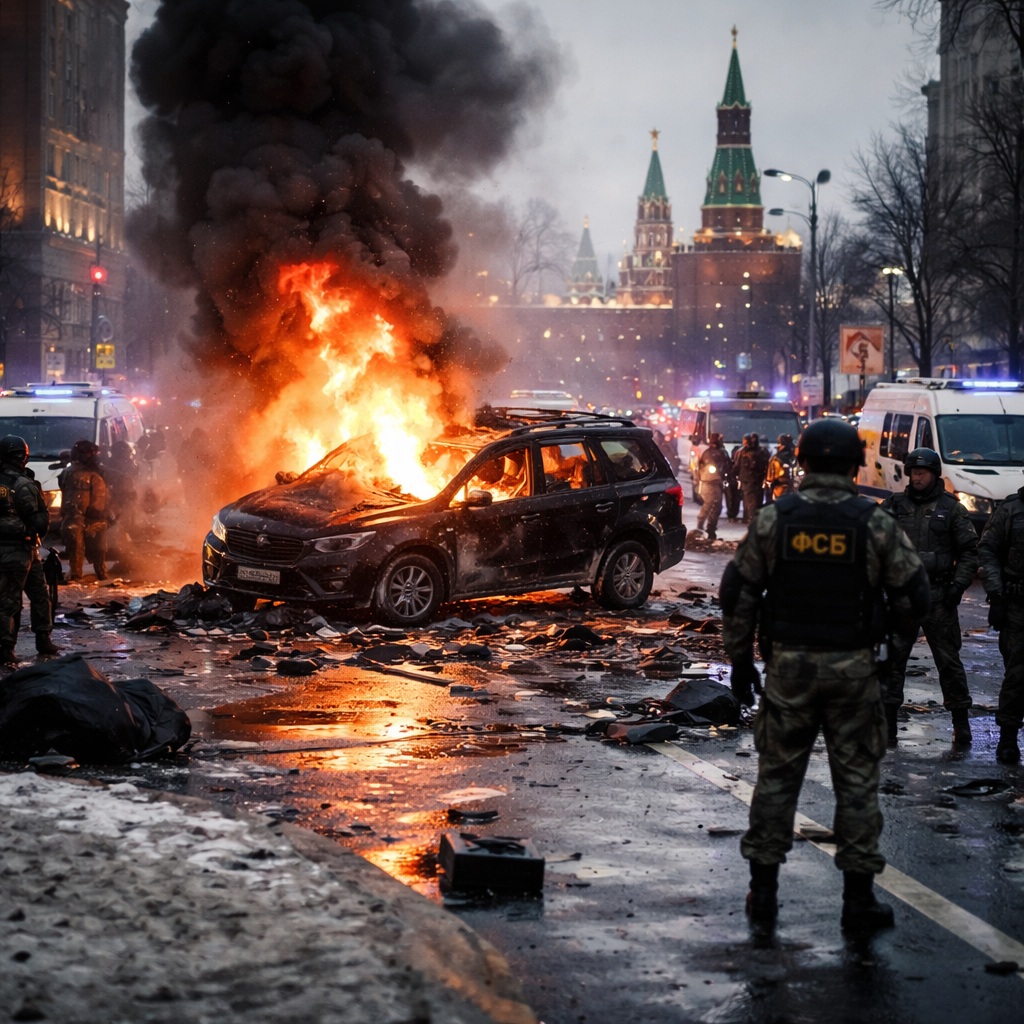
Moscow awoke to shock and tightened security after a powerful car bomb killed a senior Russian general in a residential district of the capital, an attack that authorities described as a targeted assassination linked to the ongoing war with Ukraine. The blast, which tore through a parked vehicle in the early hours of the day, sent a plume of smoke into the winter sky and rattled nearby apartment blocks, underscoring how far the conflict has reached beyond the front lines.
According to investigators, the general—whose name was released later in the day—was killed instantly when an explosive device detonated beneath his car. The vehicle was engulfed in flames, leaving little doubt that the attack had been meticulously planned. Law enforcement officials sealed off the area within minutes, while bomb disposal units combed the scene for secondary devices.
The killing comes amid a series of assassinations and sabotage operations that Russian officials have publicly blamed on Ukrainian intelligence services and affiliated operatives. While Kyiv has neither confirmed nor denied involvement in this latest incident, the attack fits a broader pattern of strikes aimed at military officers, defense industry figures, and pro-war officials inside Russia.
For residents of the neighborhood, the explosion shattered a fragile sense of normalcy. “It felt like the war had arrived on our street,” said one local resident, who described hearing a thunderous bang followed by the wail of sirens. Windows were blown out in nearby buildings, and fragments of metal were scattered across the pavement.
Russian authorities moved quickly to frame the bombing as an act of terrorism. The Investigative Committee announced the opening of a criminal case, citing the use of an improvised explosive device and the deliberate targeting of a high-ranking military figure. Security services increased patrols across Moscow, particularly around government buildings and military housing complexes.
The assassination highlights the evolving nature of the conflict between Russia and Ukraine, now marked not only by conventional warfare but also by covert operations and intelligence battles. Over recent months, a number of Russian officials and public figures linked to the war effort have been killed or injured in attacks involving explosives, firearms, or suspected poisonings.
Analysts say such operations serve multiple purposes: they disrupt command structures, sow fear among elites, and signal that no part of Russia is beyond reach. “These attacks are designed to have an outsized psychological impact,” said a security analyst based in Europe. “They demonstrate vulnerability at the very center of power.”
The Kremlin has repeatedly vowed retaliation for what it calls Ukrainian-backed terrorism, warning that those responsible will be hunted down. Following the Moscow bombing, officials renewed accusations that Western intelligence agencies were indirectly enabling such operations by supporting Kyiv.
Ukraine, for its part, has emphasized its right to self-defense and has accused Russia of waging an illegal war marked by widespread destruction and civilian casualties. Ukrainian officials have often stopped short of claiming responsibility for attacks inside Russia, instead highlighting the internal consequences of Moscow’s own military campaign.
As the year draws to a close, the killing casts a long shadow over the holiday period. Traditionally a time of relative calm, the season has instead been marked by heightened alert levels and somber public messaging. Churches and public squares across Moscow were placed under additional security, and authorities urged citizens to remain vigilant.
The broader implications of the attack remain uncertain. Some observers warn that targeted killings risk triggering further escalation, potentially prompting harsher countermeasures or expanded security laws. Others argue that such operations are an inevitable feature of a prolonged and grinding conflict with no clear end in sight.
What is clear is that the war’s reach continues to expand, blurring the line between battlefield and home front. The death of a general in Moscow sends a stark message: even the most fortified capitals are no longer insulated from the violence of modern warfare.
As investigators piece together the final moments before the blast, the city grapples with a renewed sense of unease. The question now facing Russia’s leadership—and its citizens—is how many more such shocks the conflict will deliver, and what price will be paid as the war enters another uncertain year.
 The Tower Post