Public anger spills into the streets after prosecutors unveil high-profile graft accusations, shaking trust in state institutions during the holiday season.

Public demonstrations have erupted across Albania after sweeping corruption allegations targeted senior figures linked to government power, igniting a wave of anger that has cut through the country’s usually subdued winter streets. What began as scattered gatherings quickly grew into sustained protests, with citizens demanding accountability, transparency, and meaningful political reform. The unrest has taken on a symbolic dimension, unfolding during a period traditionally associated with reflection, unity, and hope, amplifying its emotional resonance.
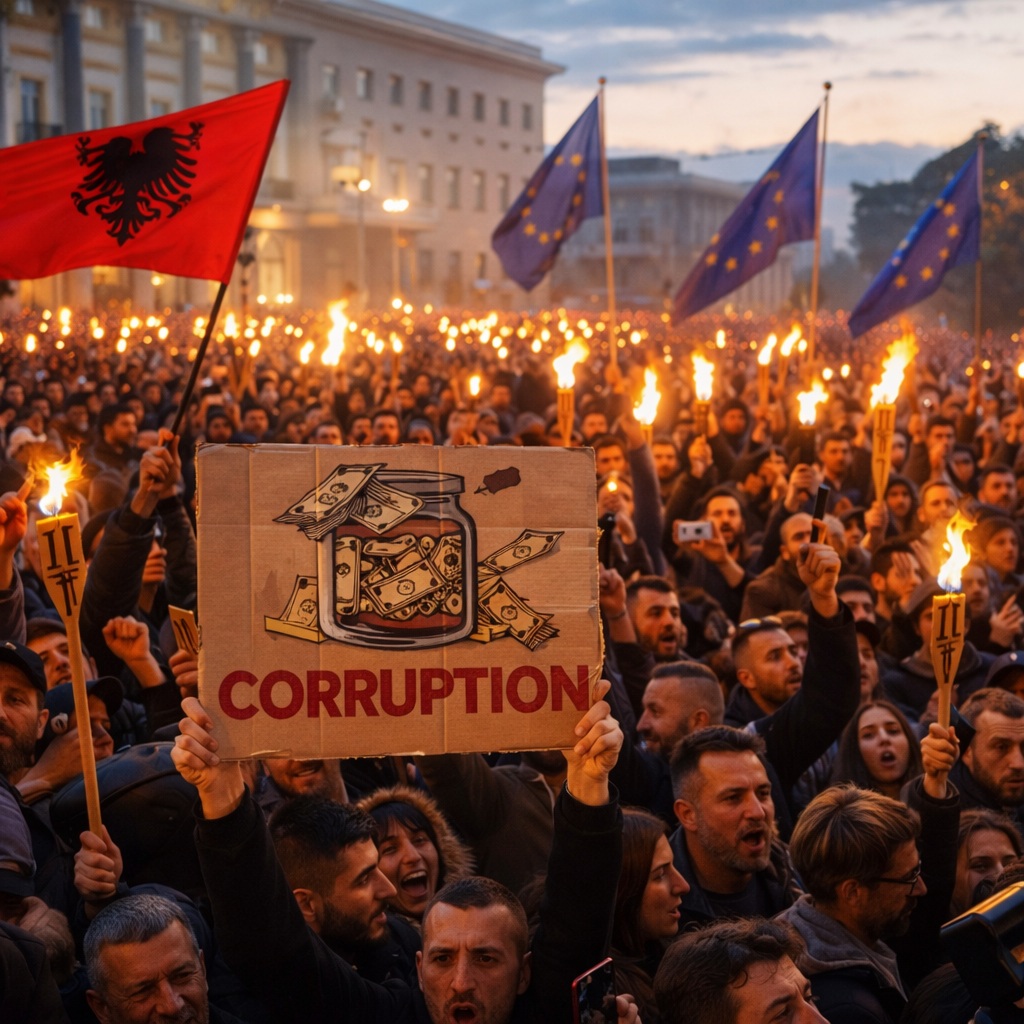
In the capital, Tirana, crowds assembled near parliament and government ministries, waving national flags and chanting calls for justice. Similar scenes unfolded in other major cities, where protesters accused authorities of shielding political and economic elites from scrutiny while ordinary citizens face rising living costs, limited job opportunities, and persistent inequality. Demonstrators interviewed by local media spoke of frustration built up over years, now released by the latest revelations.
The allegations, revealed by judicial authorities and reinforced by investigative journalism, center on abuse of public funds, illicit procurement contracts, and influence peddling linked to state-backed infrastructure and development projects. According to prosecutors, complex financial schemes were allegedly used to divert public money through private companies connected to powerful networks. While details continue to emerge, the scale of the accusations has already shaken public confidence.
The government has firmly denied wrongdoing. Senior officials have described the charges as politically motivated and warned that street protests risk undermining institutional stability. Authorities have emphasized that Albania’s justice reforms were designed precisely to handle sensitive cases without political interference. “The courts must be allowed to work independently,” government statements have repeatedly stressed.
For many citizens, however, faith in institutions remains fragile. Albania has experienced repeated corruption scandals in recent years, few of which resulted in high-level convictions. Protesters argue that this pattern has fostered cynicism and resignation, particularly among younger generations who increasingly look abroad for opportunities.
Civil society organizations, student groups, and independent activists have played a central role in sustaining the demonstrations. Through social media platforms, organizers have coordinated marches, shared court documents, and circulated investigative reports. The protests have largely remained peaceful, with volunteer marshals attempting to prevent clashes and maintain a civic tone.
Economic pressures have further fueled public anger. Inflation, housing shortages, and stagnant wages have intensified perceptions that corruption directly affects daily life. “This is not just about politics,” one protest banner read. “It’s about dignity.” Analysts note that such framing broadens the appeal of the movement beyond traditional opposition supporters.
International attention has been swift. Albania’s aspirations for closer integration with European institutions depend heavily on credible progress in combating corruption and strengthening the rule of law. European diplomats and international watchdogs have urged restraint while reiterating that transparency and judicial independence are essential benchmarks for Albania’s future.
As evening fell, marches gave way to candlelit vigils, creating a quieter but equally powerful atmosphere. Families, students, and pensioners stood side by side, holding lights rather than placards. The symbolism was unmistakable: a call for illumination in public life at a time of year associated with renewal.
Whether the current wave of protests will translate into lasting political change remains uncertain. Much will depend on the outcome of judicial proceedings and the government’s response to public demands. What is already clear is that the unrest has reshaped Albania’s national conversation, exposing deep-seated mistrust but also a renewed sense of civic engagement. During a season typically marked by celebration and pause, the country finds itself confronting fundamental questions about power, justice, and its future direction.