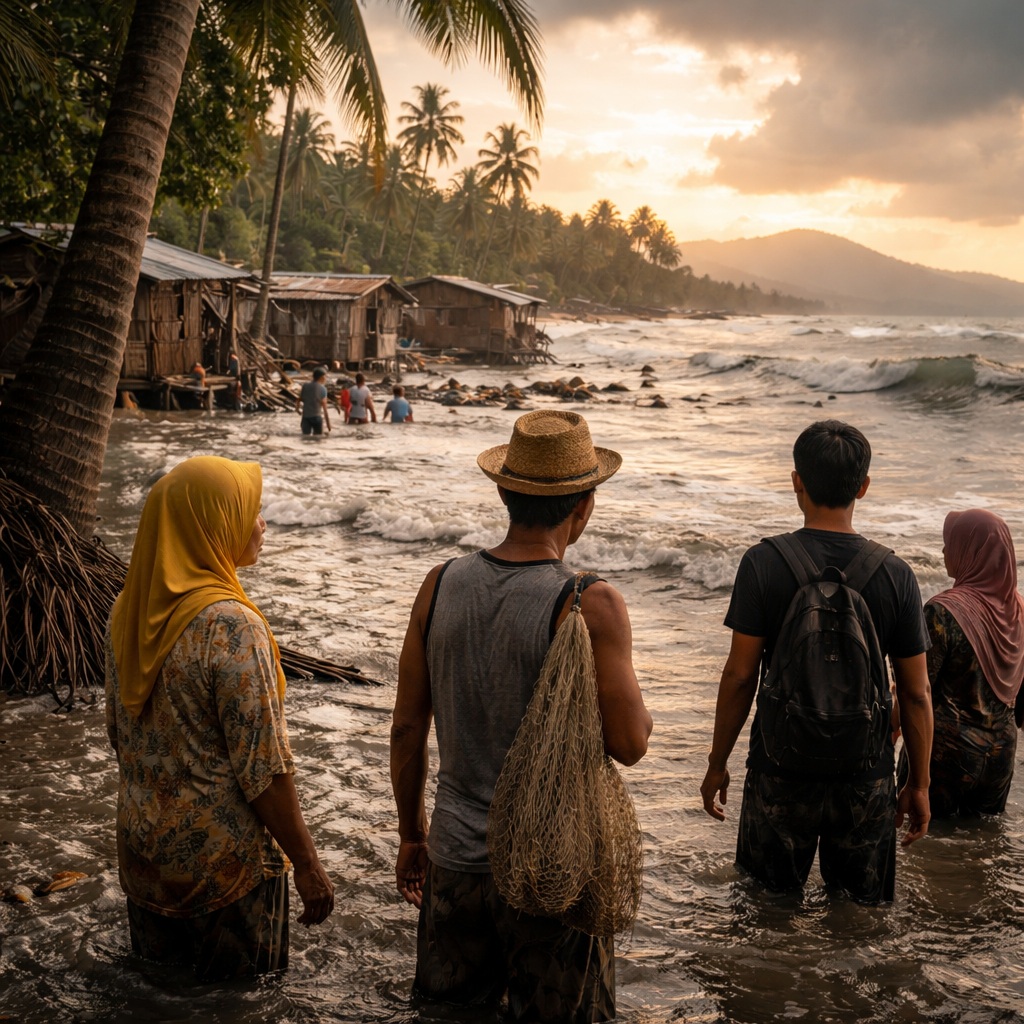
A landmark lawsuit tests the reach of international climate justice as vulnerable communities seek accountability far beyond their shores

As winter settles over Europe and the holiday season slows the tempo of public life, a Swiss courtroom is preparing to hear a case that reaches far beyond national borders. The plaintiffs are residents of low-lying Indonesian islands. The defendant is a major corporate actor headquartered in Switzerland. The claim: that emissions tied to global business decisions are threatening lives, land, and culture thousands of kilometers away.
The case marks a significant moment in the evolution of climate litigation. It brings together communities on the front lines of climate impacts and one of the world’s most influential legal jurisdictions. At its core lies a question that has long hovered over international climate negotiations but rarely entered courtrooms with such force: who bears responsibility when climate change erases coastlines, contaminates freshwater, and makes ancestral homes uninhabitable?
For the islanders, the lawsuit is born of necessity. Rising seas have already begun to claim farmland and burial grounds. Saltwater intrusion has rendered wells unusable, while increasingly violent storms batter fragile infrastructure. Fishing, the backbone of local livelihoods, has become unpredictable as marine ecosystems shift. Community leaders say relocation is no longer a distant threat but an approaching certainty.
The plaintiffs argue that these harms are not abstract consequences of a global phenomenon, but foreseeable outcomes of prolonged, large-scale greenhouse gas emissions. By filing their case in Switzerland, they are testing whether companies based in wealthy nations can be held legally accountable for climate damage suffered in the Global South.
Legal experts describe the case as part of a broader wave of strategic climate litigation. Around the world, courts are being asked to interpret existing laws—on human rights, corporate duty of care, and environmental protection—in the context of a warming planet. What sets this case apart is its transnational nature and its focus on corporate responsibility rather than state policy alone.
Swiss courts, known for their cautious and methodical approach, now find themselves at the center of a global debate. The plaintiffs are not asking for symbolic recognition alone. They seek concrete measures: emissions reductions aligned with scientific targets and financial contributions to adaptation efforts in vulnerable regions.
Corporate representatives have signaled that they contest both jurisdiction and liability. They argue that climate change is a collective problem requiring political solutions, not judicial ones, and that singling out individual companies oversimplifies a complex global system. Such arguments have been heard before, but courts in several countries have increasingly shown willingness to engage with them rather than dismiss cases outright.
Observers note that the timing of the hearing carries symbolic weight. As the year draws to a close, governments and businesses alike are taking stock of climate pledges made and promises kept—or broken. For communities already living with irreversible damage, patience is in short supply.
Whatever the outcome, the Swiss case is likely to resonate well beyond the courtroom. A ruling in favor of the islanders could embolden similar claims and accelerate efforts to define legal standards for climate responsibility. A dismissal, on the other hand, would underscore the gaps that still exist between climate science, moral accountability, and enforceable law.
For the Indonesian plaintiffs, the case is about more than precedent. It is about survival and dignity, and about being seen and heard in systems that have long felt distant and inaccessible. As festive lights glow across Swiss cities, their lawsuit serves as a stark reminder that the climate crisis does not pause for holidays—and neither does the search for justice.