A fresh business survey points to mounting concerns over paperwork, regulatory drift and unpredictable checks—right as firms push holiday-season deliveries across the Channel.

In the quiet stretch of the holiday period—when offices thin out and many European buyers close early—UK warehouses are still humming. Pallets are wrapped, labels are printed, and lorries roll toward ports with time‑sensitive stock: speciality foods, spare parts, cosmetics, fashion, and components for factories that do not pause just because the calendar does. For many exporters, the hardest part of the journey begins not on the motorway, but at the desk: the forms, declarations and evidence files that decide whether goods move smoothly or stall.
A newly released survey by the British Chambers of Commerce suggests dissatisfaction among UK exporters with the current EU trade terms is rising again. Across responses drawn largely from small and medium‑sized companies, a clear majority said the existing arrangements are not helping them expand sales in Europe. Almost none described government support for coping with frequent trade‑policy changes as genuinely comprehensive. Business groups say the picture is of friction that has become routine—less a one‑off “teething problem” and more a permanent cost of doing business with the UK’s closest, largest neighbour.
“The agreement may be tariff‑free on paper, but it isn’t friction‑free in practice,” said a manufacturing exporter in the Midlands who asked not to be named to protect customer relationships. “We spend more time proving what a product is and where it came from than selling it.”
A border built out of paperwork
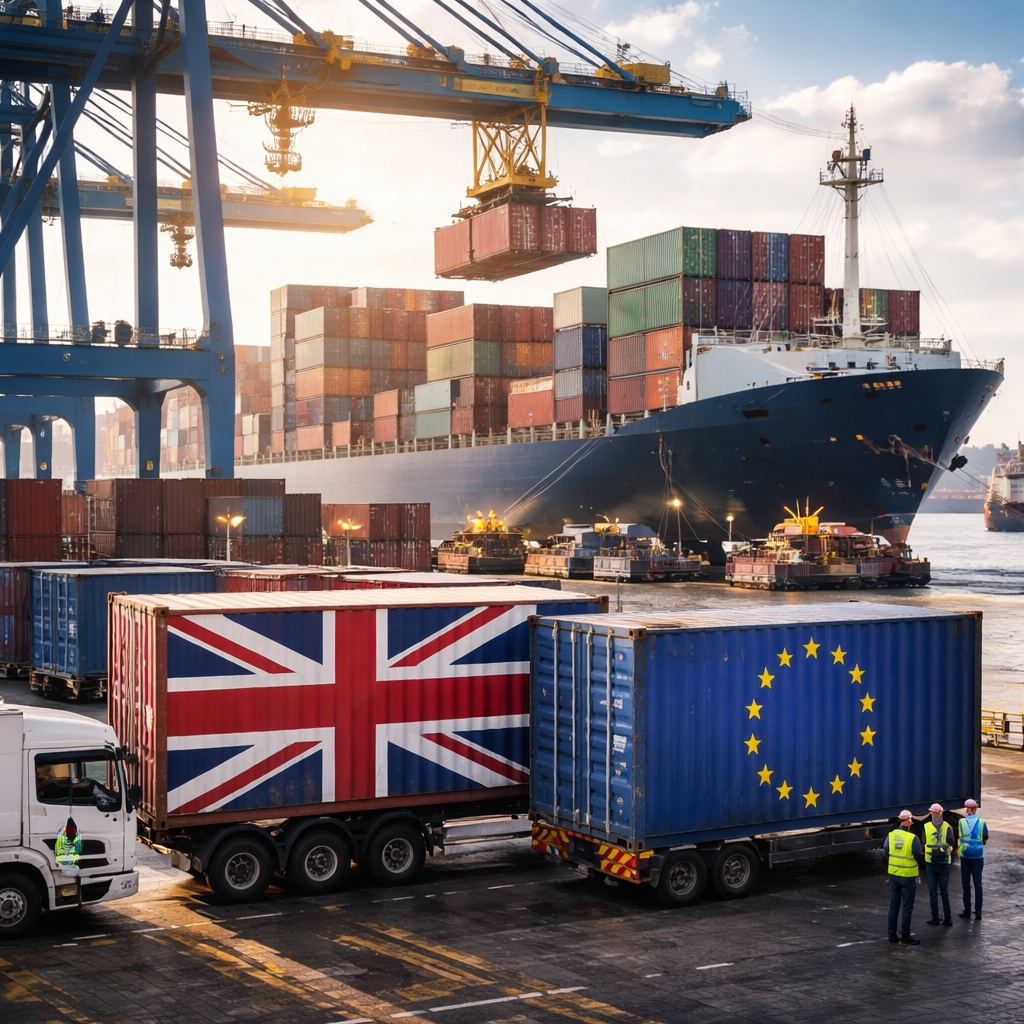
The EU‑UK trade deal removed tariffs and quotas for goods that meet rules‑of‑origin requirements, but exporters say proving eligibility can be burdensome. Companies must track inputs, document processing steps, and retain evidence to satisfy customs authorities or customer audits. For large firms with dedicated compliance teams, that can be managed. For smaller companies selling into multiple EU markets, it often means hiring external agents, accepting higher error risk, or stepping back from lower‑margin product lines.
“Rules of origin are where a lot of hidden cost sits,” said a trade adviser who works with manufacturers and consumer‑goods exporters. “Even when the goods qualify, you still need to demonstrate it—consistently—and that demonstration can be as demanding as paying a tariff.”
Exporters also point to product regulation, where incremental divergence can create duplication even for identical items. Firms describe needing parallel documentation sets, altered labelling, or an EU‑based representative for certain categories. Each change may appear small, but stacked across a catalogue—and across multiple EU destinations—it becomes a deterrent to new orders.
Food and drink companies describe a parallel challenge: certificates, inspections and border procedures that add cost and reduce shelf life. Several exporters say they have moved from frequent, smaller deliveries to fewer, larger shipments to make compliance worthwhile—an adjustment that can strain cashflow and complicate stock management. Others have shifted to sending goods to an EU partner for onward distribution, a workaround that can reduce border touches but adds warehousing and handling fees.
New rules, old uncertainty
Exporters say another source of frustration is the sense that the “target” keeps moving. Regulatory divergence means that a product compliant in one market is not automatically compliant in the other, and the burden sits on businesses to keep up. Companies cite emerging EU requirements on product safety, sustainability reporting and climate‑linked border measures as areas where administration could intensify. Even firms that support higher standards complain that the route to compliance is complex, the guidance is technical, and responsibilities can be unclear—particularly for small suppliers and niche manufacturers.
For companies selling across Europe, the biggest fear is unpredictability: not that checks exist, but that treatment varies between ports, countries and inspectors. “If it was slow but steady, you could plan,” said a logistics manager for an engineering supplier. “The problem is variance. Sometimes it goes straight through. Sometimes it stops for a query that feels arbitrary. Your customer only remembers the times it stops.”
That unpredictability is amplified during holiday logistics. Limited staffing at some points in the chain can turn minor documentation issues into multi‑day delays. And while customers may be shut, penalties for late delivery can still apply, particularly where goods support manufacturing schedules or seasonal promotions.
A “reset” under pressure
The survey lands amid renewed political debate about how far the UK should go in smoothing trade with the EU. The government has signalled an intention to stabilise ties and pursue practical improvements without reopening the fundamentals of Brexit. Business groups are urging a narrow but ambitious agenda that focuses on removing the most persistent sources of friction.
The British Chambers of Commerce and other business organisations have called for steps such as reducing checks for agrifood through a sanitary and phytosanitary arrangement, simplifying VAT and customs processes, and improving cooperation on climate‑related trade measures and emissions trading. In plain terms, exporters say they want fewer surprises, fewer duplicated forms, and faster resolution when problems arise.
Business leaders emphasise that these demands are not ideological. “Companies aren’t asking for politics,” said a regional chamber representative. “They’re asking for predictability. When rules change, they need lead time, clear guidance, and systems that don’t force every small exporter to become a specialist in customs law.”
Some exporters remain wary that incremental fixes will not be enough. For sectors dependent on just‑in‑time supply chains—automotive components, aerospace parts, specialist chemicals—minor delays can ripple through production schedules. In those industries, firms say, being “nearly as easy” as before can still mean losing contracts to competitors inside the single market.
At the same time, advisers argue adaptation is possible with the right support: better digital customs tools, more consistent border processes, and subsidised training for compliance. A growing market has emerged for services that bundle customs brokerage, tax handling and regulatory checks, effectively outsourcing complexity. But these services add cost, and their availability varies by region and product type—another reason smaller exporters feel squeezed.
Inside the exporter’s decision
In a small manufacturing plant in northern England, the EU remains the most accessible external market, but the sales pipeline has narrowed. The company’s managing director described a long‑standing distributor that stepped back from mixed consignments because it did not want the administrative burden. Another customer asked the firm to shift final assembly into the EU to reduce repeated declarations and border risk.
“That’s the kind of decision that changes investment,” the director said. “It’s not that we don’t want to export. It’s that the safest way to serve EU customers is starting to look like doing more of the work inside the EU.”
For service exporters—design, engineering and specialist consultancy—the issues are different but familiar: recognition of professional qualifications, short‑term travel rules, and contract conditions. Companies say the UK’s strengths in services remain, but cross‑border delivery can be slowed by administrative steps that did not exist previously, making it harder for smaller firms to compete with EU‑based rivals on convenience and speed.
A holiday‑week reality check
There is a particular irony to the Christmas‑week trade picture, exporters say: demand spikes for certain goods, while the border system becomes less forgiving. “Everything is on a deadline,” said a food exporter who ships chilled products. “Customers want stock for seasonal lines, and if it arrives late, it’s worthless.”
The latest survey captures that sentiment. Businesses report that compliance work has expanded into time that would otherwise be spent on sales and product development. Some have shifted attention to non‑EU markets. But few see Europe as replaceable soon. Geography still matters; the EU’s proximity offers short transit times and a customer base that many firms spent decades building.
What comes next
As the year closes, UK exporters appear to be settling into a new normal marked by negotiation—within companies, with customers, and at the policy level. The question raised by the survey is whether that normal is sustainable for smaller firms, or whether the cumulative cost will continue to thin out the exporter base.
For business groups, the best outcome would be a targeted package of changes that makes trade “boring” again: fewer surprises, fewer duplicated forms, clearer guidance, and quicker fixes when systems fail. It is not a promise of effortless commerce, but of workable commerce—an outcome that many exporters, watching the year end from loading bays and logistics dashboards, say would be victory enough.