New registrations keep climbing across key markets, with electric models and improving supply supporting demand despite an uncertain economy.

European new car registrations have risen year on year for a fifth consecutive month, extending a late-year run of gains that industry executives say reflects both steadier vehicle availability and a decisive shift in consumer preferences toward electric models.
The latest figures from national authorities and industry trackers indicate that demand has remained resilient even as households across the continent continue to navigate a mix of higher living costs, uneven growth, and lingering concerns about energy prices. Dealers and manufacturers describe a market that is no longer dominated by post-pandemic backlog deliveries alone. Instead, they say buyers are increasingly returning to showrooms with clearer priorities—chief among them lower running costs, access to city centres with stricter emissions rules, and the promise of newer technology.
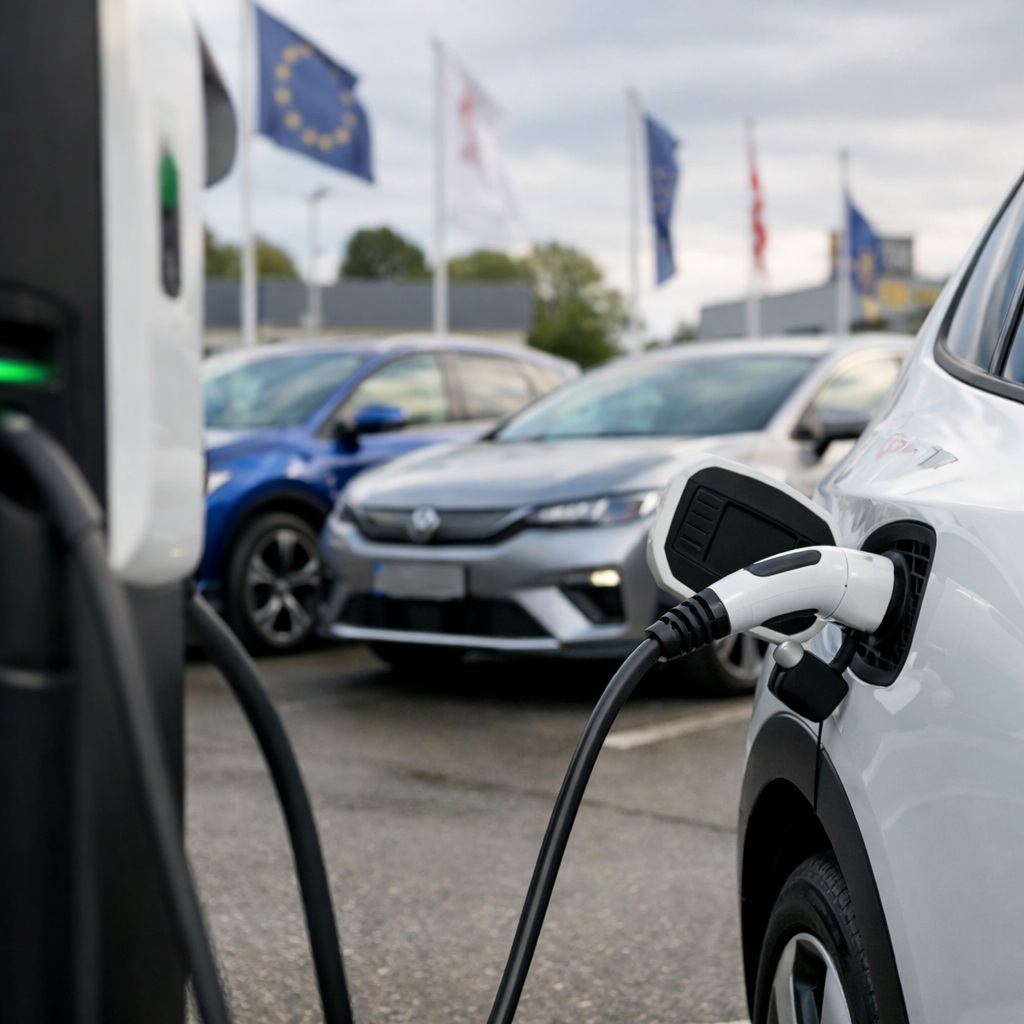
Electric vehicles have emerged as the clearest driver of the current upswing. Registrations of battery-electric models have grown faster than the overall market in several major countries, according to industry data, helping to offset softer demand for some petrol and diesel cars. Automakers have widened their line-ups across price points, while lease and finance offers have become more aggressive as brands compete for share in a segment that has moved from early adoption to mainstream consideration.
In Germany, France, Italy and Spain, the momentum has been shaped by a mix of factors: local incentive schemes where still available, tighter environmental regulations in urban areas, and a steady build-out of public charging—particularly along highways and around large cities. In many places, the charging conversation has shifted from “whether” to “where,” with drivers weighing convenience and reliability rather than doubting the concept altogether.
Supply conditions have also improved compared with earlier years, when shortages of components and transport bottlenecks distorted delivery schedules. Dealers report that lead times for popular models have generally shortened, allowing consumers to make purchases with greater confidence. That has mattered for corporate fleets as well, where replacement cycles are planned and delayed deliveries can become costly. Fleet buyers remain an important pillar of the market, industry participants say, as companies pursue decarbonisation targets and seek to lock in predictable operating expenses.
The competitive landscape has intensified. Established European manufacturers are accelerating electric launches and investing in regional production to reduce exposure to global disruptions and to meet stricter rules on emissions. At the same time, newer EV-focused brands and non-European entrants are pressing incumbents on pricing, software features and charging partnerships. The result has been a faster pace of product updates and a broader selection of vehicles, from compact city cars to family SUVs and delivery vans.
Consumers, however, are still cautious about budgets. Sales staff say buyers are more likely to compare total cost of ownership—electricity versus fuel, maintenance schedules, and warranty coverage—than in the past. Many shoppers now ask detailed questions about battery health, real-world range in winter conditions, and access to home or workplace charging. For some, plug-in hybrids remain a stepping stone, appealing to drivers who want electric capability for daily commuting while retaining the flexibility of a combustion engine for longer trips.
Economists and analysts warn that the outlook is not without risks. A slow economy can weigh on big-ticket purchases, and changes to subsidies or taxation can shift demand quickly from one drivetrain to another. Interest-rate sensitivity also remains a factor, especially for households relying on financing. Even so, the recent run of monthly gains suggests that the market has found support in the structural transition toward electrification—and that EV adoption is now large enough to influence headline performance for the entire industry.
For policymakers, the data offers evidence that emissions targets and infrastructure investment are shaping purchasing decisions, though the unevenness of charging availability still matters across regions. For automakers, the message is clear: the European car market’s recovery is increasingly tied to electric offerings, pricing discipline, and the ability to deliver vehicles reliably.
As the year approaches its final stretch, the fifth straight month of growth signals a sector that is adapting to a new normal. Traditional engines remain present, but electric models are increasingly setting the tempo—pushing the market forward even as the broader economy remains unsettled.